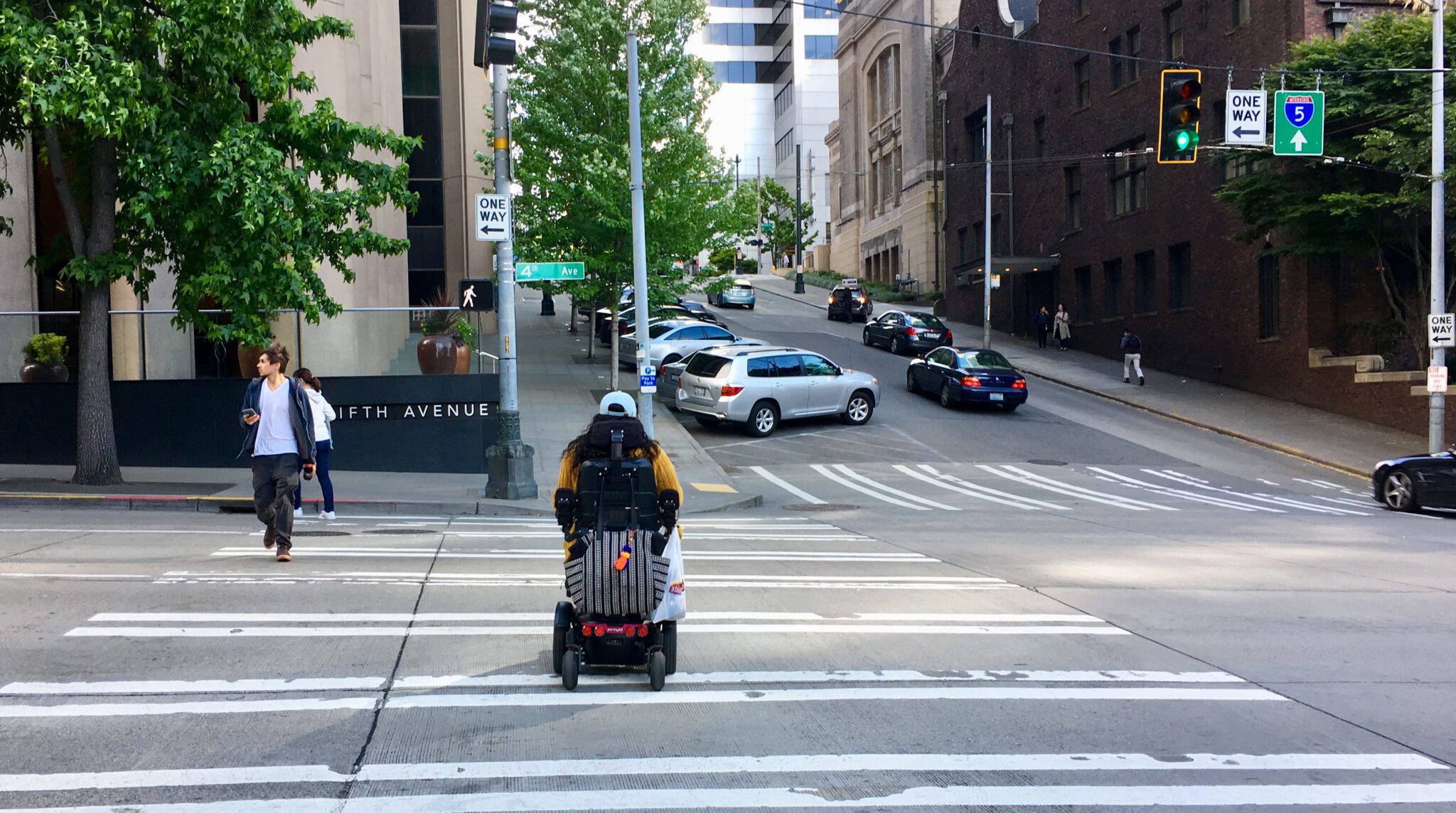
 People cross a street in Downtown Seattle inside a marked crosswalk. Photo: SDOT
 In an effort to improve accessibility in the public right-of-way, SDOT is kicking off a project to update our current Americans with Disabilities Act (ADA) Transition Plan, and we need your help identifying where and how we can make Seattle’s public right-of-way more accessible.
Do you experience barriers when trying to access places you need to go, like no curb ramps, difficulty using sidewalks getting to bus stops, or a lack of accessible parking? Do you have priority destinations and locations you’d like SDOT to focus on?
Take our survey by Tuesday, September 15, to make your voice heard. Click here for the survey.
Your responses will help us prioritize, coordinate, and develop projects and improve accessibility in Seattle’s transportation network.
Additional languages:
- Encuesta del plan de transición de la Ley de Estadounidenses con Discapacidades (ADA, por sus siglas en inglés)
- ADA 過渡計畫問卷調查
- Khảo Sát Kế Hoạch Chuyển Tiếp ADA
- Xog aruurinta Qorshaha Kalaguurka ee ADA
- ADA Transition Plan Survey
Additional formats:
To request the survey in a different format or get a printed copy, please contact us:
- Email: DOT_ADAProgram@seattle.gov
- Use subject line: ADA Transition Plan Survey Alternative Format
- Phone: (206) 386-1055
Together, let’s answer the question: What’s a priority destination for you and how can we remove barriers to meet your needs?
What is the SDOT ADA Transition Plan?
An ADA Transition Plan is an important effort to assure compliance with the Americans with Disabilities Act so that people can access government programs, services, and activities that are provided to the public.
Our department oversees the streets and sidewalks in the City of Seattle, so our ADA Transition Plan focuses on existing pedestrian facilities in the public right-of-way, including infrastructure such as curb ramps, sidewalks, and Accessible Pedestrian Signals (APS).
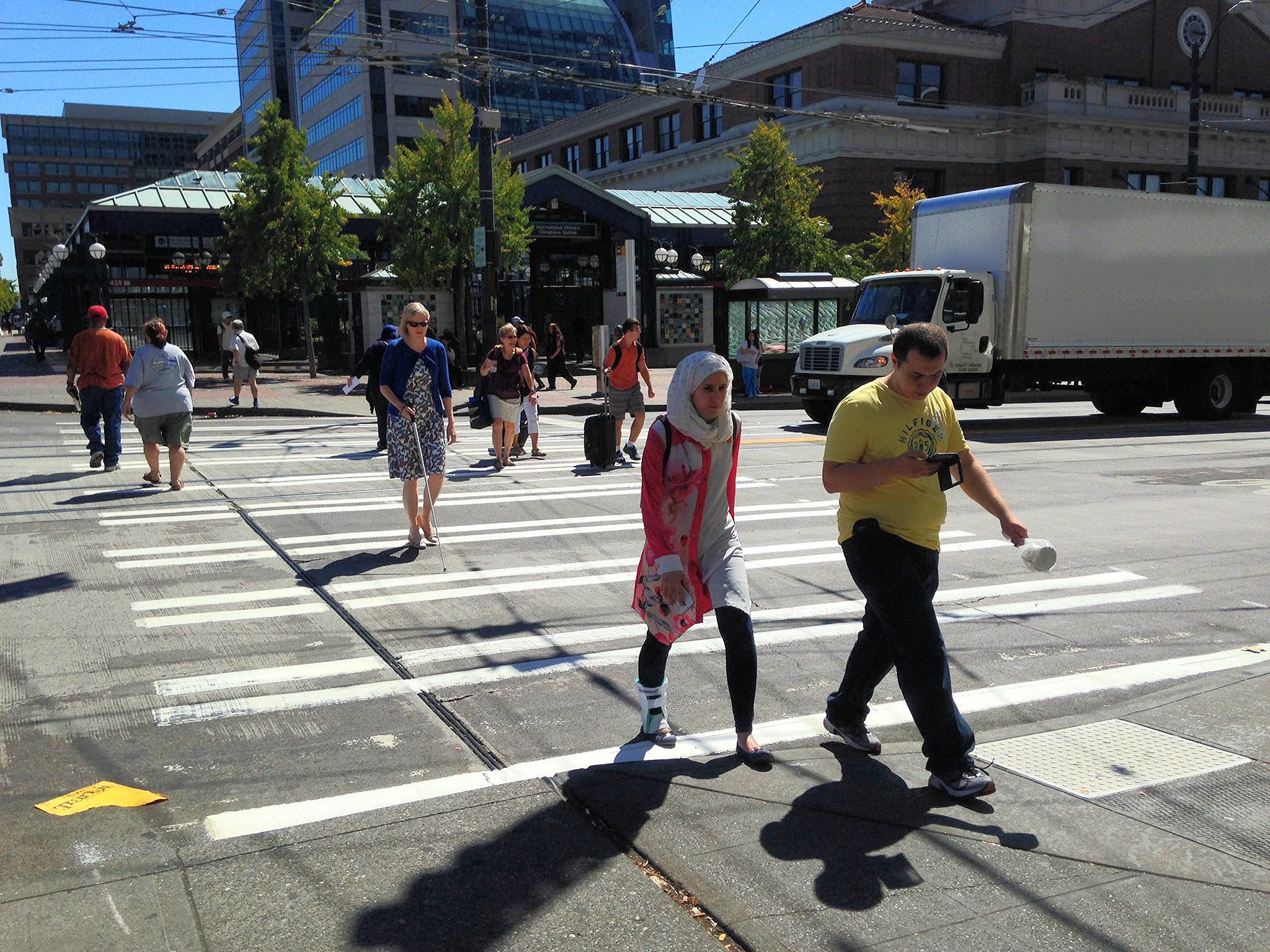
Understanding the condition of our existing facilities is called self-evaluations, and the results of these assessments go into the Transition Plan so that barriers to access are documented and systematically removed.
This plan also includes additional information about the Department’s efforts towards compliance with the ADA, coordinating efforts and projects within SDOT as well as with other city departments, and updating methods to remove barriers with the goal of improving accessibility in Seattle’s public right-of-way.
The SDOT ADA Transition Plan is considered a living document, with progress and updates to be provided in future updates until all barriers are removed.
Why it matters:
- It ensures legal compliance with the ADA.
- It demonstrates our commitment to equity and inclusion.
- It provides a transparent, actionable plan for making communities more accessible for all.
Join us
Visit our ADA Transition Plan Update website.
Take our survey:
- ADA Transition Plan Survey
- Encuesta del plan de transición de la Ley de Estadounidenses con Discapacidades (ADA, por sus siglas en inglés)
- ADA 過渡計畫問卷調查
- Khảo Sát Kế Hoạch Chuyển Tiếp ADA
- Xog aruurinta Qorshaha Kalaguurka ee ADA
Sign up for email updates.
More from SDOT
Remember to visit the SDOT blog again for more stories like this and follow us on social media for updates and announcements.
Instagram | TikTok | Facebook | LinkedIn | YouTube | Flickr | X | X Traffic
Belen Herrera contributed to this report.