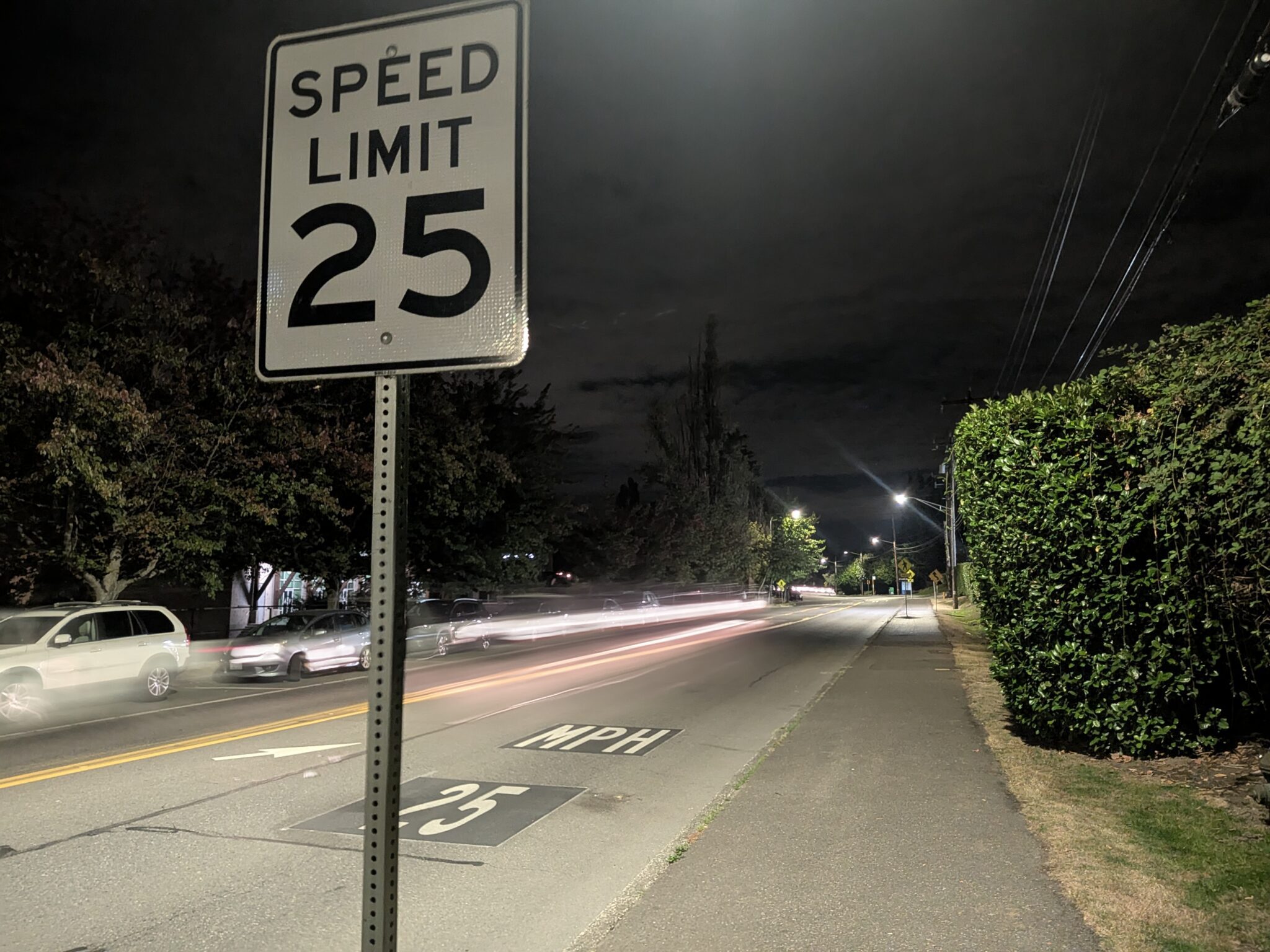
 A 25 mph speed limit sign in Seattle’s Sand Point neighborhood, near Warren G. Magnuson Park. Photo: SDOT
 Blog stats: 1,200 words | 6-minute read
Summary:
- Transportation safety is at the core of everything we do at SDOT, and we are fully committed to our fundamental goal of preventing serious injuries and fatal crashes.
- In 2027, we will add new 24/7 speed safety cameras on Rainier Ave S, E Marginal Way S, and Sand Point Way NE as the initial phase of up to 10 new safety camera locations recently announced in Mayor Wilson’s recent Executive Order to strengthen our Vision Zero work.
- These locations were chosen based on their concerning history of excessive speeding and deadly crashes.
- Traffic safety cameras are proven to be an effective way to prevent dangerous driving. Over time, we’ve seen crashes cut in half in the places with safety cameras.
Everyone needs to get around safely, and we are committed to our goal of ending deadly crashes and serious injuries in Seattle. As we work to accelerate traffic safety projects throughout the city, we’re moving forward with new 24/7 speed safety cameras in four locations with a history of excessive speeding and deadly crashes.
These cameras will be activated in 2027 as the first of up to 10 new speed safety camera locations to be turned on by early 2029, as called for in Mayor Katie B. Wilson‘s recent Executive Order to accelerate and strengthen our Vision Zero work.
We have selected the first set of speed safety cameras based on careful analysis of safety and equity data, with the goal of choosing places where the cameras will have the biggest safety benefit.
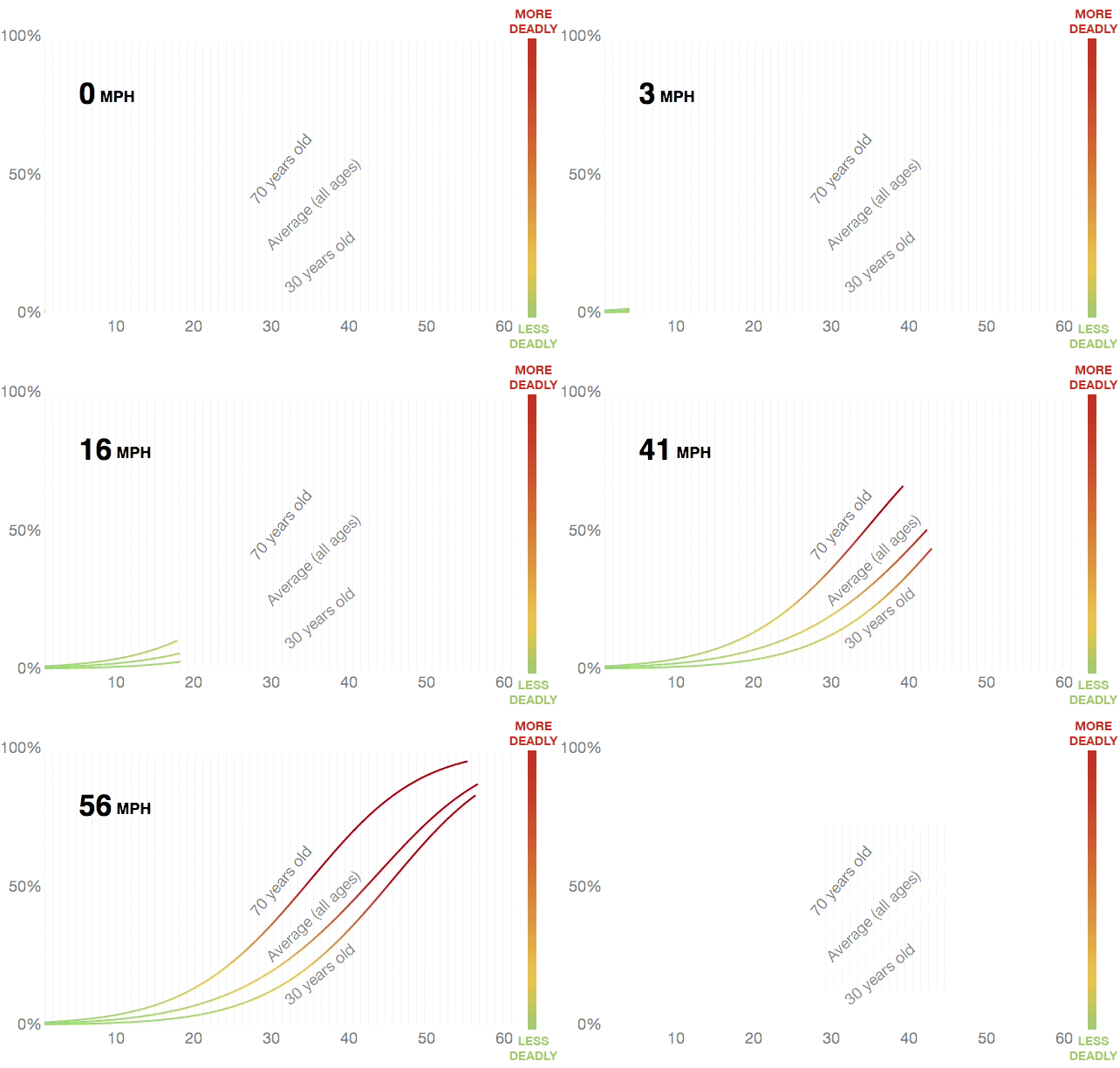
We have identified the following 1-mile long stretches which will be narrowed down to specific blocks in the coming months as design progresses:
- Rainier Ave S (northbound between S Holgate St and S Jackson St).
- E Marginal Way S (between S Fidalgo St and Diagonal Ave S).
- Rainier Ave S (between S Norfolk St and 51st Ave S).
- Sand Point Way NE (between NE 74th St and Matthews Ave NE).
Safety cameras are proven to prevent illegal speeding and save lives
Traffic safety cameras are a proven method to ensure people obey traffic safety laws, and significantly reduce the risk of serious crashes over time. National studies show that safety cameras have resulted in:
- 50% reduction in crashes and injuries on streets in multiple cities.
- Nearly 95% drop in speeding violations in New York City.
- 70% drop in extreme speeding (people driving 10+ mph over the speed limit) in Washington D.C.
- 95% of people in Seatle who receive and pay a ticket never receive another citation at the same camera location
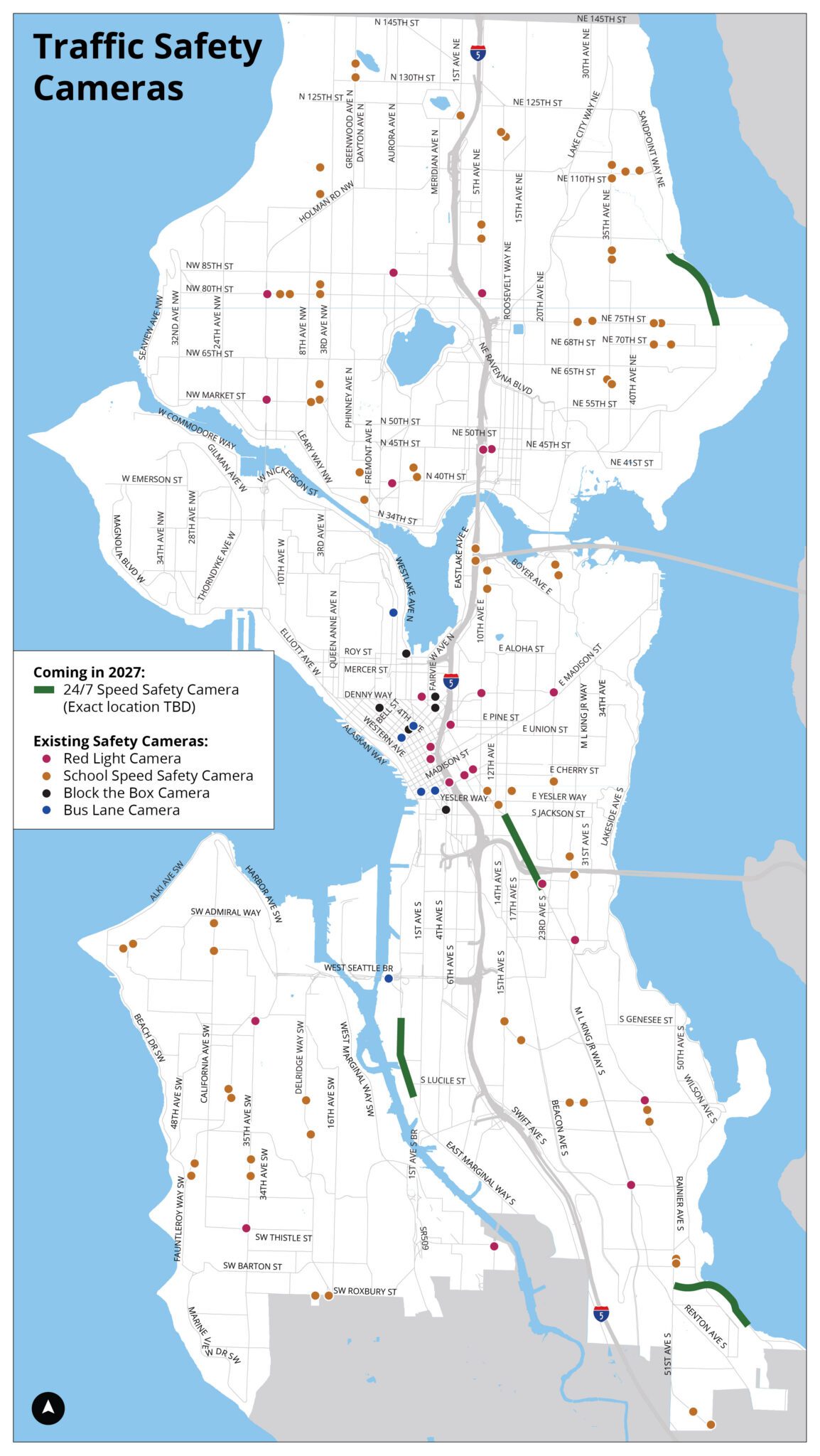
Speed is a factor in hundreds of collisions on our streets each year. Speeding makes crashes more likely to occur and do more harm. A person is twice as likely to be killed if they are hit by someone driving 30 mph than a driver going 25 mph.
How the locations were chosen
We conducted a careful analysis of safety and equity data to help select locations where new safety cameras would have the greatest benefit:
- Safety and operational considerations included how many people walk or bike along a street, rates of excessive speeding, and collision history.
- Equity considerations included where other kinds of traffic safety cameras are already located, conversations with community groups, and the demographics in these neighborhoods as measured by the City of Seattle’s Racial and Social Equity Index.
Our data shows that 15% of people driving in all four of these locations were traveling 10+ mph over the speed limit.
Our goal was to boost safety where it’s most needed, while trying to avoid over-concentration of cameras in historically disadvantaged neighborhoods. We recognize that while speed cameras improve traffic safety, issuing citations can also be a disproportionally large burden on some people and communities.
You can read more about how we selected the locations on our Traffic Safety Camera Program webpage:
New cameras will add to the citywide network of safety cameras
The new speed safety cameras will function similarly to school zone safety cameras that already exist, but with the key difference that they will enforce the speeds 24/7.
These will add to Seattle’s network of existing traffic safety cameras which currently include:
- 37 school zones with one or more speed safety cameras (recently doubled).
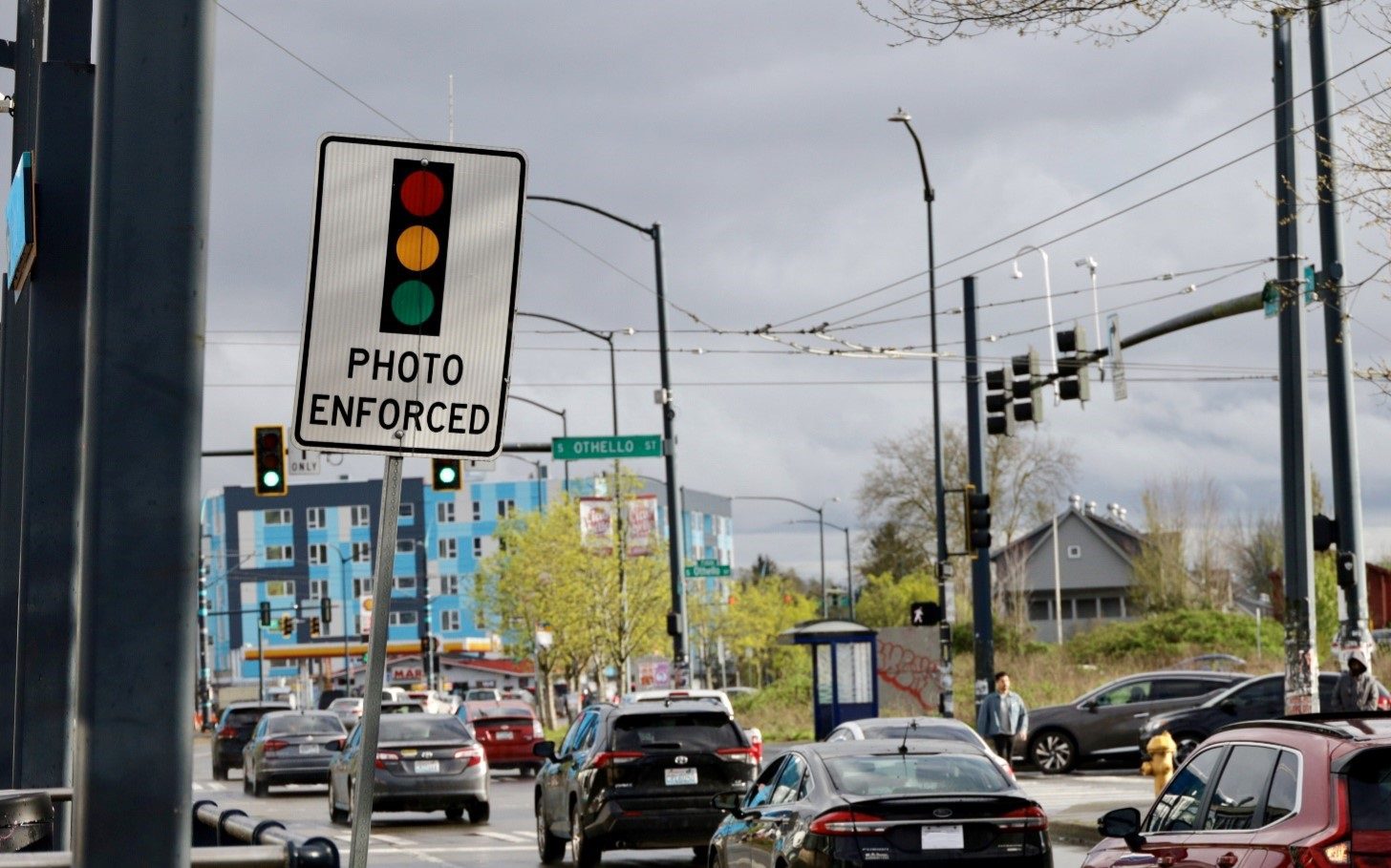
- 23 intersections with red light cameras
- 6 bus lanes with cameras
- 7 intersections with “block the box” cameras to prevent drivers from blocking crosswalks and intersections
What to expect before cameras are turned on
We expect to turn on the new cameras in the second half of 2027. We will provide public updates once we narrow down the specific blocks where cameras are being built.
We will install street signs at least 30 days before the cameras are turned on so people are aware. After the cameras are turned on, they will be programmed to only issue warnings for the first 30 days.
We will also continue to work to build other kinds of safety investments on these streets, including the upcoming Rainier Ave S Connection project and a planned future phase of the East Marginal Way Corridor Improvement Project. Streets like these with high historical rates of crashes, serious injuries, and traffic deaths will continue to be among our highest priorities for ongoing transportation safety enhancements.
What to do if you get a ticket
You can find more detailed guidance on what to do if you get a ticket on the Municipal Court’s website.
There are several options if you can’t afford to pay your ticket. People with limited incomes who receive government assistance may be eligible for reduced fines on their first safety camera infraction.
Traffic safety cameras follow strict privacy guidelines
These cameras are solely to be used to increase traffic safety, and will not be used for any other kind of monitoring. There are several protections in the state and local laws to ensure that these cameras uphold and protect people’s privacy.
State law requires that traffic safety cameras may only film when they detect a traffic violation. The video cannot be used as evidence to prosecute other kinds of crimes aside from speeding.
The video feed is not connected to any of the city’s other camera networks or shared with any other law enforcement agency. The camera images are only reviewed when verifying that a traffic violation occurred before a citation is mailed. Click here to learn more about the camera technology and how this data is reviewed.
Traffic safety cameras reduce the need for other kinds of traffic stops and ensure that enforcement is applied more fairly to anyone who is caught speeding.
Ticket revenue is used to build safety enhancements
The primary goal of traffic safety cameras is to prevent dangerous and illegal driving behavior. While raising money isn’t the primary objective, we are committed to using ticket revenue to fund safety improvement projects like new sidewalks, crosswalks, flashing beacons, and more.
As we continue building more travel safety upgrades, it could potentially reduce the need for safety cameras in a particular location, allowing us to relocate them to other places or remove them eventually.
We will monitor the effectiveness of the safety cameras over time and publish an annual report considering factors like whether illegal behavior decreases, crashes become less common, and other considerations.