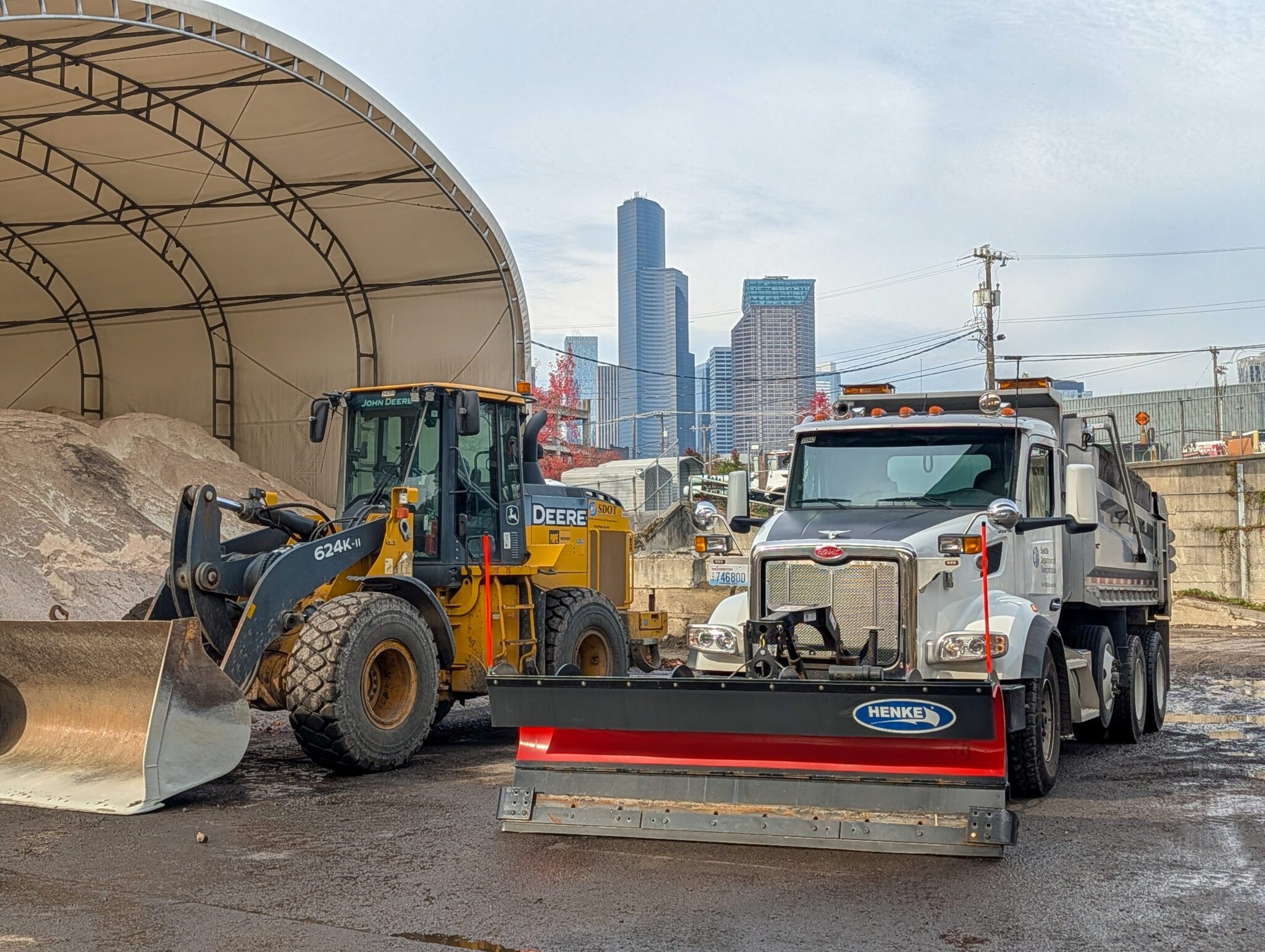
 SDOT crews prepare for winter in Seattle during an annual snow plow training exercise. Photo: SDOT
Blog stats: 800 words | 5-minute read
Quick link: Jump down to additional winter weather resources on the web.
We are prepared to respond to winter storms. This week on November 2 and 3, we’re conducting a snow plow training exercise to test equipment and ensure our snow plow drivers are familiar with their routes. This training exercise is one example of the work that occurs year-round to prepare for winter storms and help crew members practice before winter weather arrives.
“SDOT is here to help you safely and reliably navigate the city in all weather conditions, including snow and ice. Our crews and City partners take preparation seriously. Please join us by keeping an eye out for each other and workers clearing our streets when storms arrive. Now is a great time to pick up a snow shovel and ice melt and make a plan with your neighbors to keep sidewalks, curb ramps, and street drains clear. Working together we can have even better outcomes.” – Angela Brady, PE, Acting Director, Seattle Department of Transportation
We monitor weather conditions 24/7 and pre-treat major arterial streets before it begins to snow to prevent ice from forming. If snow begins to fall, crews will typically work 24 hours per day to clear Seattle’s most critical streets for emergency services and buses. In addition to our SDOT team, crew members from Seattle Public Utilities and Seattle Parks & Recreation are also trained to drive snow response vehicles and are ready to help.
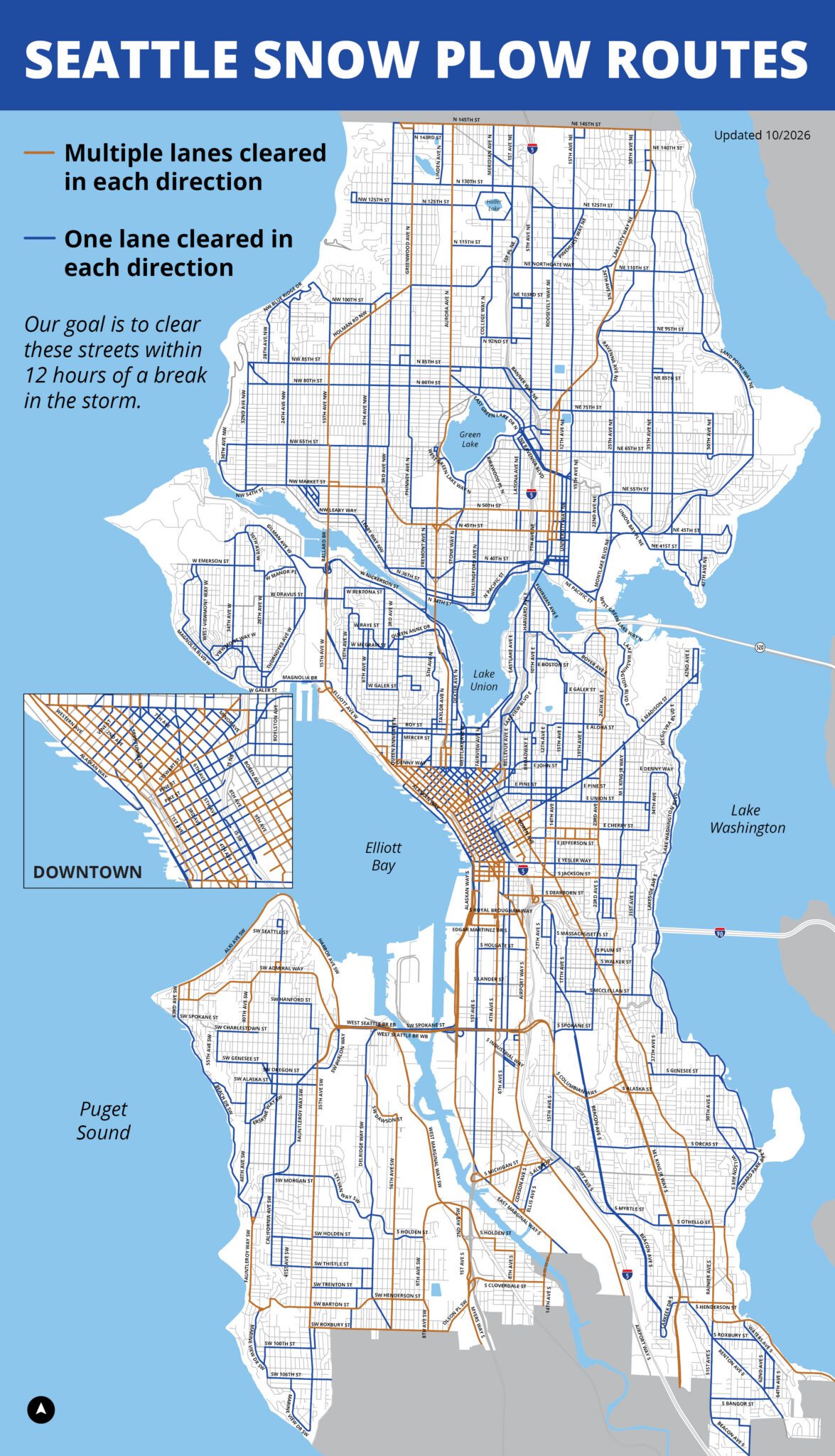
Over 1,000 lane miles of Seattle’s most critical routes to hospitals, schools, emergency services, and shelters are prioritized for plowing. As hard as our crew members work, it may take up to 12 hours after a break in the storm to clear all these streets.
What does the practice run include?
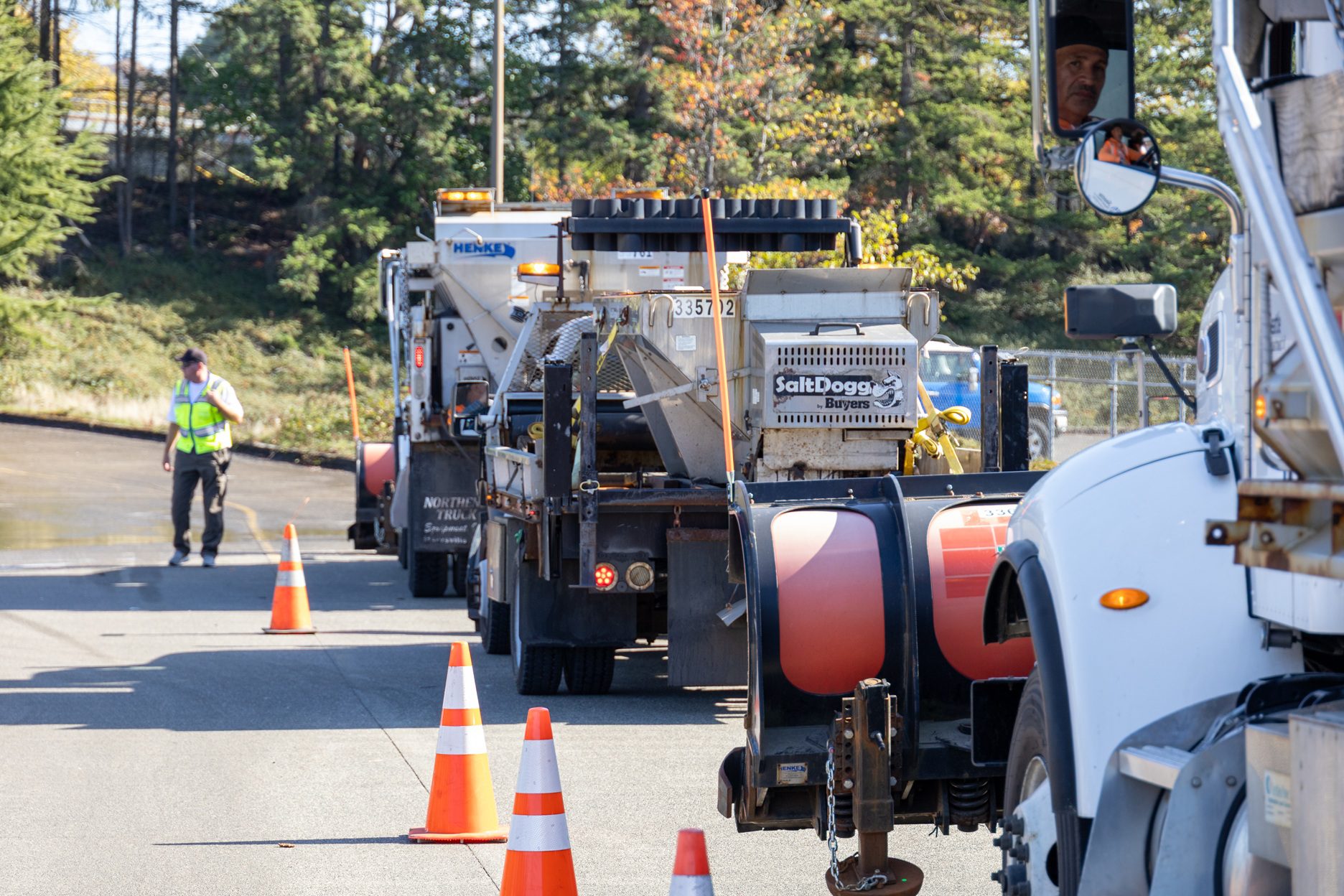
During this practice run, SDOT snowplow drivers travel the specific routes they would clear during and after a real snow and ice storm, following a network of pre-identified arterial streets all across the city. This helps drivers familiarize themselves with the current street conditions.
At the same time, other City of Seattle specialists ensure vehicles, equipment, and supplies are where they need to be at several maintenance facilities across Seattle. This exercise also includes key contributions from SDOT equipment operators, dispatch and traffic operations center staff, auxiliary support crew members, and senior management.
We’ve been making a lot of traffic safety enhancements in recent years, including installing new speed cushions throughout the city. One of the benefits of this training exercise is that it helps our plow drivers to know where the cushions and other traffic calming features are located. Another way we’ve addressed this is by installing signs near speed cushions on arterial streets.

You can count on us to clear major streets, but crews can’t be everywhere at once. It is everyone’s responsibility to clear ice and snow from the sidewalks around their homes and businesses to keep communities safe. It’s not just the law; it’s the right thing to do so that people of all ages and abilities can travel safely following a snowstorm if it becomes necessary.
As City workers prepare for snow, we are asking the public to help get ready too:
- To prepare and assist in your neighborhood, talk to your neighbors to see who may need help during a storm. Make a community plan to ensure that all the sidewalks on the block get shoveled. Be sure to have a shovel and salt ready or know who to ask if you need a helping hand.
- View a map to see Seattle’s snow plow routes. During snow events, use this online Winter Weather Response Map to see real-time updates about street conditions and which streets we have recently plowed.
- Visit the SDOT Winter Weather webpage for more information about how to get around safely when it snows. Visit the Metro winter guide website for King County Metro transit updates.
- For more information, visit www.seattle.gov/transportation/winter-weather. You can also find the City of Seattle’s overall winter storm response website at https://www.seattle.gov/winter-weather.
Thank you for your interest and taking the time to help prepare in advance. We wish you a safe winter weather season in the months ahead.