Blog stats: 1,400 words | 7-minute read
To celebrate Seattle Forest Week (November 7-15), we’re highlighting SDOT’s ongoing work to help grow and take care of Seattle’s urban forest, in close partnership with other City of Seattle Departments including the Office of Sustainability & Environment, Seattle Public Utilities, Seattle City Light, Seattle Department of Construction & Inspections, and others.
November marks the beginning of tree planting season in Seattle, and we’re beginning to plant more trees that will grow along Seattle’s streets and communities for years to come.
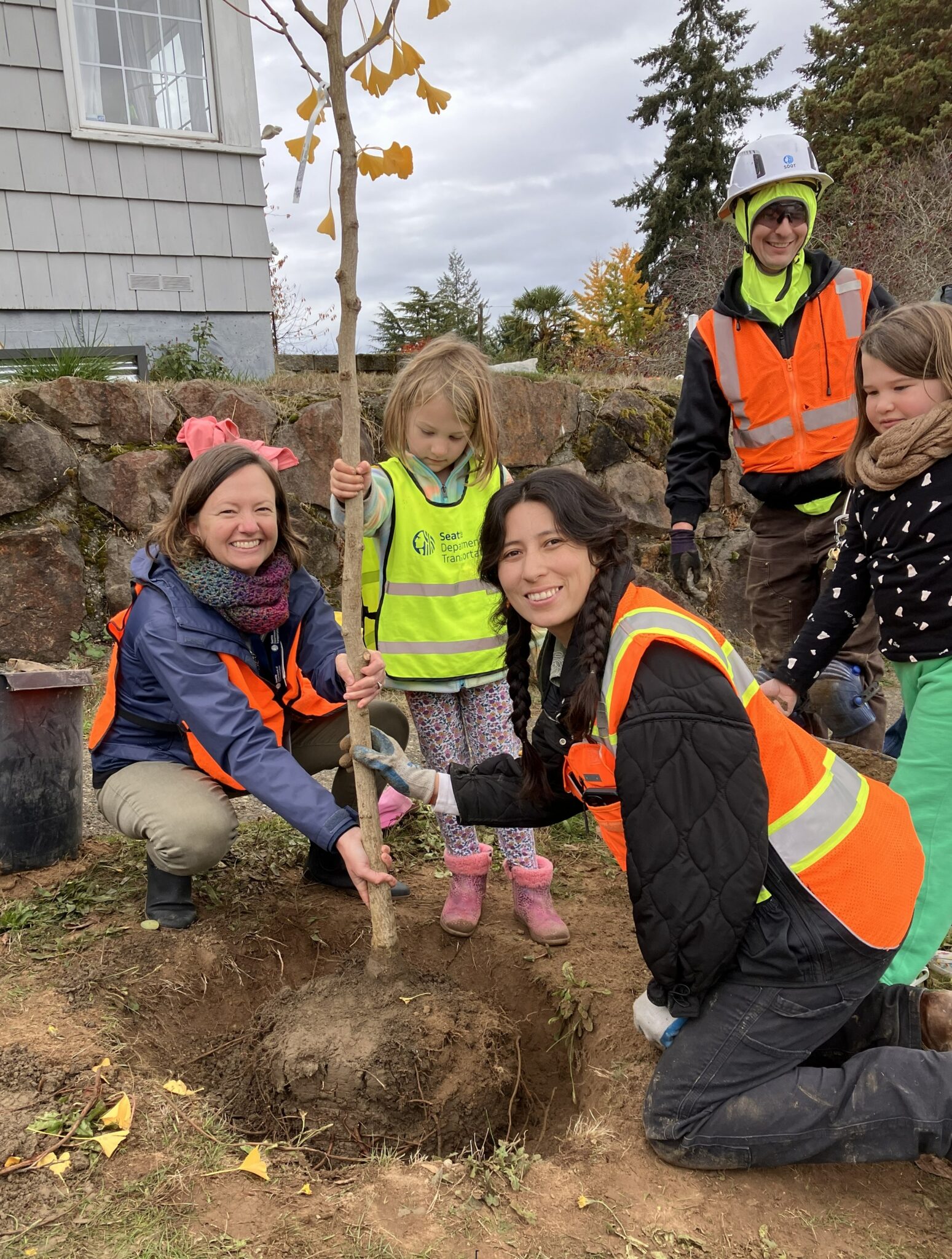
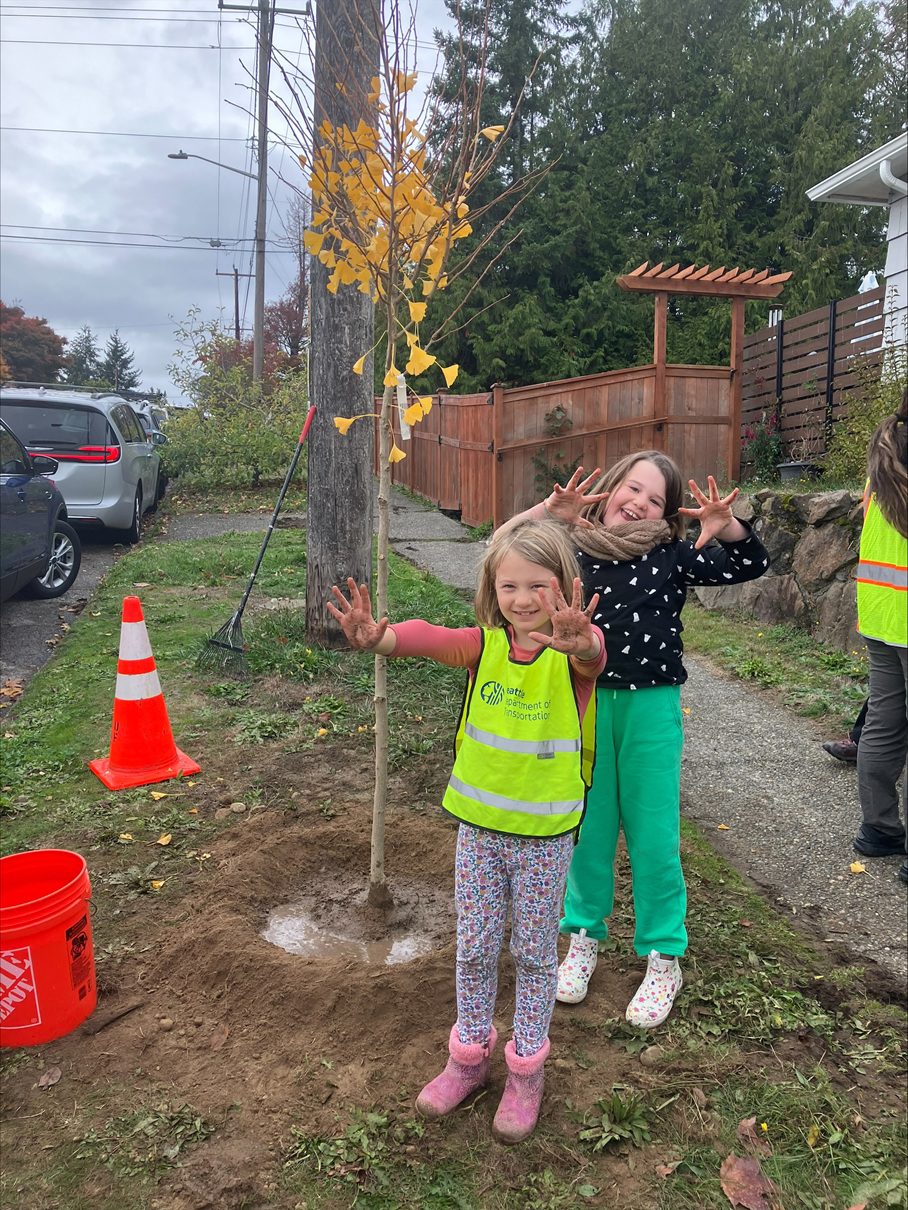
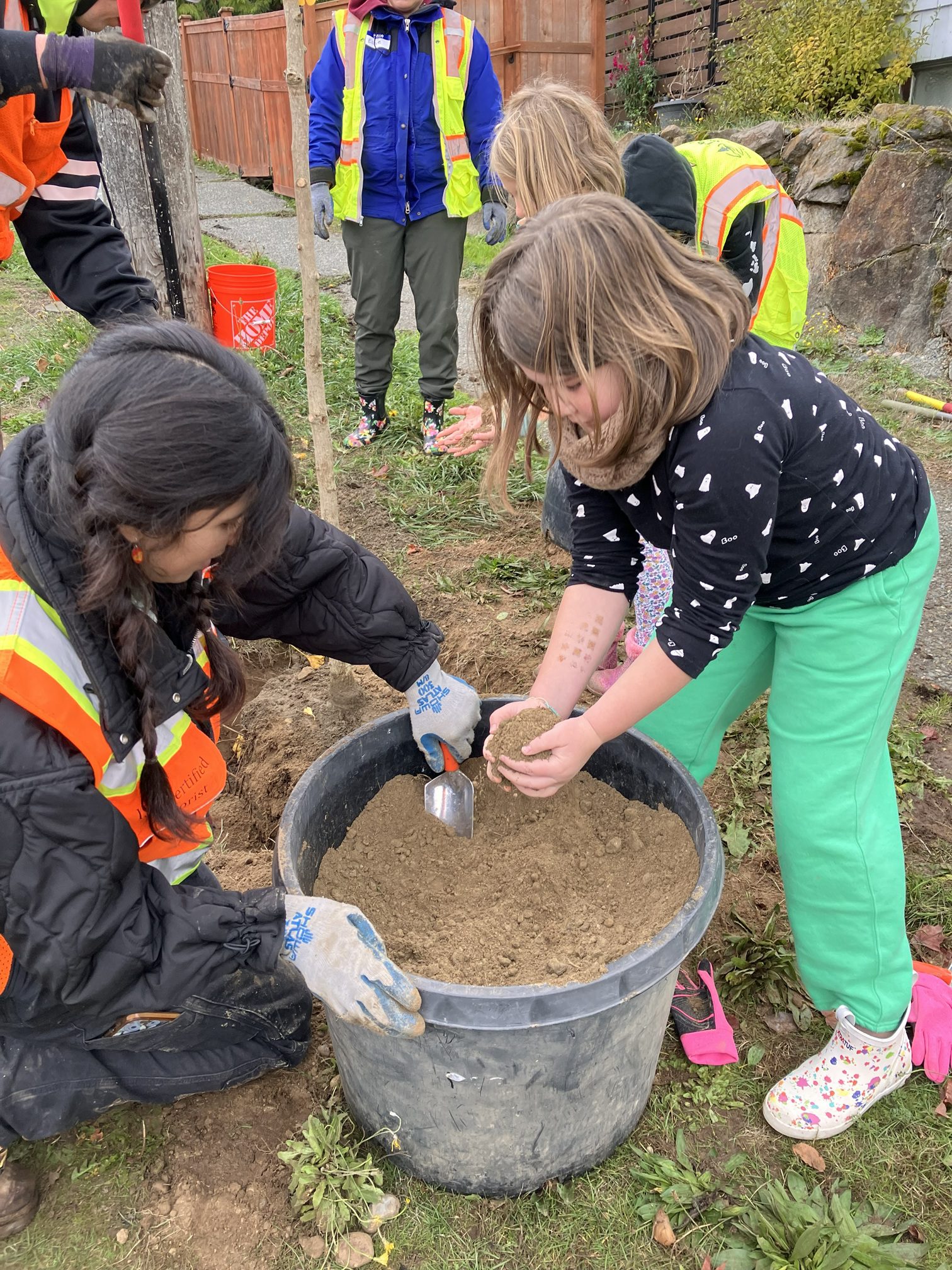
Trees remain a high priority for the City of Seattle. This past weekend, Mayor Katie Wilson joined City department staff and community members to plant trees along the route to Roxhill Elementary in West Seattle.
We hope you enjoy learning more about our work in this blog post.
Jump to:
- How do we plant and take care of our trees?
- Why do we plant trees in the fall and winter instead of spring?
- Planting the right tree in the right place
- Growing our urban forest together
- An ongoing partnership: SDOT’s Urban Forestry & Safe Routes to School programs
How do we plant and take care of our trees?
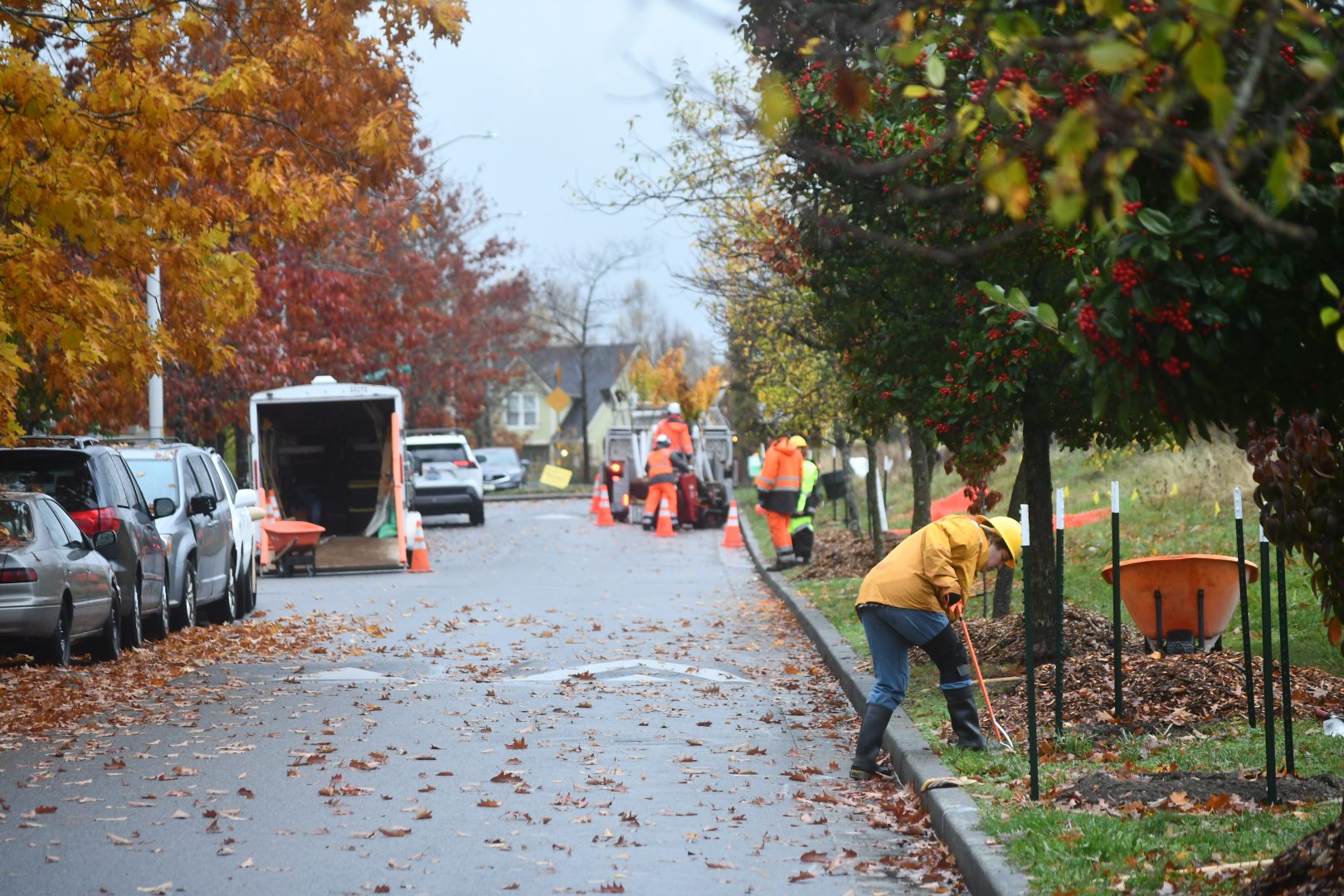
Our Urban Forestry team is responsible for managing trees within Seattle’s public right-of-way. In this area, we’ve taken inventory of over 221,000 trees – that’s nearly a quarter-million trees! Our Seattle Tree Inventory map provides the public with information on individuals street trees. The map includes approximately 40,000 city-maintained trees within the citywide inventory.
Tree planting involves much more than simply finding an open spot and putting it in the ground. Our team uses Geographic Information Systems (GIS) analyses to help identify historically underserved areas where new street trees are needed the most, track the establishment care of newly planted trees for five years, and replace trees if they die.
Thanks to funding in the voter-approved Seattle Transportation Levy, our Urban Forestry team’s new Tree Planting Program also includes goals for tree planting that improve the city’s resilience to climate change. Trees provide more shade and help cool neighborhoods during hot summer months. This helps reduce the urban “heat island” effect through an increased tree canopy, especially in historically underserved Seattle neighborhoods. Our Urban Forestry team selects new street tree traits that best match these goals.
Why do we plant trees in the fall and winter instead of spring or summer?
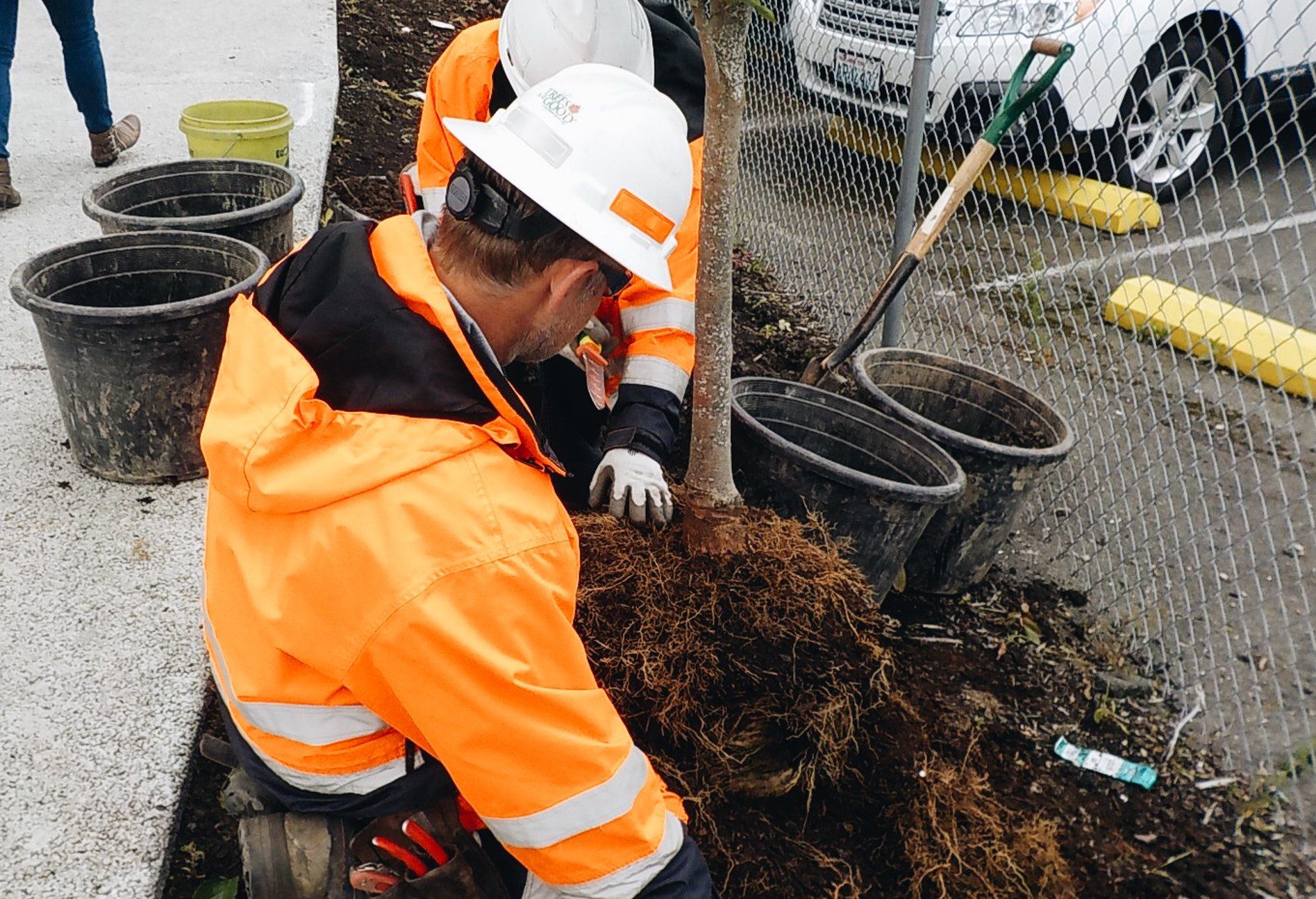
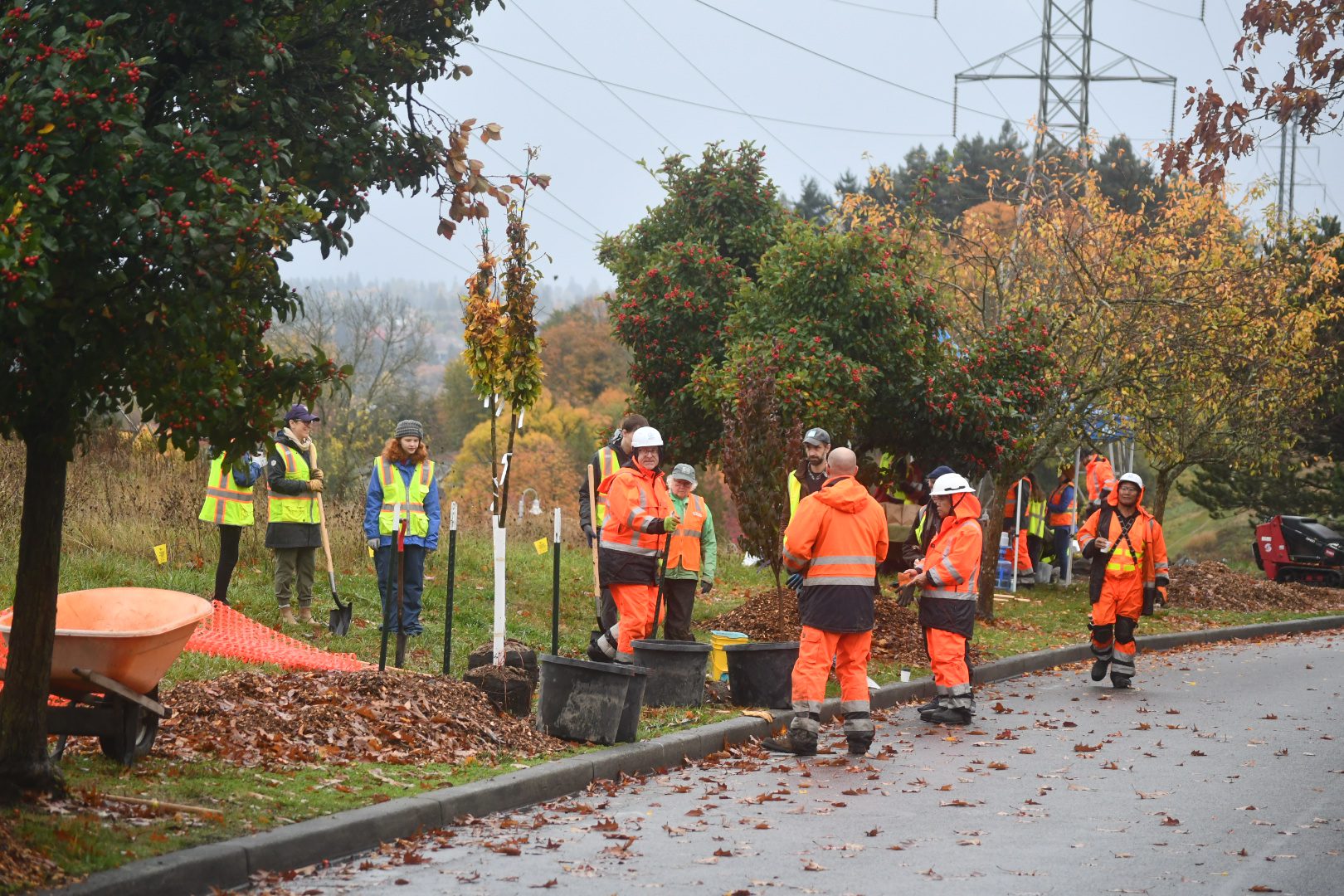
Digging trees out of a nursery with ideal growing conditions, then planting them along a city street can cause an effect known as transplant shock. This has the potential to kill a tree, so we plant trees while they’re dormant during fall or winter months.
During the months between Halloween (October) and Earth Day (April), many trees slow down their growth and enter a period of dormancy as daylight decreases and temperatures cool. When the trees shoot new leaves, stems, and roots, they will have a whole spring and summer of growth to better adjust to the new, harsher environment where they’re planted.
Planting during the fall and winter also helps avoid the effects of summer heat, drought, and ground level ozone that forms in hotter conditions, which makes transplanting trees during the summer more challenging and risky. Planting trees in the fall and winter months offers better outcomes for trees to continue growing and thriving throughout the year.
Planting the right tree in the right place
Street trees grow in some of the busiest and most challenging environments in the city. When choosing specific tree for a site, our team follows a crucial rule: plant the right tree in the right place (at the right time).
Before selecting a tree, we consider the site conditions such as street pavement, curbs, sidewalks, overhead utilities, underground utilities, traffic signs, visibility, heat, available sunlight, and available soil in addition to many other factors. We even consider historic or future uses of the site to minimize conflicts with the tree’s anticipated growth.
Once we understand the constraints of the site, we can pick a tree that will fit best. Some places, we will plant a tree that cannot grow very tall but stretch out boughs full of beautiful blossoms. Other places, we will plant a tree that grows tall with a sturdy trunk to shield pedestrians from swiftly moving cars. We have many types of trees from which to choose, so we can select one that the site can best accommodate.
Planting a tree along a busy street in Seattle can be very different from planting one in a park or front yard. We only select trees that can thrive and withstand the existing conditions while working to avoid potential conflicts with people, infrastructure, and how the space is used.
We also consider the effects of climate change as Seattle grows warmer and drier, as a part our urban forestry work. Through our Tree Planting Program, we select tree species, hybrids, and cultivated varieties that can better adapt to changing climate conditions.
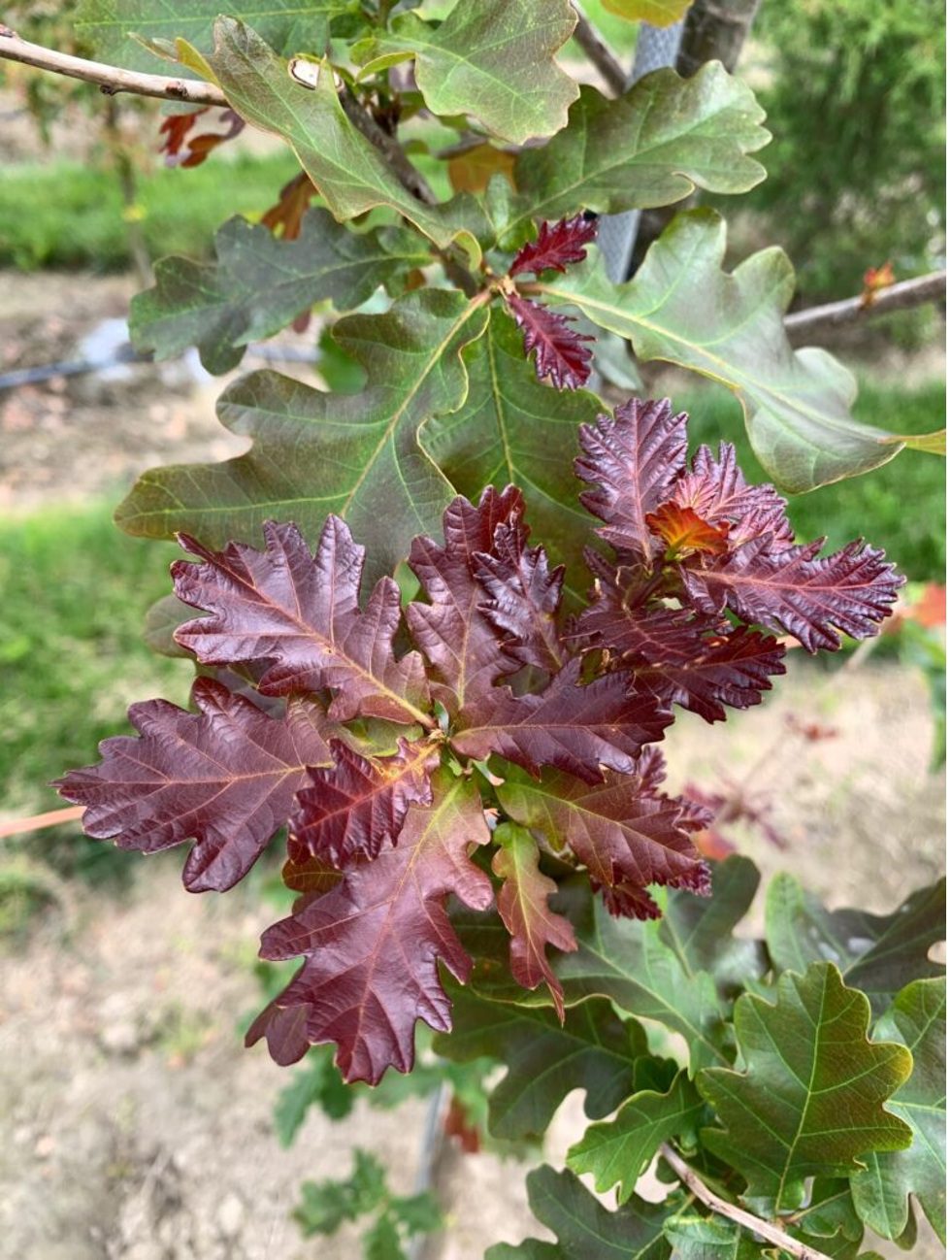
One tree we’re planting during the 2026-2027 tree planting season is the Pacific Heritage Oak. This hybrid species combines our native Garry Oak with the hardier Heritage Oak. It’s expected to provide high-quality habitat for local wildlife and is better suited for an urban environment like Seattle.
Growing our urban forest together
Trees are an essential part of Seattle’s streets and neighborhoods. Our Urban Forestry team uses data and expertise to help determine where trees are needed most, especially in areas with less tree canopy and higher temperatures.
Growing Seattle’s urban forest is one of many parts of our work to build a more sustainable city. We’re focused on keeping our streets green while keeping Seattle moving. This includes reducing carbon emissions by making it easier for people to get around by walking, biking, and using transit.
As Seattle keeps growing, we want to ensure that our streets work for both people and trees. By choosing transit, walking, or biking when we can, we can help reduce vehicle emissions and do our part to protect the environment that our urban forest is rooted in.
An ongoing partnership: SDOT’s Urban Forestry & Safe Routes to School programs
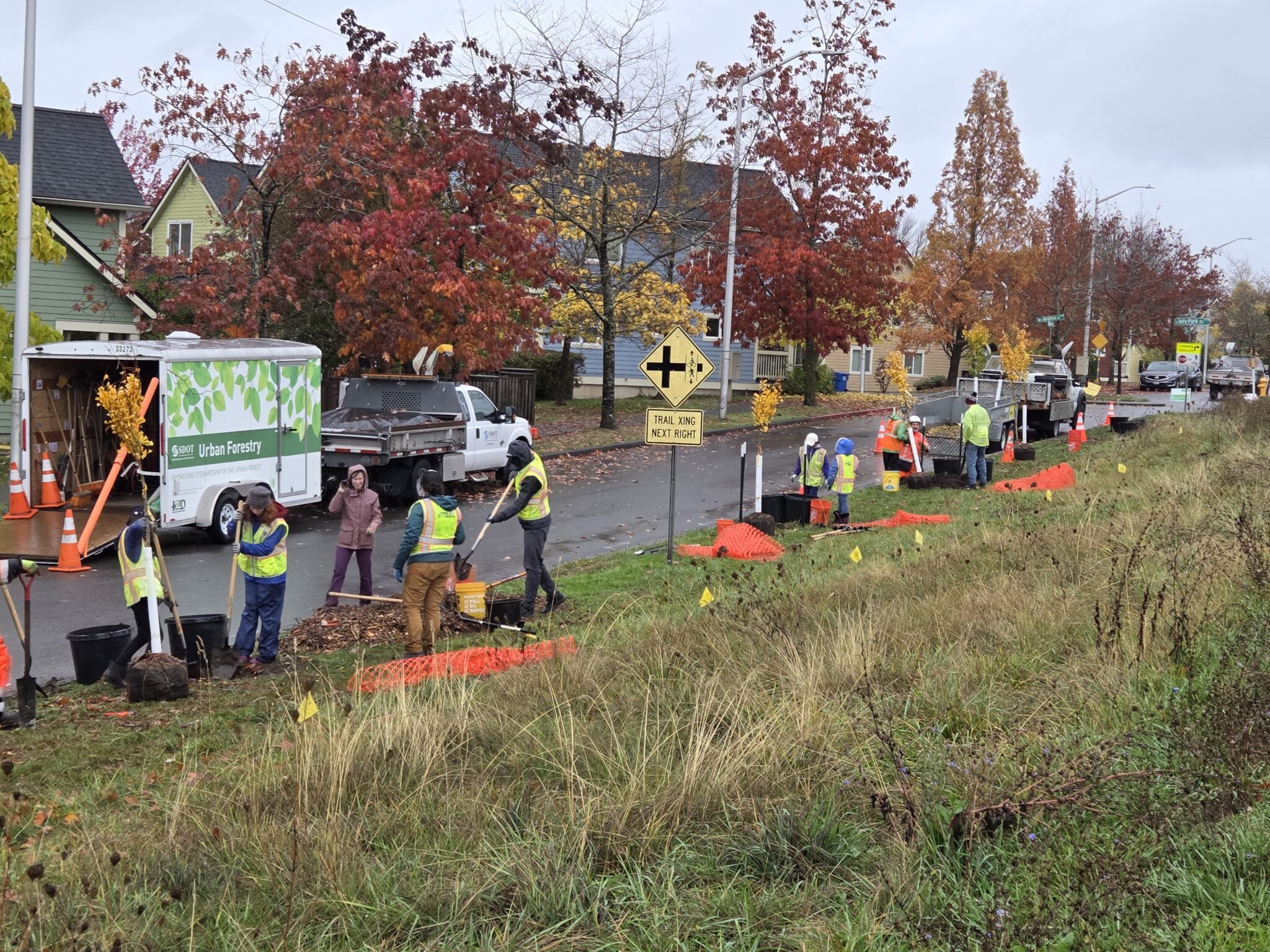
Every year, our SDOT Urban Forestry team and Safe Routes to School program work together to plant trees along routes where students walk, bike, and roll to school. Planting trees along routes to schools makes the experience of walking to school more pleasant, creating a natural buffer between the street and the sidewalk, sometimes reducing noise, and providing shade and rain cover.
This year we planted trees on SW Holden St leading to Roxhill Elementary in West Seattle. In past years we planted trees along the routes to Aki Kurose Middle School (Hillman City), Concord Elementary (South Park), Cleveland High School (South Beacon Hill), and Dunlap Elementary/South Shore PK-8 (Rainier Beach).
Street trees can improve travel safety for everyone. When larger trees mature and create a sense of enclosure around a street, drivers tend to slow down like they do when entering a tunnel (see this report for additional details). Trees can be added to streets to complement other traffic calming devices like speed humps, curb bulb outs, and traffic circles.
Kids are more vulnerable to air pollution, with smaller lungs and shorter heights putting them closer to car exhaust. Trees help improve the quality of the air they breathe.
Thank you
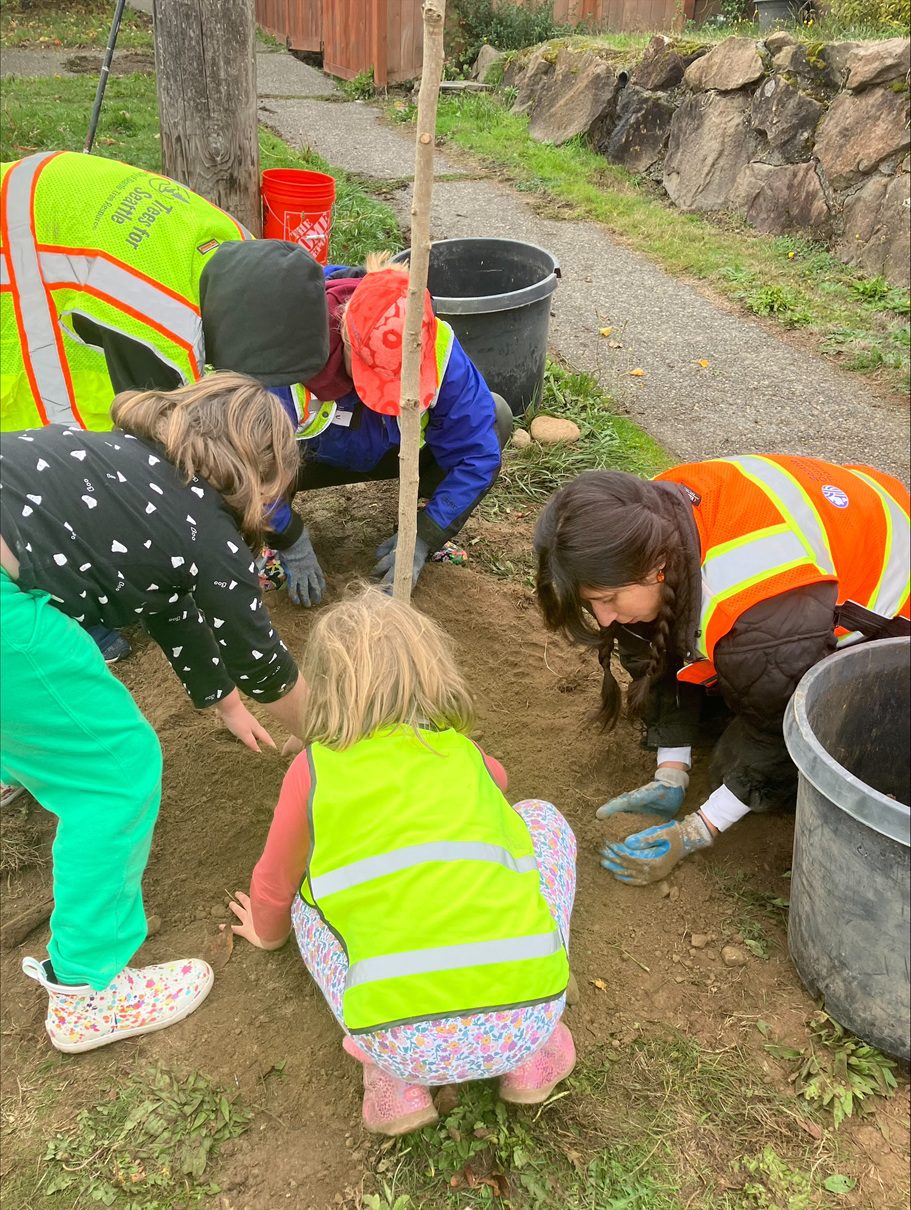
Happy Seattle Forest Week! Keep an eye out for new trees being planted in neighborhoods across the city this fall and beyond.