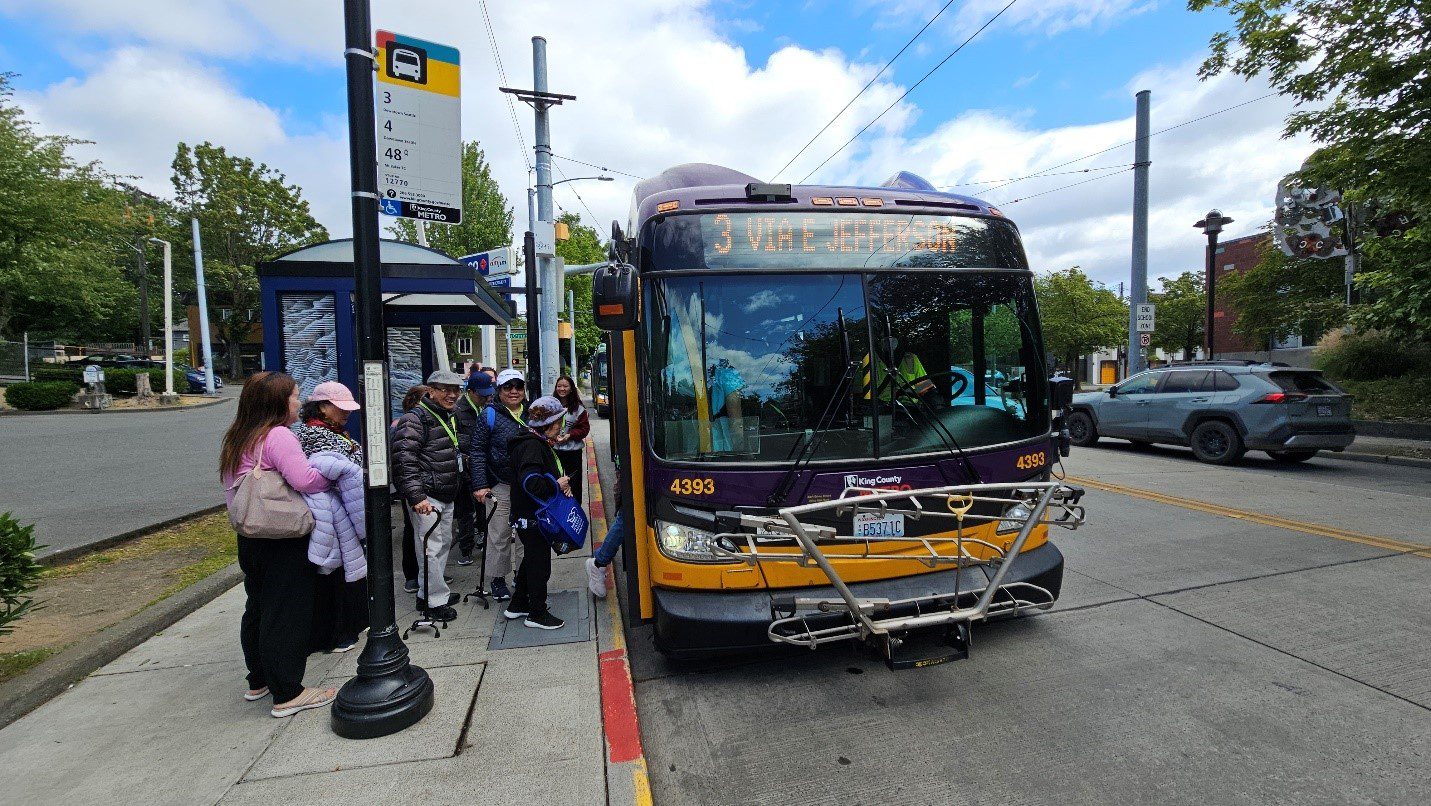
 Vietnamese Senior Association community members board a bus during a transit field trip event in Seattle. Photo: SDOT
 Blog stats: 1,000 words | 5-minute read
Summary:
- In 2024, the voter-approved Seattle Transit Measure (STM) invested in Seattle’s local transit network to make public transportation better, more reliable, and more accessible for everyone in our city.
- This included 1.7 million free transit trips for young adults, low-income residents, and aging adults; additional service on 29 bus routes in Seattle; and support for 19 large transit projects to make taking the bus easier, safer, and more reliable.
- STM investments improve transit accessibility and affordability, reduce emissions, foster vibrant community hubs, and maintain the infrastructure that connects people to reliable transit services. This work is organized into four core investment areas:
- Transit Service
- Transportation Access Programs
- Transit Capital Projects
- Emerging Mobility Needs
- STM investments are crucial in advancing goals outlined in the Seattle Transportation Plan (STP), including equity, maintenance & modernization, mobility & economic vitality, sustainability, safety, and livability.
- Read more below, and in the 2024 Seattle Transit Measure Annual Report.
In 2024, the voter-approved Seattle Transit Measure invested in Seattle’s local transit network to make public transportation better, more reliable, and more accessible for everyone in our city.
The Seattle Transit Measure (STM) represents a vital investment in our city’s public transportation network. The STM is a testament to Seattle’s commitment to improving transit access, with most STM revenue used to add bus trips in Seattle in addition to what King County Metro provides and prioritize bus service for people who rely on transit the most.
The STM generates over $50 million annually until early 2027 to fund investments in transit. Our new 2024 annual report highlights the progress and impact of the STM in supporting people in Seattle with reliable, safe, and accessible transit. It also shows how the STM supports the goals set forth in the Seattle Transportation Plan, a 20-year plan for the future of transportation in Seattle.
“This report highlights our continued advancements in public transportation services and underscores the critical role transit plays in fostering a more equitable, sustainable, and resilient Seattle. Since voters approved the Seattle Transit Measure in 2020, we have made strides in transforming how Seattleites connect with one another, with a focus on those who have historically faced limited transit access.” – Mayor Bruce Harrell
“Seattle Transit Measure investments are crucial in advancing goals outlined in the Seattle Transportation Plan, including equity, maintenance & modernization, mobility & economic vitality, sustainability, safety, and livability. The measure invests in improving transit accessibility and affordability, reducing emissions, fostering vibrant community hubs, and maintaining the infrastructure that connects people to reliable transit services. These achievements reflect our dedication to ensuring that every Seattleite has access to reliable transit options.” – SDOT Interim Director Adiam Emery
In 2024, the Seattle Transit Measure supported people in Seattle with reliable, safe, and accessible transit.
This work was organized into four core investment areas: Transit Service, Transportation Access, Transit Capital Investments, and Emerging Mobility Needs. Below, we outline several key achievements in 2024 within each of these investment areas, made possible thanks to the Seattle Transit Measure.
Transit Service
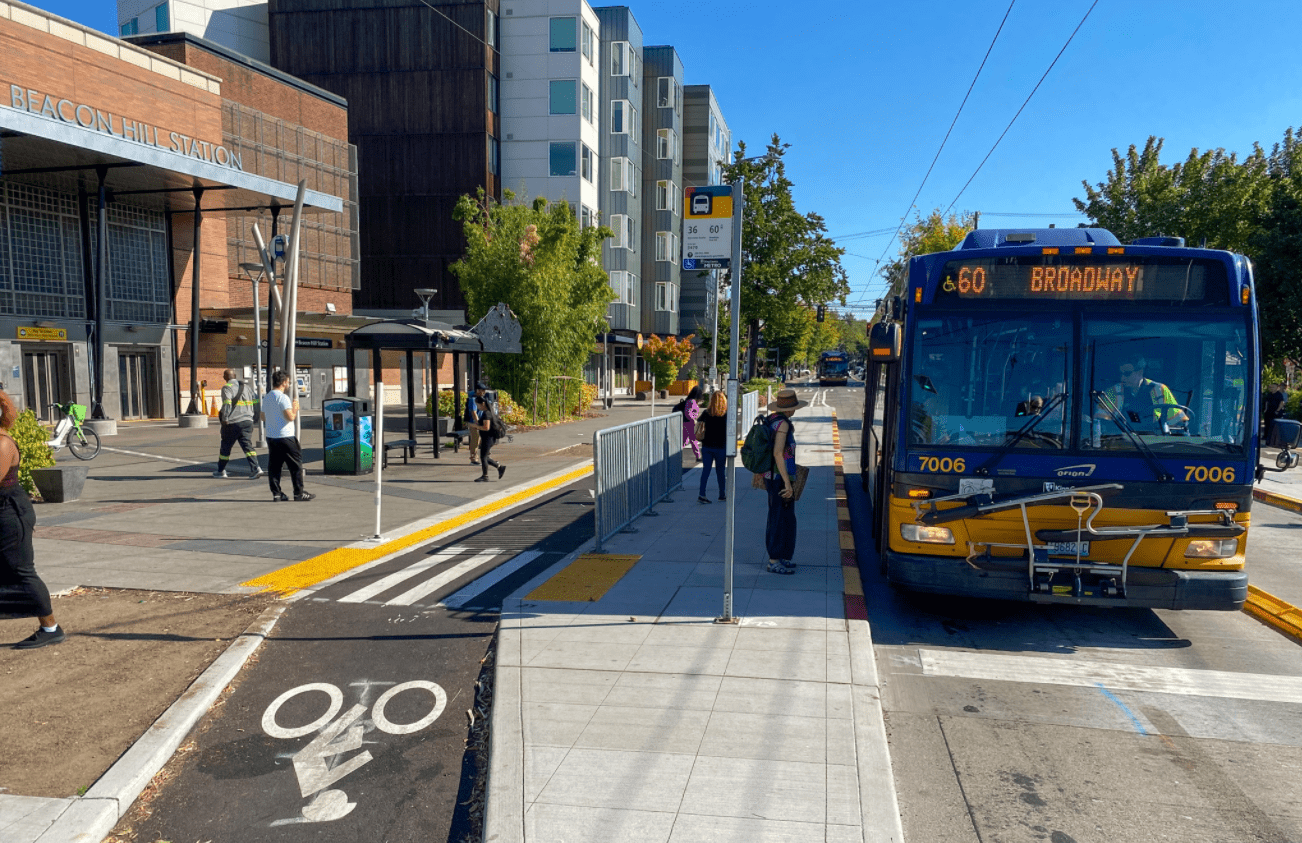
STM invested in more bus service citywide, including:
- Adding 143,000 hours of additional Metro bus service, focusing on equity priority areas and off-peak travel times
- Launching Metro Flex pilot in Delridge and South Park neighborhoods
- Funding 3,000+ weekly bus trips
- Funding 50% Of Metro’s Trailhead Direct service, including from Mount Baker Transit Center to the Issaquah Alps
Transportation Access
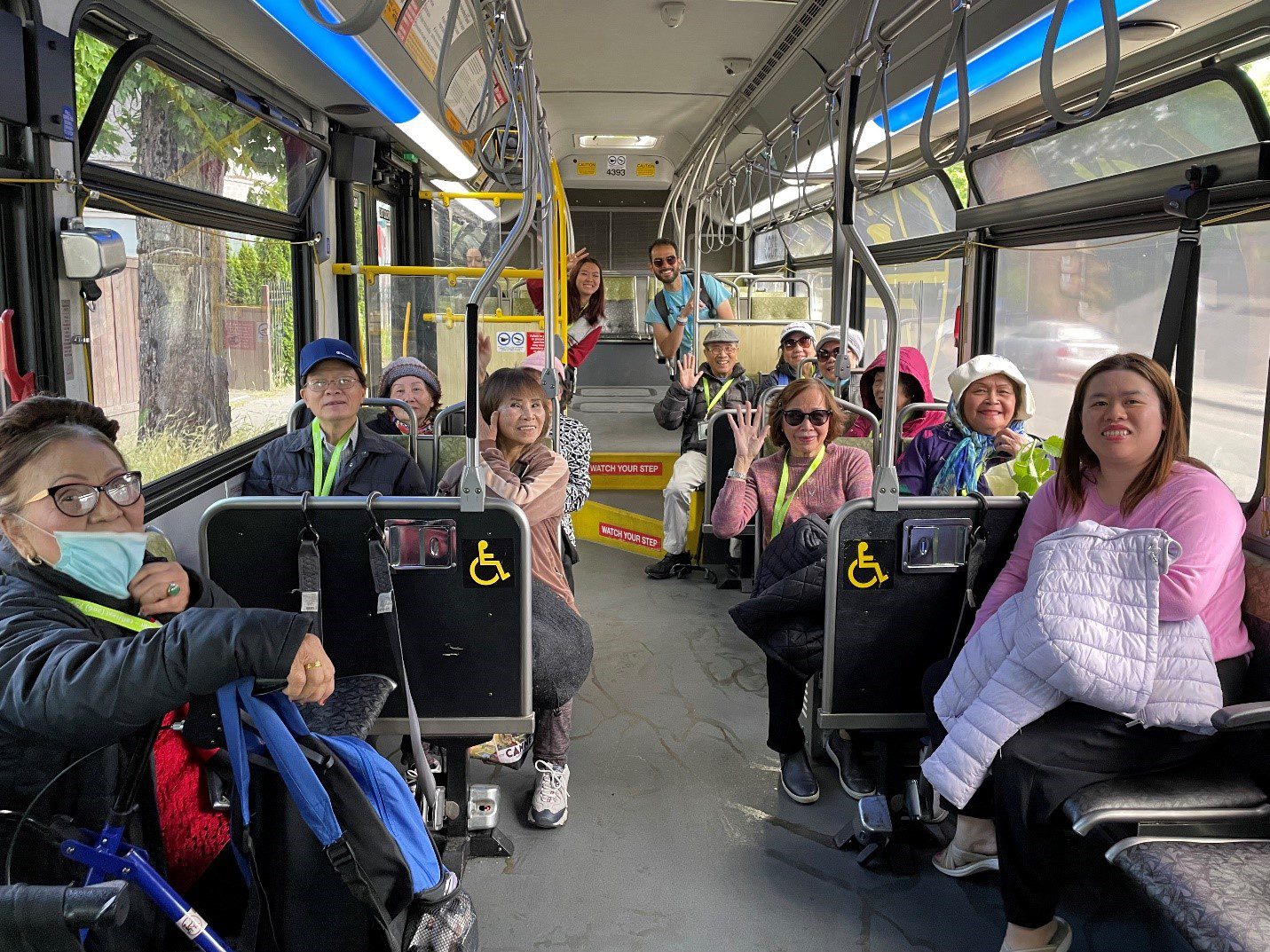
STM invested in transit for people who rely on transit the most by:
- Making it possible for Seattle Housing Authority (SHA) residents to take 1.2+ million transit rides under the SHA Transit Pass Program, which provides residents of SHA properties with an unlimited free ORCA card
- Hosting 12 transit-oriented field trips for older adults to gain confidence navigating their community on transit
- Funding 200,000+ transit rides for Seattle Colleges students as part of the Promise Scholar Transit Pass program
- Providing 17,000+ ORCA cards to food banks operating in partnership with the City of Seattle Connector Program and to Seattle parks visitors through the Seattle Parks and Recreation Scholarship Program
- Providing 1,500 ORCA cards to income-qualifying Seattle Preschool Program households during the 2024-2025 academic year
Transit Capital Investments
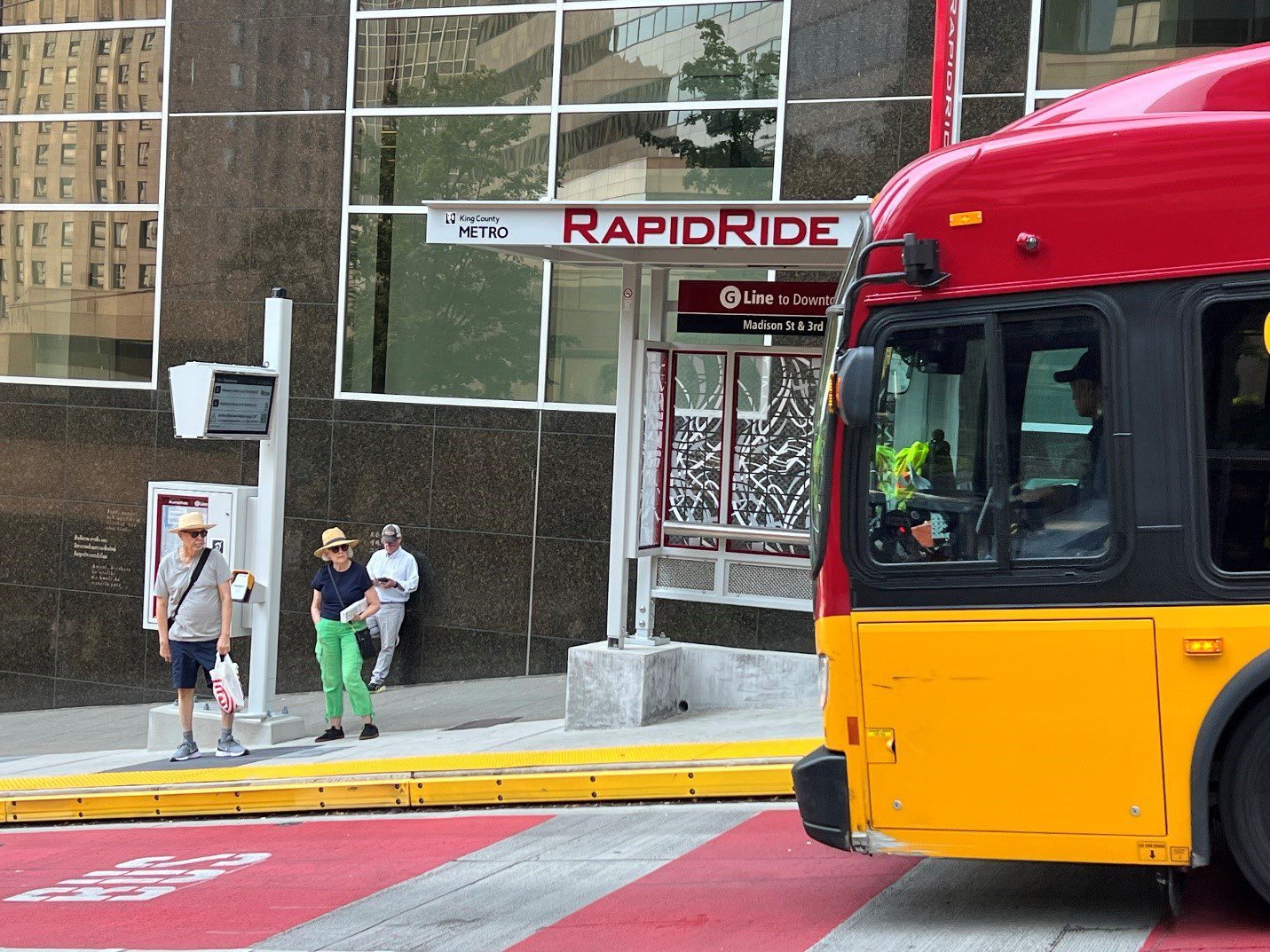
STM improved transit travel time and reliability, safe routes to transit and safety at bus stops, and wayfinding for people walking, rolling, and biking to transit stops through investments in:
- 19 capital projects
- 13 transit spot improvements
- 40 King County Metro bus routes benefiting from capital improvements
Emerging Mobility Needs

STM supported innovative partnerships with King County Metro to help boost transit ridership in Seattle and lower single occupancy vehicle use through the Transit GO Rewards (TGR) platform and the Bike and Scoot to Transit campaign. A 2024 Council budget action allotted up to $1 million of STM funds to support more Transit Ambassadors on King County Metro bus routes and Seattle Streetcar. In 2024, Transit Ambassadors were stationed in the Central District, Lower Queen Anne/Seattle Center, and Rainier Valley. Activities under Emerging Mobility Needs resulted in:
- 25,000 New TransitGO Rewards users
- 410,000 transit trips taken using TransitGO Rewards points
- 3,000 people took bike or scooter trips to transit
- 140 engagements between Transit Ambassadors and transit riders, helping them navigate the transit system or other needs
All in all, in 2024 STM strengthened neighborhood connectivity by increasing bus and streetcar service, which makes it easier for residents to access work, education, healthcare, and daily essentials – particularly in historically underserved areas.
Looking ahead to the final two years of the measure, we are guided by the Seattle Transportation Plan. In 2025, STM is funding additional transit service, continuing subsidized ORCA card programs, advancing research and work on transit safety, and updating branding and technology for the Downtown Circulator. The STM, along with the new Seattle Transportation Levy, will drive significant transit investments in the years ahead.