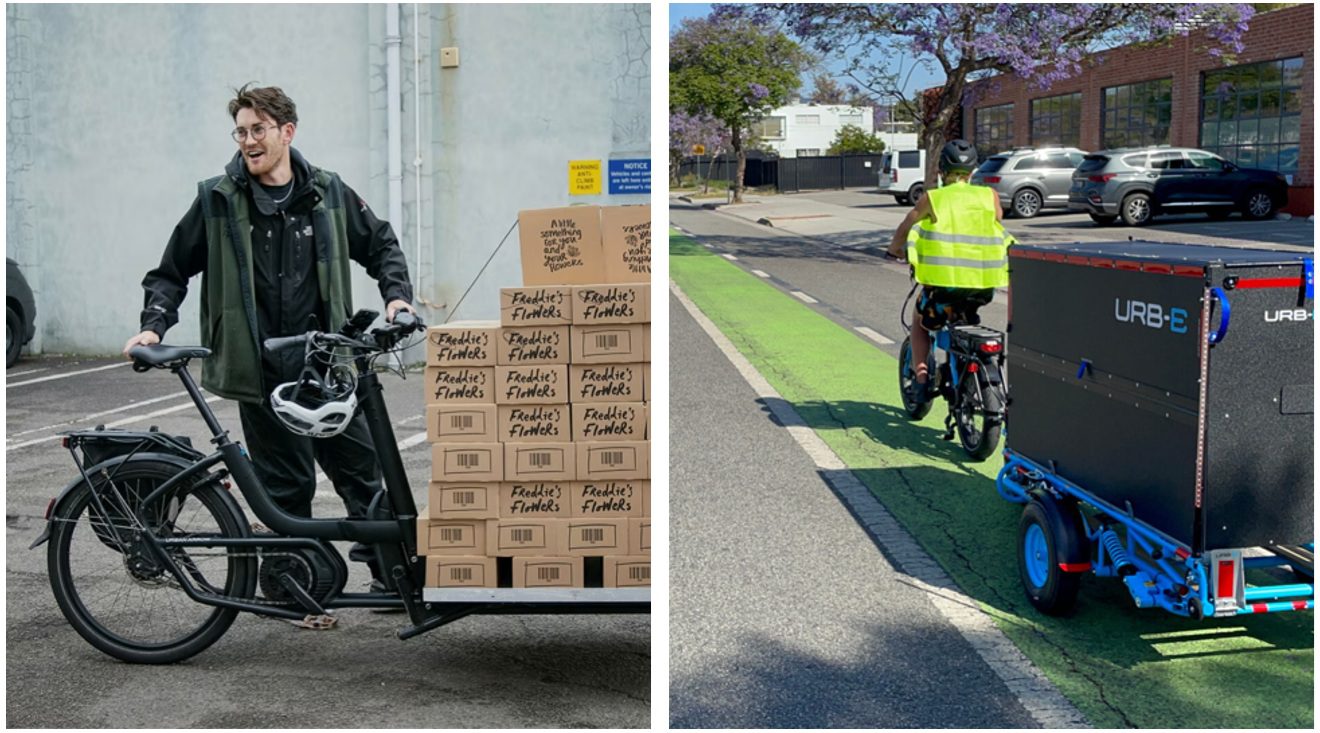
 Two examples of people using e-cargo bikes to deliver goods in an urban setting.
 Blog stats: 1,200 words | 6-minute read
Summary:
- The City of Seattle invites businesses to join Seattle’s new Commercial E-Cargo Bike Program to bring electric cargo (e-cargo) bikes into their logistics and delivery operations.
- Applications are now being accepted for e-cargo bike permits. We encourage you to contact the program lead, Katherine Rice, if you have questions.
- People using commercial e-cargo bikes can transport goods and equipment or conduct services, often replacing a car, van, or truck. They feature electric motors that can move cargo, have a variety of designs to suit many business needs, and may ride in the city’s growing network of bike lanes.
- E-cargo bikes can reduce transportation costs, improve efficiency, and promote sustainability for many companies in Seattle. Key benefits include:
- Cost-savings: E-cargo bikes are an estimated 40% cheaper to purchase and operate than delivery vans.
- Faster deliveries: According to one study, e-cargo bikes make deliveries 60% faster than delivery vans in urban areas.
- Better branding: E-cargo bikes offer companies space to boost brand visibility and help signal commitment to the environment.
- In September 2025, the Seattle City Council passed legislation adopting commercial e-cargo bikes as a legal vehicle type and allowing SDOT to permit their ability to park at the curb. SDOT is now ready to launch its Commercial e-Cargo Bike Program.
- Businesses operating commercial e-cargo bikes for delivery in the City of Seattle need a permit to park in designated areas and operate larger cargo bike types. E-cargo bikes may otherwise operate in Seattle without a permit – but they will not have legal access to park at the curb in these zones.
- This program advances the City’s climate goals within the Climate Change Response Framework, Climate Executive Orders from 2022 and 2025, and the 20-year vision in the Seattle Transportation Plan.
Addressing the challenge of more deliveries in Seattle
In the Puget Sound region, deliveries of packages, food, and grocery items more than doubled between 2019 and 2021. Growing delivery volumes can add cost and complexity for businesses, while increases in delivery-related traffic contribute to congestion on streets, competition for limited curb space, and added air pollution. Seattle’s freight network is expected to carry 42% more goods by 2050, using the same amount of street space we have today.
The City of Seattle is addressing these challenges by taking action to create a cleaner, safer, and more equitable transportation system. A big part of our approach is to pursue opportunities to reduce the size of vehicles on Seattle streets and transition from fossil fuels (like gasoline and diesel fuel) to zero-emission energy sources (like electric vehicles and e-cargo bikes).
To determine how to develop and launch programming, the City of Seattle worked with C40 Cities and consultants to ensure our program would best fit the business community in Seattle, including outlining the comprehensive process Seattle went through to help other cities considering similar programs as described in a recent case study. After engaging with global experts on zero-emissions freight and studying peer cities like New York and Boston that are also grappling with increased deliveries, we’ve worked to prioritize a transportation mode that could help address many of these challenges: the e-cargo bike.
We encourage businesses of all sizes that might be interested in using e-cargo bikes to complete our short application to for an e-cargo bike permit, or visit the permit website linked there if you’re interested in learning more.
Introducing e-cargo bikes: key features & benefits
E-cargo bikes are specialized electric bikes designed to transport goods and equipment. They are often capable of replacing a car, van, or truck.
Key features include:
- Electric, zero-emission power: E-cargo bikes are battery-powered with electric motors to assist riders. The motors allow people riding them to cover longer distances, haul much larger loads, and navigate Seattle’s hilly terrain.
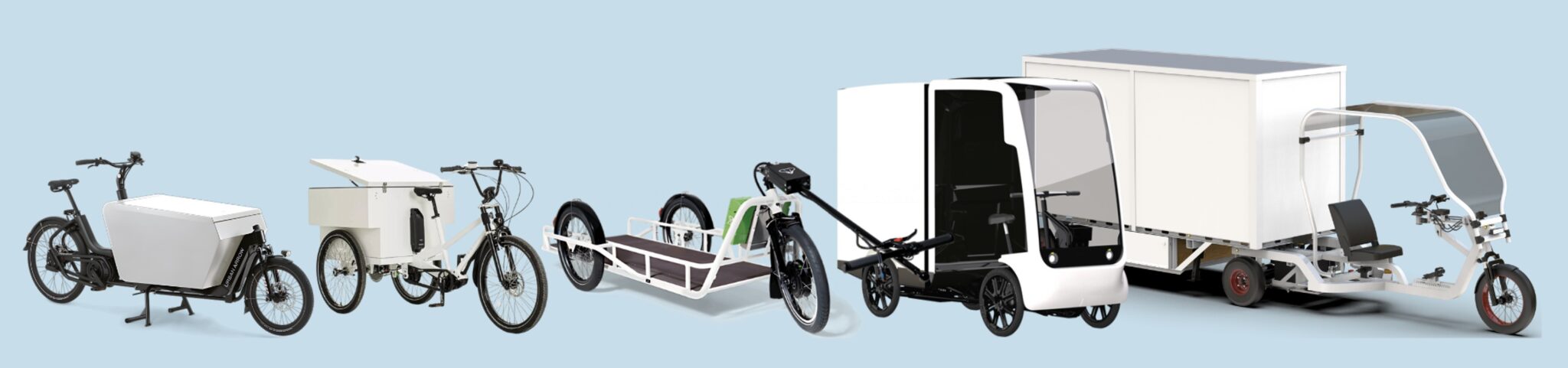
- Designed to transport goods: There are many different designs for e-cargo bikes. Each design includes a cargo area (in the front or rear of the bike) and some also use a trailer attachment. Some e-cargo bikes can carry up to 1,000 pounds of goods!
- Use bike lanes: E-cargo bikes are designed to share bike lanes with people riding bikes and scooters, allowing riders to avoid sitting in traffic, resulting in real time savings. E-cargo bikes permitted under this program will have a 15 mile per hour speed limit to help ensure safe operations for everyone.
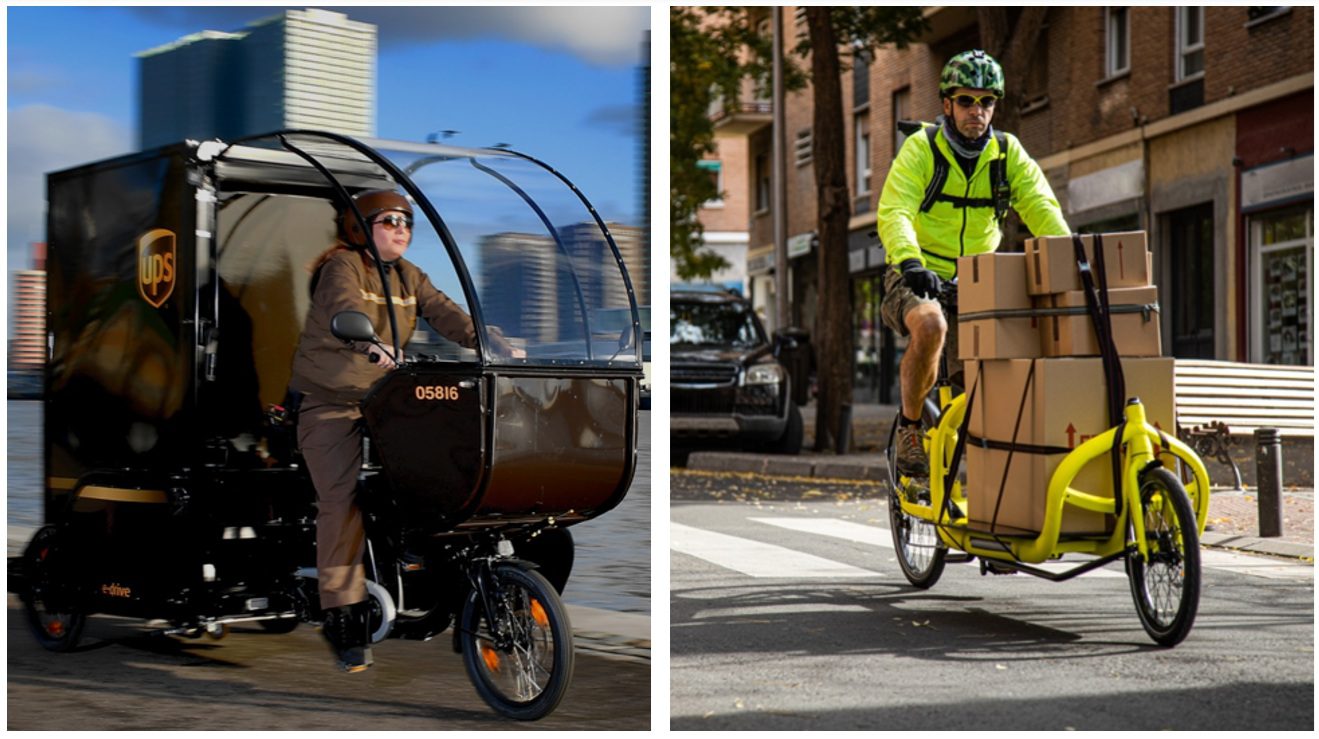
E-cargo bikes come in a wide variety of forms, shapes, and sizes to fit many different business needs, riders, and services. For example:
- Flatbed options to deliver goods that are too large for an enclosed compartment
- Refrigerated options to deliver goods that need to stay cold
- Protected compartments for tools and supplies for service calls
- Enclosed rider areas to keep you dry during the rainy months
Incorporating e-cargo bikes into a business fleet can deliver key benefits:
- Cost-savings: E-cargo bikes are an estimated 40% cheaper to purchase and operate than internal combustion engine vehicles, lowering overhead costs.
- Faster deliveries: According to one study, e-cargo bikes make deliveries up to 60% faster than delivery vans in urban areas thanks to dedicated bike lanes that help bypass traffic congestion, flexible parking options to reduce time spent looking for parking, and easier vehicle maneuvering.
- Better branding: Many e-cargo bikes provide space for companies to boost brand visibility and signal their commitment to the environment.
About SDOT’s Commercial E-Cargo Bike Program
SDOT’s Commercial E-Cargo Bike Program will make it easier for Seattle businesses and organizations to use e-cargo bikes as delivery volumes continue to increase.
We’re excited to work with local businesses of all sizes to help our freight network become more efficient and cost-effective while keeping Seattle on track toward our transportation and climate goals.
SDOT’s new Commercial E-Cargo Bike Program:
- Creates a formal legal vehicle definition that includes many different e-cargo bike designs to meet diverse commercial needs.
- Provides permitted commercial e-cargo bike access to select curbside parking and loading zones.
- Waives the cost of e-cargo bike permits until 2027 (after which they will be $100 per e-cargo bike annually, compared to $250 for permitted motor vehicles to use Commercial Vehicle Loading Zones.
Learn more about the program and apply for e-cargo bike permits today on the SDOT Commercial E-Cargo Bike Program website.
What’s next for the program?
We encourage businesses of all sizes considering using e-cargo bikes to complete our short application for e-cargo bike permits now, or visit the permit website if you’re interested in learning more.
SDOT is working on how to support this exciting new addition to our city’s urban freight network including other strategies identified in the 20-year Seattle Transportation Plan and its Curbside Management Element.
We’re also planning to work with business organizations in neighborhoods across Seattle to highlight the new program and share how it could work to meet their needs.
Let us know if you’d like to receive future updates about the program by emailing ecargobikes@seattle.gov and be sure to visit our SDOT Commercial E-Cargo Bike Program website for the latest information.
Thank you for your interest in this program as it rolls out!