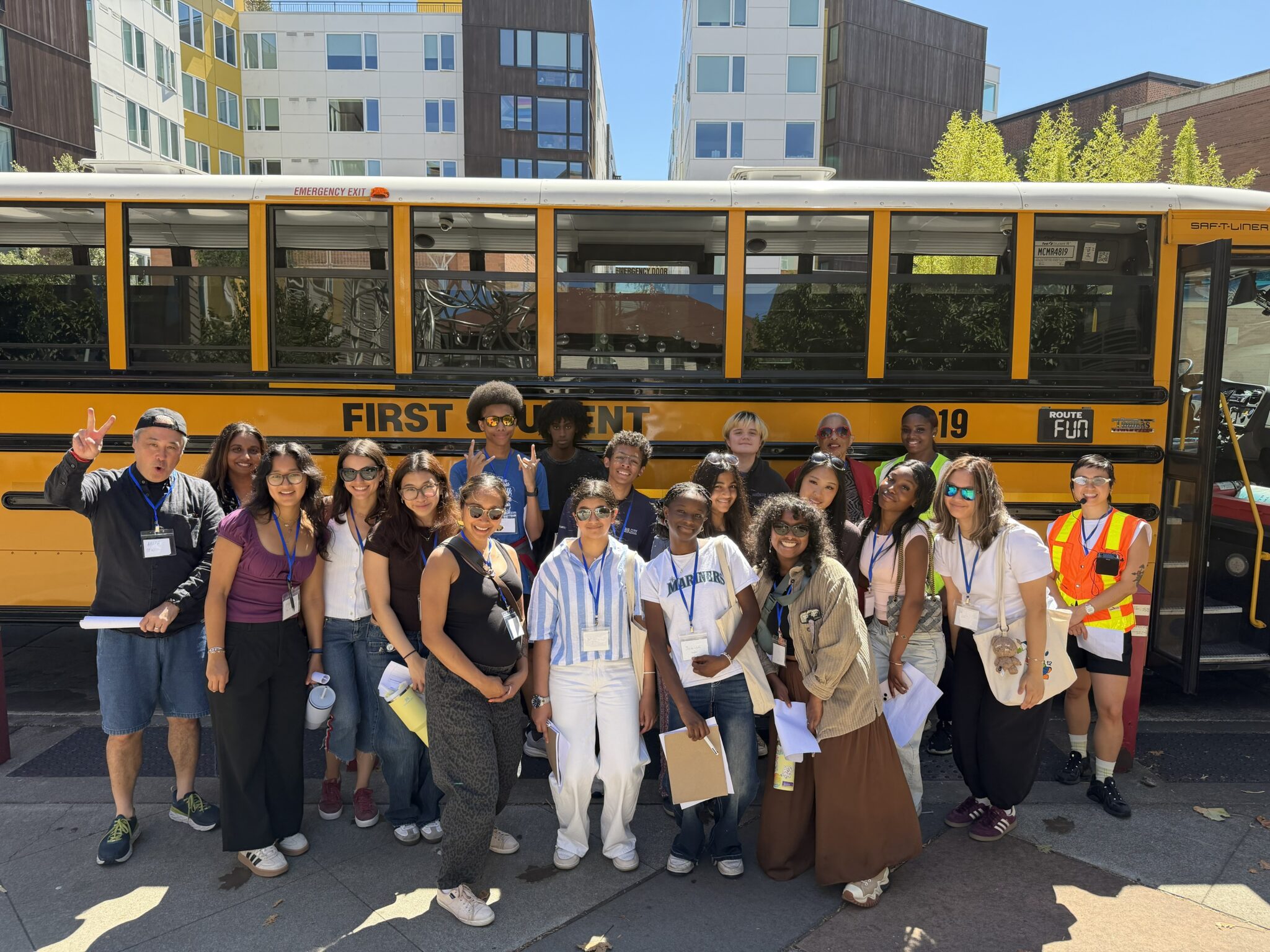
 Youth participants, Seattle Transportation Equity Workgroup members, and SDOT staff standing in front of a school bus near the Beacon Hill Link light rail station during the Safety Module of the 2026 Youth Mentorship Program. Photo: SDOT
 Blog stats: 1,000 words | 5-minute read
At-a-glance:
- This August, we hosted the second annual Youth Mentorship Program co-led by the Seattle Department of Transportation’s Office of Equity and Economic Inclusion and the Transportation Equity Workgroup!
- The mentorship program empowers young people, ages 15-18, from communities across Seattle and King County, to learn about SDOT’s transportation equity work and develop advocacy skills for representing their communities’ needs. Youth participants were compensated for their time and participation.
- The mentorship program spanned three weeks, with six different modules led by SDOT subject matter experts on the following topics:
- Community and Mobility Hubs
- Race and Social Justice
- Safety and Vision Zero
- Climate
- SDOT Investments
- Advocacy
- Participants worked in groups to deliver a capstone project, which they shared with Seattle City Councilmember Rob Saka, Division Directors at SDOT, and Transportation Equity Workgroup members.
Key focus areas: six unique modules
As part of their Orientation, we helped prepare youth participants on the role and scope of SDOT’s work as a municipal transportation agency. This includes resources like our Transportation Equity Framework, which is the department’s roadmap to ensure accountability as we implement equitable policies, projects, and programs to better serve Seattle residents and the traveling public.
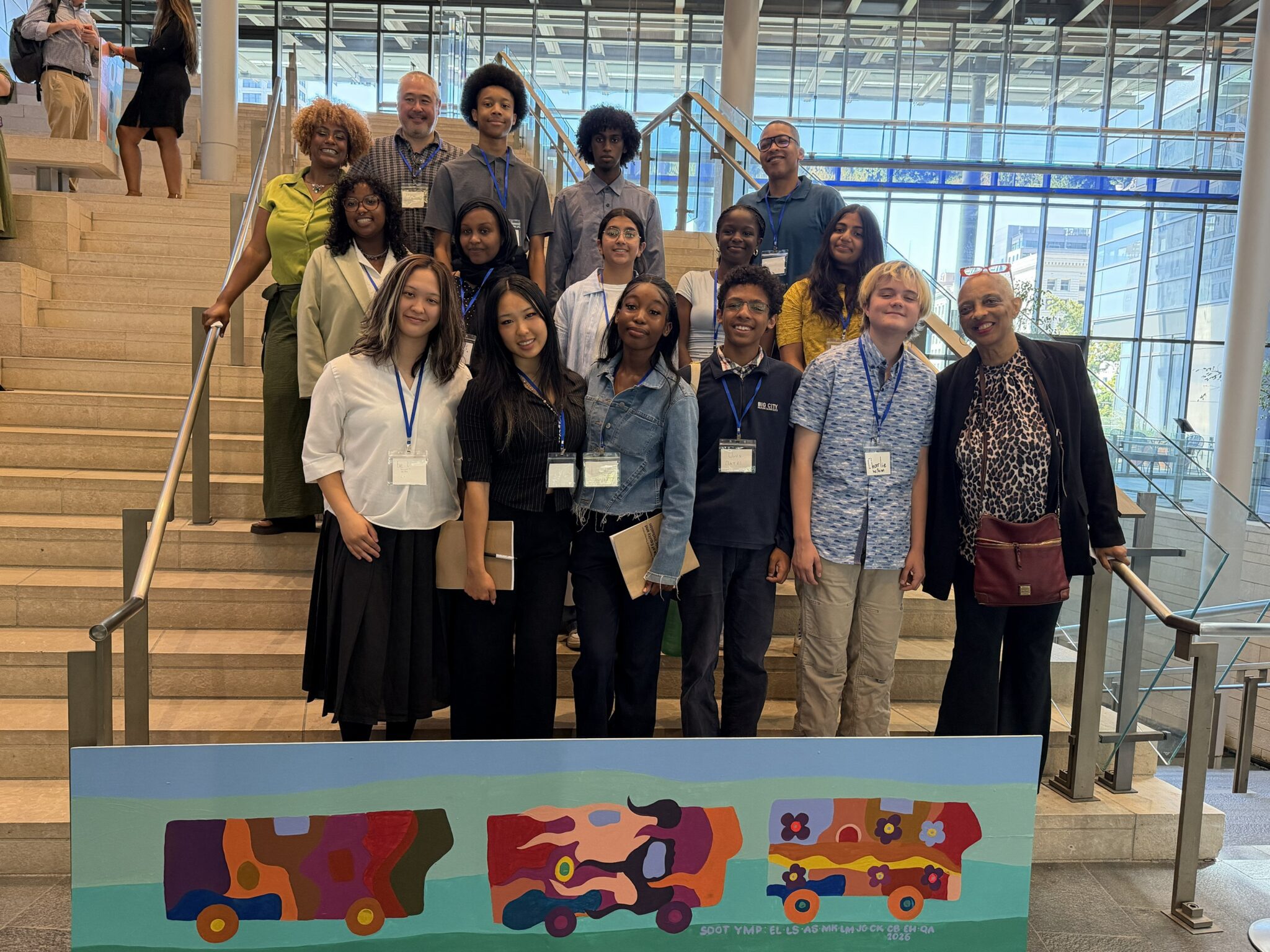
In Module 1, participants learned about SDOT’s Community and Mobility Hubs Program, which takes a participatory approach to designing joyful public spaces for communities to gather and access transit. The group visited local artists Angelina and Claudia Villalobos’s studio to paint a mural showcasing their vision for an ideal transit station.
During Module 2, members of SDOT’s Race and Social Justice Change Team led the youth participants through discussions about mobility justice. Seattle Streetcar Operations and Maintenance Supervisor, Staci Little, led a tour of the South Lake Union streetcar line.
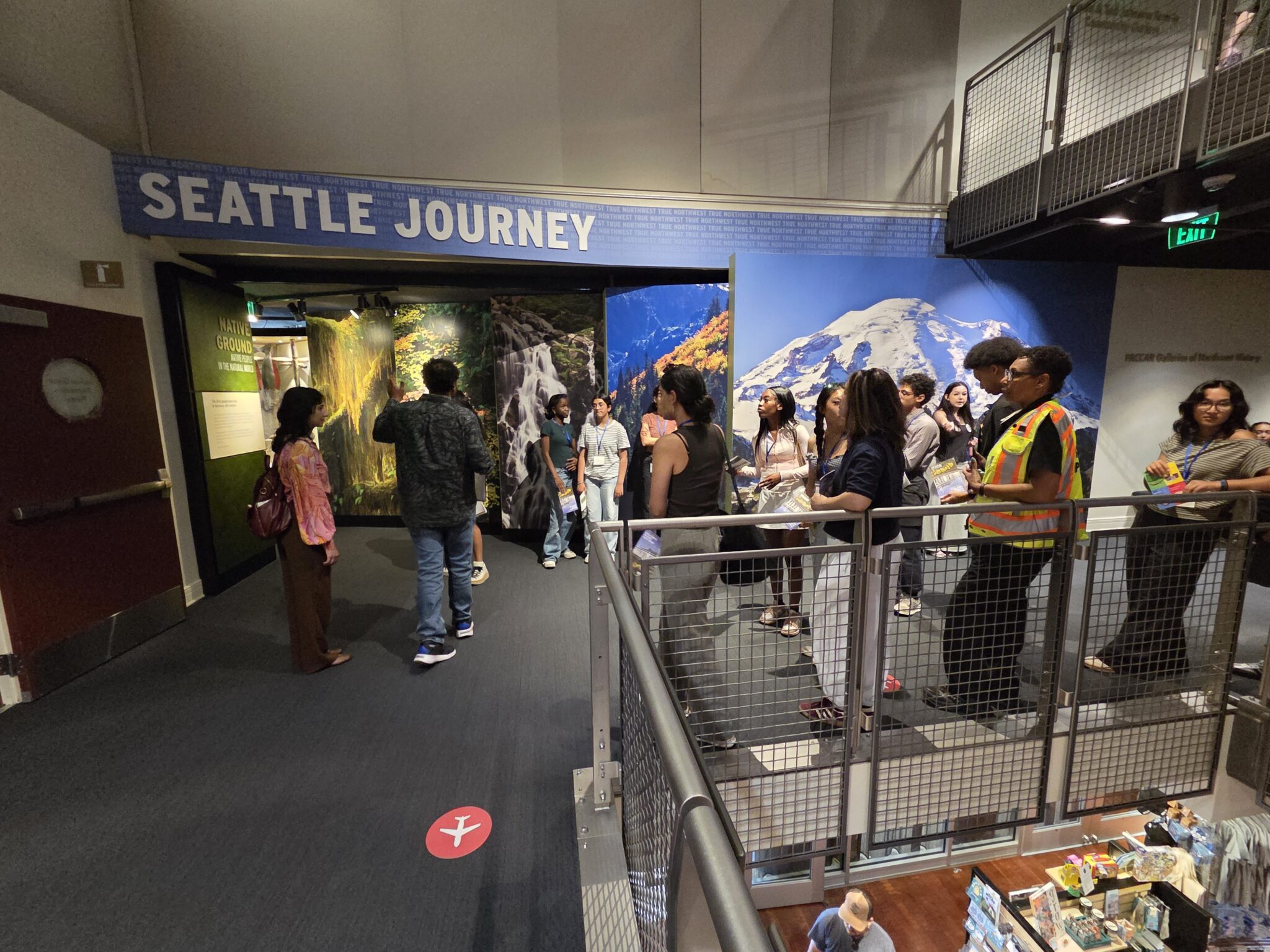
After the meeting, the streetcar transported the group to the Museum of History & Industry (MOHAI), where youth explored an exhibit on native and settler history in Seattle. Participants considered how human interactions with the environment have impacted mobility and which populations have benefited or been burdened.
In Module 3, staff from SDOT’s Vision Zero and Safe Routes to School teams shared overviews of their work to improve travel safety across the city. The group took a field trip to street intersections in South Lake Union and Beacon Hill. SDOT has recently built a variety of travel safety improvements in these neighborhoods – things like wider sidewalks, more crosswalks, new protected bike lanes, and easier access to bus stops and light rail stations – to help people with their everyday trips.
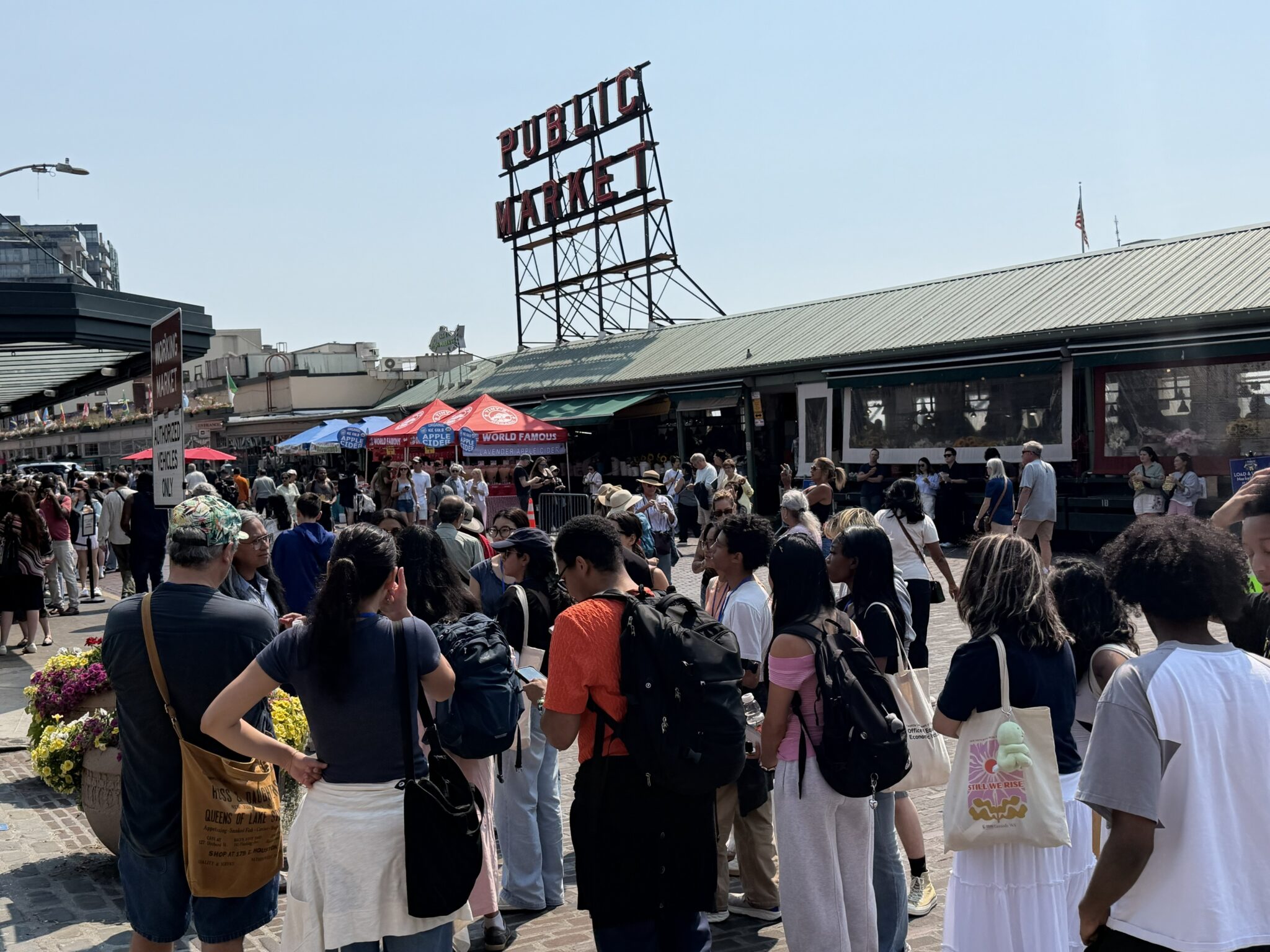
Module 4 focused on climate change and how SDOT is working to address the challenge and strengthen the city’s climate resilience for the future. The group toured pedestrian-friendly projects along Seattle’s central waterfront and in Pike Place Market. They considered the importance of safe, comfortable public spaces that help encourage sustainable travel options – things like walking, biking, rolling, and riding transit.
In Module 5, the group connected their learnings to SDOT’s funding and investment mechanisms. Youth reflected on how historical redlining has led to disinvestment in communities of color and discussed how the City of Seattle is working to undo the lasting inequities of these decisions. Youth took the First Hill streetcar line through the Chinatown-International District to see some recent investments in public art, lighting, sidewalks, and more.
Finally, Module 6 gave the youth an opportunity to share their perspectives with City leaders by presenting their capstone projects to Seattle City Councilmember Rob Saka, SDOT Division Directors, and the Transportation Equity Workgroup (more on this below). A graduation ceremony was held to celebrate the participants’ accomplishments over the three-week duration of the mentorship program.
In their own words
We asked participants: “What have you learned that you want to take back to your community?” Here are a few of their responses:
“I took back how we have so much input to how transportation is in the city. I always thought, ‘The bus wasn’t working – it doesn’t matter,’ but now I see that we can give our input and make a change.” – Program Participant
“I would take back everything I’ve learned here. I didn’t know much about transportation, thought it was just bus/train thing, but now I see that it’s so much more – trees, streets. My community probably also doesn’t know, so I’d want to teach them there’s more…” – Program Participant
“I want to bring back to my community the idea of a people street so that people can gather, learn, and discuss what needs to be changed to bring to the city” – Program Participant
The culmination: capstone projects
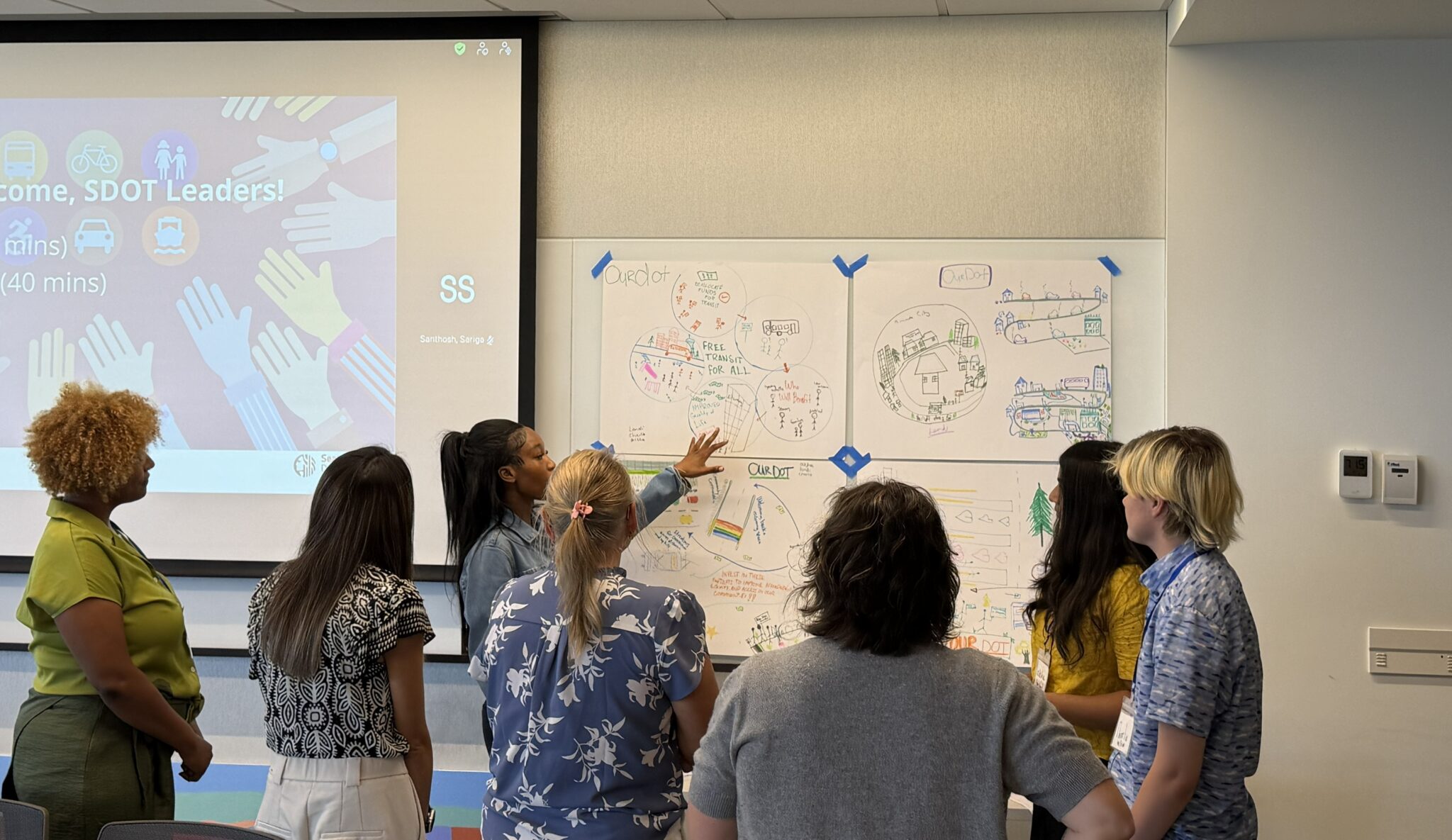
This year’s program deepened youth engagement by adding a new two-part capstone project. The first part was the bus stop mural the youth created with local artists Angelina and Claudia Villalobos during the Orientation and Module 1.
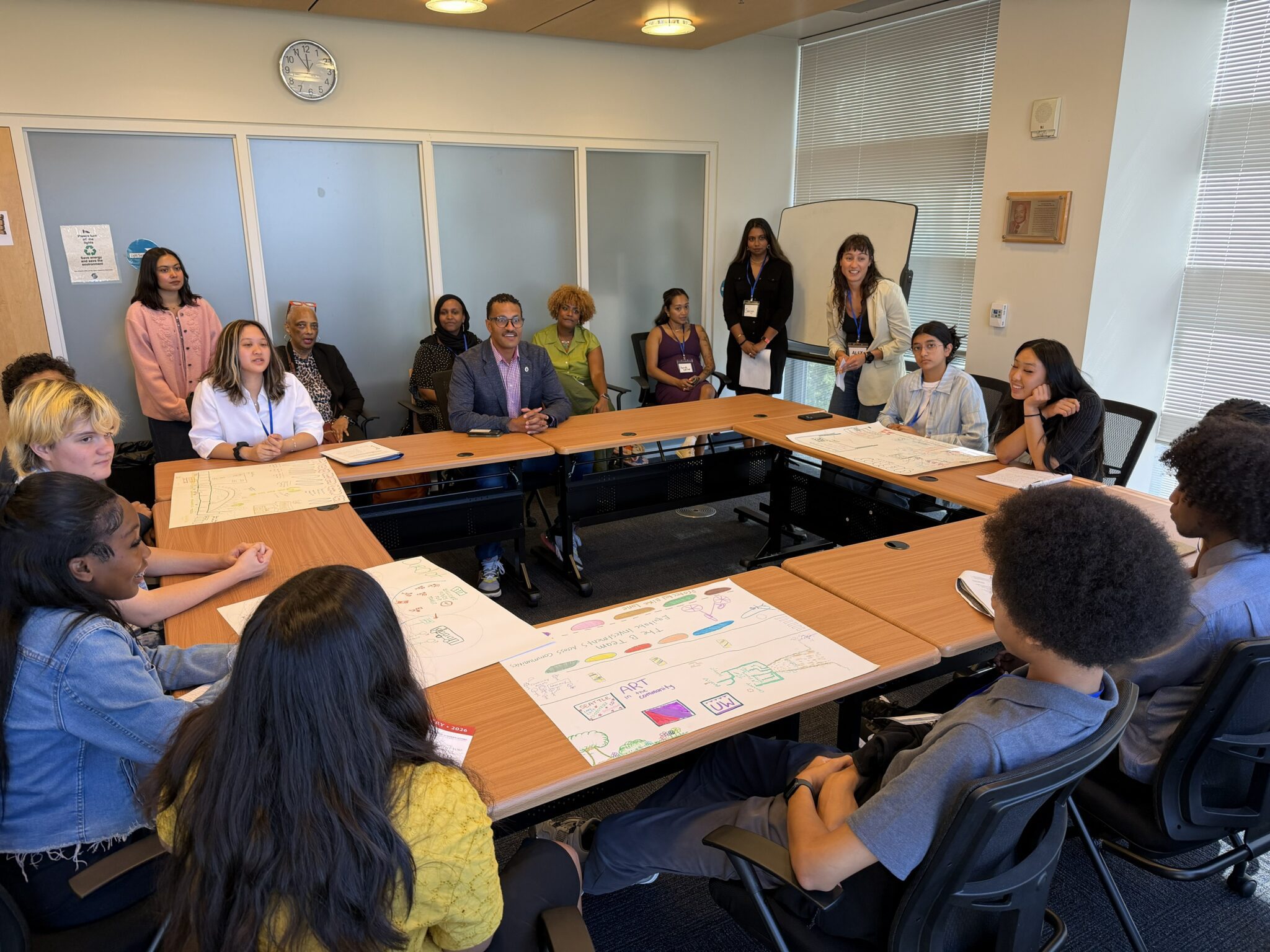
The second part encouraged youth to creatively reflect on their learnings through storyboards. Working in small groups with Transportation Equity Workgroup members, youth engaged in guided discussion about each module topic. Then, they created colorful posters showing their vision for transportation equity surrounding each topic and their group’s shared value.
The shared values youth participants chose were:
- Equitable Investments
- Transparency in the Decision-Making Process
- Green and Walkable Communities
- Transit Affordability and Access
After completing their posters, youth presented their transportation visions to SDOT Division Directors, Transportation Equity Workgroup members, and Councilmember Rob Saka as part of the final module.
Thank you to everyone who supported the mentorship program and participated in making it come to life for our second year!
If you’d like more information or know a young person in your life who might be interested in similar opportunities, please reach out to transportationequity@seattle.gov. Thanks again for your interest.