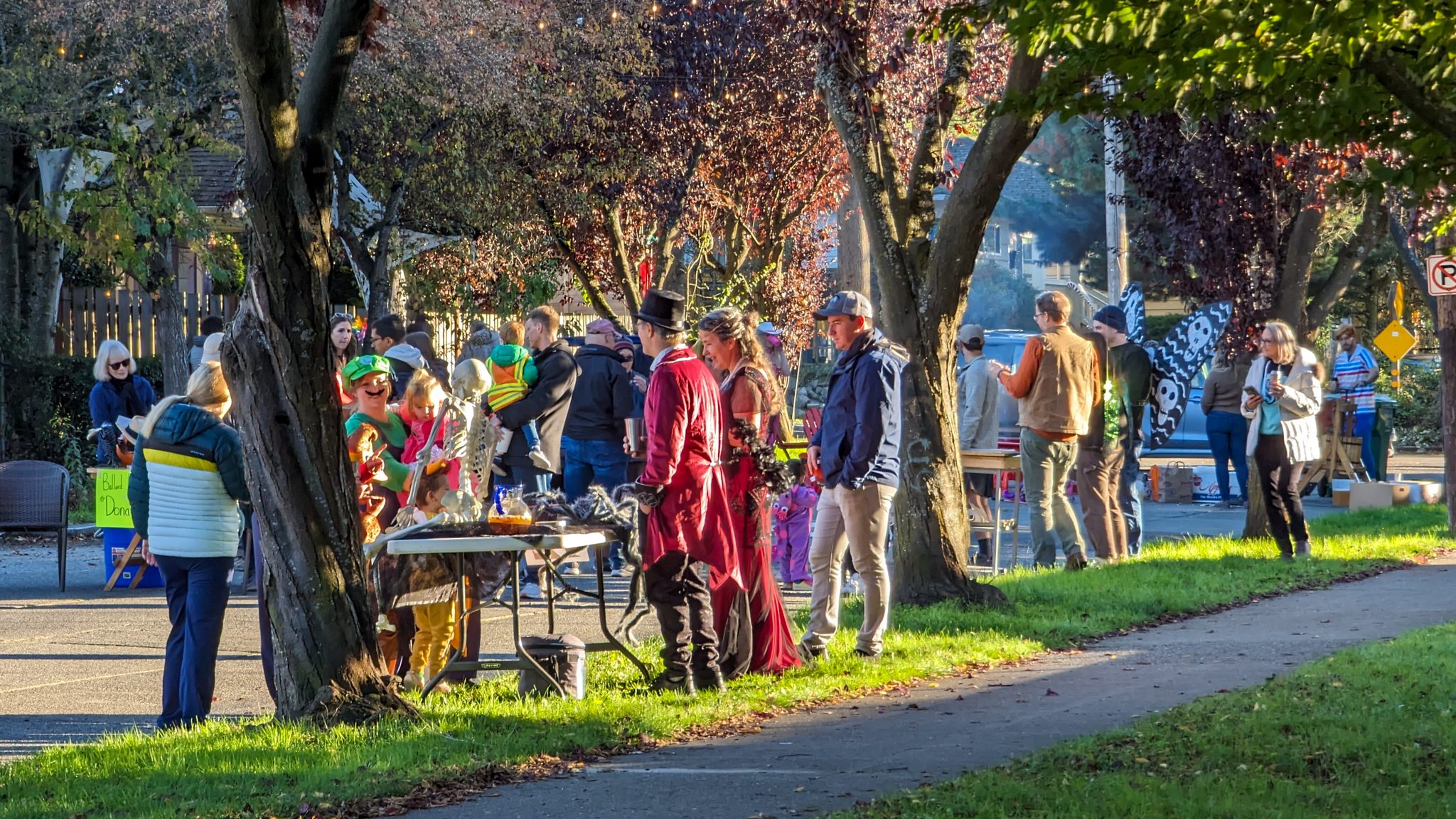
 People celebrate Halloween with fun costumes and smiles. Photo: SDOT
 Blog stats: 800 words | 4-minute read
At-a-Glance:
- Trick-or-Streets is a wonderful way to celebrate Halloween and Día de Muertos with your neighbors.
- You can apply here to host an event on your block. Applications are due by October 20, and approved events can occur between October 21 and November 2.
- You’ll find helpful details below in this blog post. You can also visit our website to learn more or email us at SDOTpermits@seattle.gov for guidance.
- We hope you enjoy community building and fall festivities by participating this year.
- Multi-block street closures of up to three consecutive blocks are permitted during Trick-or-Streets, perfect for parades, scavenger hunts, and more. The cross streets must remain open to through traffic.
This blog post is available in multiple languages, including Spanish, Somali, Vietnamese, and Traditional Chinese, via the links below:
- Organice una celebración de calles seguras para pedir dulces (Trick-or-Streets) en su cuadra – Presente su solicitud antes del 20 de octubre
- Martigeli debbaaldeg Trick-or-Streets ah oo ku qabo balooga wadadaada – Gudbi codsi ka hor Oktoobar 20
- Tổ chức lễ hội Trick-or-Streets tại khu phố của quý vị – Nộp đơn đăng ký trước ngày 20 tháng 10
- 在您的街區舉辦「不給糖就搗蛋」的街道活動 — 請於 10 月 20 日前提出申請
Halloween is one of our favorite times of the year! It brings together families, friends, and neighbors through creative costumes, festive home décor, and impressive pumpkin carvings. To help you enjoy the Halloween spirit, we’re providing a Trick-or-Streets promotion between October 21 and November 2. During this time, you can get a permit to close your street for Halloween or Día de Muertos, free of charge, so long as your event is open to the public.
Here’s how it works
You can have more fun during Trick-or-Streets with a multi-block street closure of up to three consecutive blocks. This is perfect for neighborhood walks in costumes, scavenger hunts, and other activities. Multi-block closures are best only where the cross streets are residential streets (with no yellow or white lines). Cross streets must remain open so people driving can pass through.
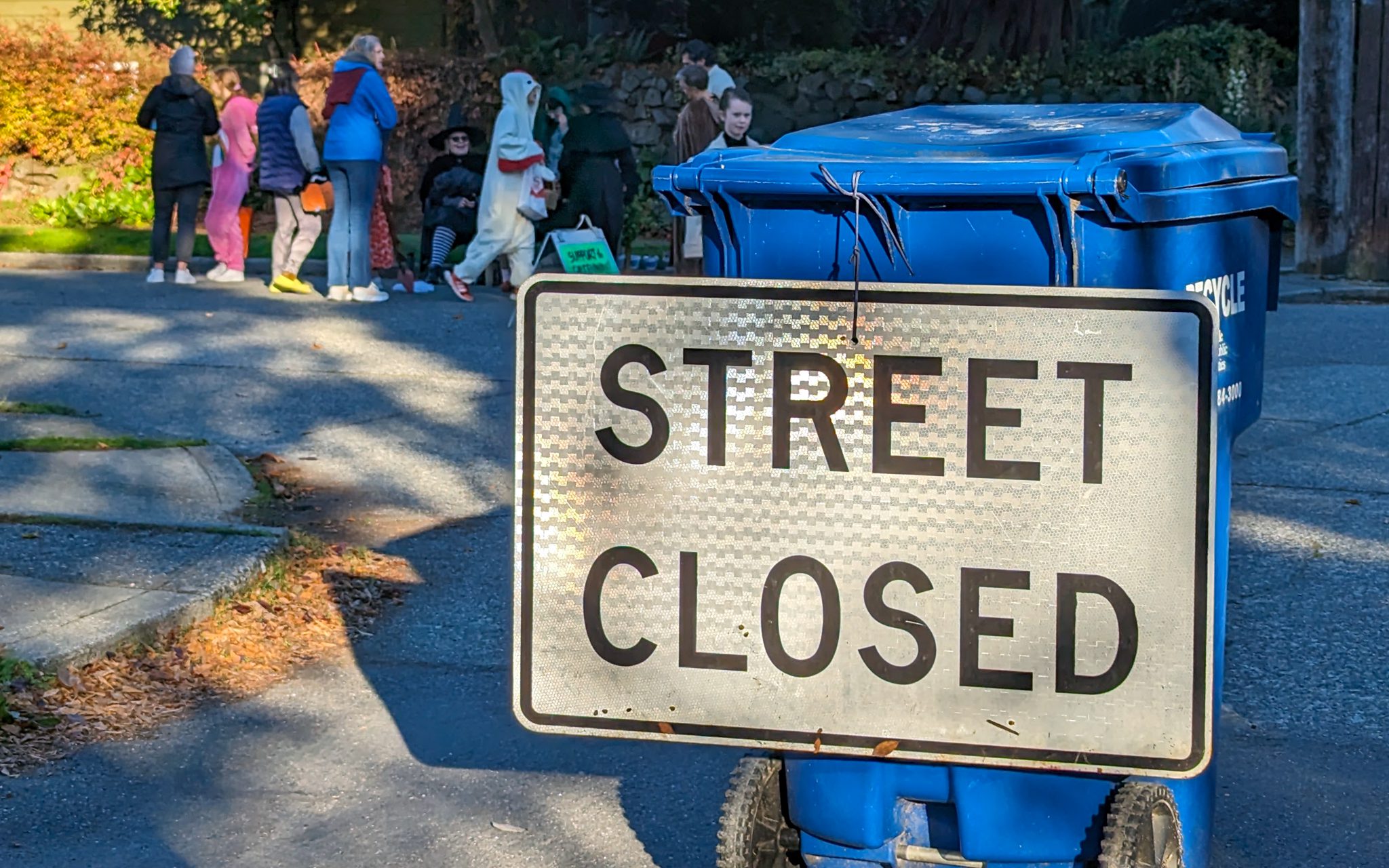
Street closures can last until 10 PM. If your event goes past dusk, you must:
- Put reflective tape on your street closure signs and barricades to make sure they’re visible at night.
- Be sure to communicate with your neighbors before your planned event so they know the street closure is happening.
- Have an adult monitor at the end of each block.
Ready to apply?
If you want to apply, submit a simple registration form (see link below) as soon as possible. The earlier you submit, the earlier we can review your request. You must submit your request by October 20, 2026.
Here’s how you can apply:
- Use this simple registration form to sign up to participate.
- Call (206) 684-7623 for help signing up.
- Interpreters are available to assist you for free.
If you live on a Healthy Street, hosting an event is even easier!
Since your street already has barricades and “STREET CLOSED” signs, you do not need any additional permits to hold a Trick or Street on an existing Healthy Street.
You’ll still need to follow the guidelines within our street closure checklist and let people driving know about your planned activity.
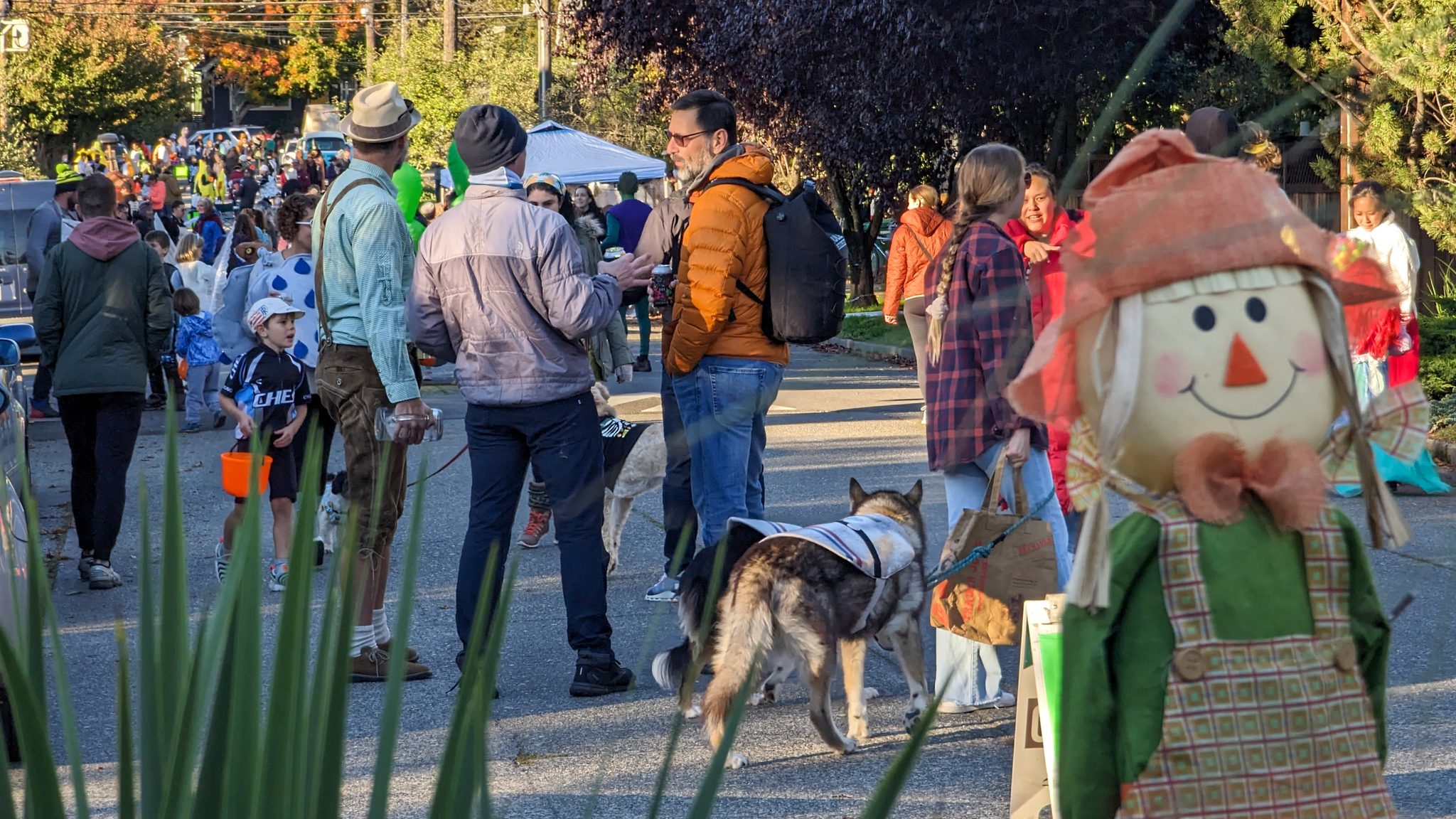
Share your Trick-or-Streets experiences, ideas, memories:
- Tag SDOT on social media @Seattledot
- Tell us about your experience with an email to publicspace@seattle.gov
Or, let us know if you would like to share your experience on the simple registration form!
More celebrations taking place in Seattle
Seattle Center
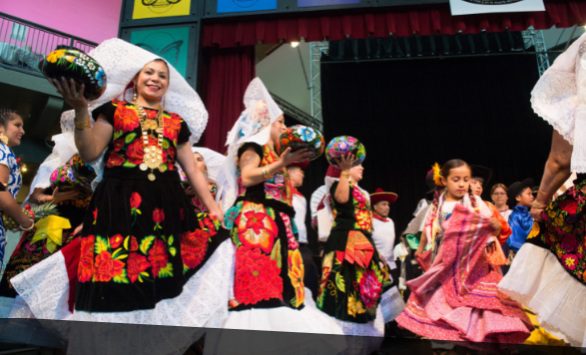
- The Día de Muertos Festival Seattle will take place on October 31 to November 1, 2026, from 11 AM – 6 PM at the Armory Food & Event Hall and Fisher Pavilion.
- The festival is part of the Seattle Center Festál series. It is free and open to the public.
- For more information, visit the Día de Muertos Festival Seattle website.
Other Trick-or-Streets around the city
Check out our map of street closure activations across the city: Block Parties and Play Streets
The difference between Halloween and Día de Muertos
Hola, everyone! Día de Muertos originated in ancient Mesoamerica (Mexico and northern Central America) where Indigenous groups, including Aztec, Maya, and Toltec, had specific times when they commemorated their loved ones who had passed away. Certain months were dedicated to remembering the departed, based on whether the deceased was an adult or a child.
After the arrival of the Spanish, this ritual of commemorating the dead was intertwined with two Catholic Spanish holidays: All Saints Day (Nov. 1) and All Soul’s Day (Nov. 2).
Día de Muertos is often celebrated on Nov. 1 as a day to remember children who have passed away, and on Nov. 2 to honor adults.
Today, Día de Muertos is celebrated mostly in Mexico and some parts of Central and South America. Recently, it has become increasingly popular among Latino communities abroad, including in the United States.
Día de Muertos is not a day for mourning. Families celebrate by placing an offering with food, fruit, and other items the departed liked when they were alive. Also, music and colorful ornaments placed around the offering welcome the spirit of the deceased.