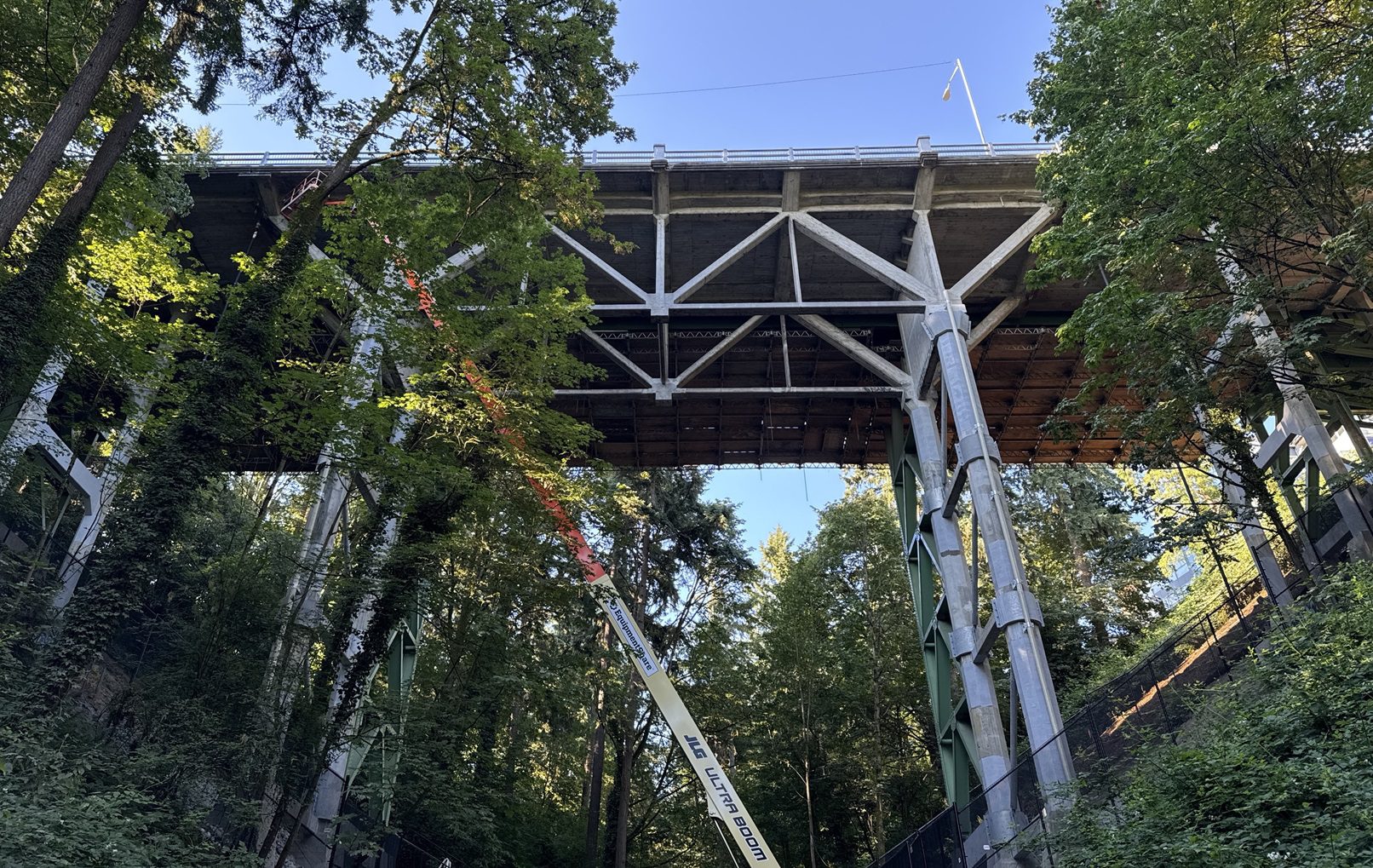
 View of the Admiral Way bridges (north and south) in West Seattle. Photo: SDOT
 Blog stats: 1,400 words | 7-minute read
Summary:
- Thanks to the voter-approved Levy to Move Seattle, we’ve upgraded over a dozen City-owned bridges to meet modern earthquake standards. We’ve made 6 upgrades just this year, with more on the way.
- Since 2006, we’ve strengthened a total of 44 bridges all across Seattle as part of our bridge seismic program.
- These bridge seismic upgrades are some of the final few big projects we’re completing thanks to the Levy to Move Seattle. We stopped collecting Levy to Move Seattle revenue at the end of 2024.
- There’s more good news: we have a new Seattle Transportation Levy that will continue to invest in our transportation system, including the safety and reliability of Seattle’s bridges.
- The new Seattle Transportation Levy will invest $221 million into our bridges and structures over the next 8 years, including a new Bridge Preventative Maintenance program focused on making our bridges last as long as possible.
Did you know that your tax dollars fund work to help make our bridges stronger and more resilient to earthquakes?
Our Bridge Seismic Program supports improvements so that our bridges withstand earthquakes that are an ongoing risk in the Pacific Northwest. Many Seattleites remember the last significant earthquake in our region – the Nisqually earthquake of 2001. There are also smaller earthquakes that occur each year that we often don’t even feel.
Big earthquakes (also known as seismic events) could have a larger impact on Seattle’s bridges. Our Bridge Seismic Program reinforces bridges, especially our older ones, to better withstand the potential impacts of earthquakes. This work is in addition to ongoing maintenance and inspections that we perform on each City‑owned or maintained bridge, as needed.
Here are the bridges we’ve seismically retrofitted this year:
- N 41st St Pedestrian Bridge
- 13th Ave NW/Holman Rd NW Pedestrian Bridge
- N 102nd & Aurora Pedestrian Bridge
- Admiral Way N & S Bridges (note: these are two separate bridges next to each other)
- McGilvra Blvd E Bridge
Check out the improvements we’ve made to each bridge this year!
N 41st St Pedestrian Bridge on Aurora Ave N
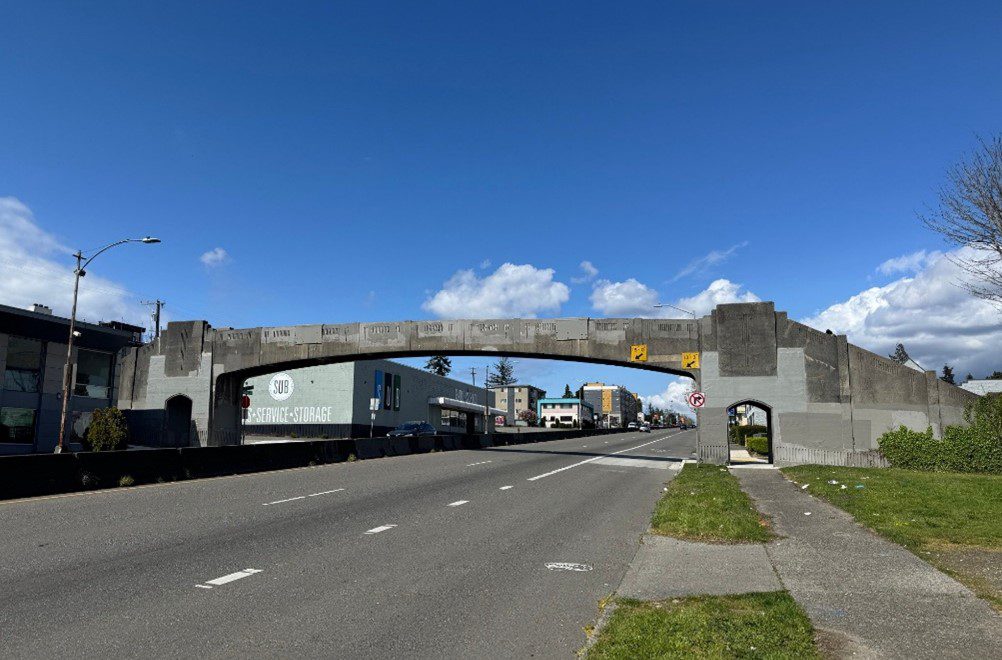
We strengthened and stabilized this bridge, which crosses Aurora Ave N at N 41st St, by using carbon fiber wrapping, retrofitting the foundation, and replacing bolts. We also repaired cracks and upgraded nearby sidewalks and curb ramps to improve access for people walking and rolling.
13th Ave NW/Holman Rd NW Pedestrian Bridge in Crown Hill
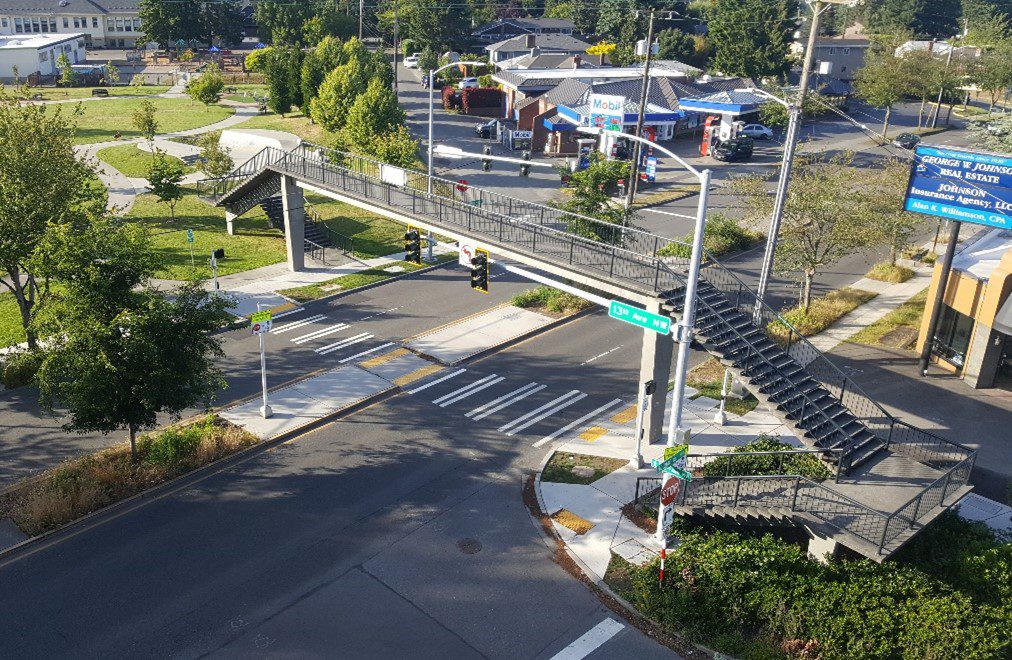
On this bridge, which crosses Holman Road NW in a busy area of northwest Seattle, we reinforced the foundation, strengthened the columns and main beams with carbon fiber wrapping, and repaired damaged areas to increase seismic resiliency. We also rebuilt sidewalks and curb ramps near the bridge to improve safety and accessibility for everyone.
N 102nd & Aurora Pedestrian Bridge near Licton Springs
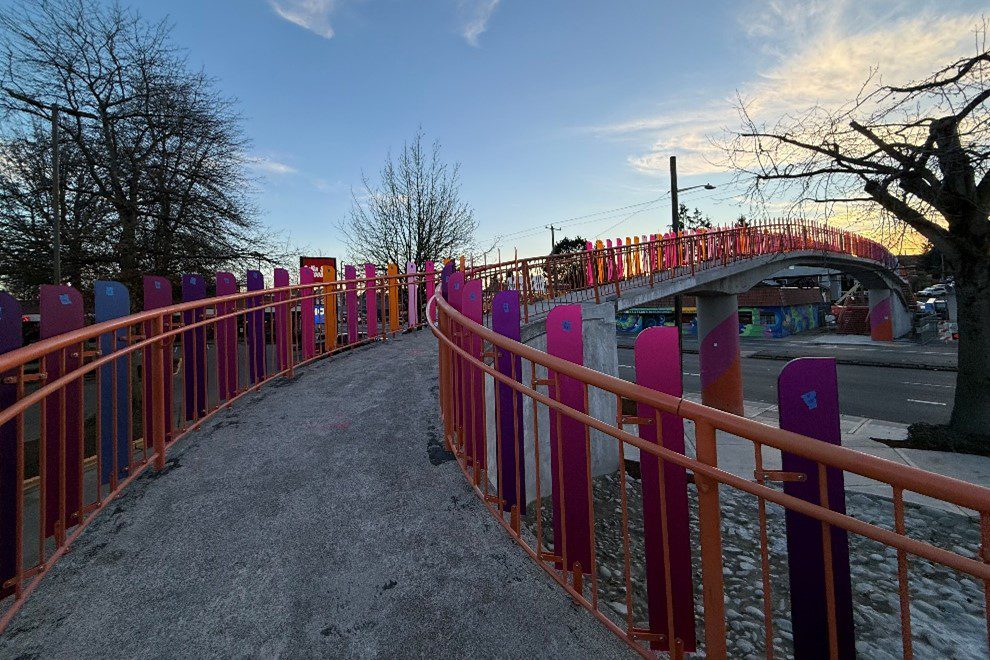
This colorful bridge crosses Aurora Ave N at N 102nd St. To make it stronger and less vulnerable during an earthquake, we reinforced it with carbon fiber wrap, upgraded the expansion joints, and strengthened the ends of the bridge.
In addition, we added flexible components and built supporting walls and foundations for improved seismic resiliency. Learn more about the community-led project to install colorful artwork on this bridge back in 2019.
Admiral Way North & South Bridges in West Seattle
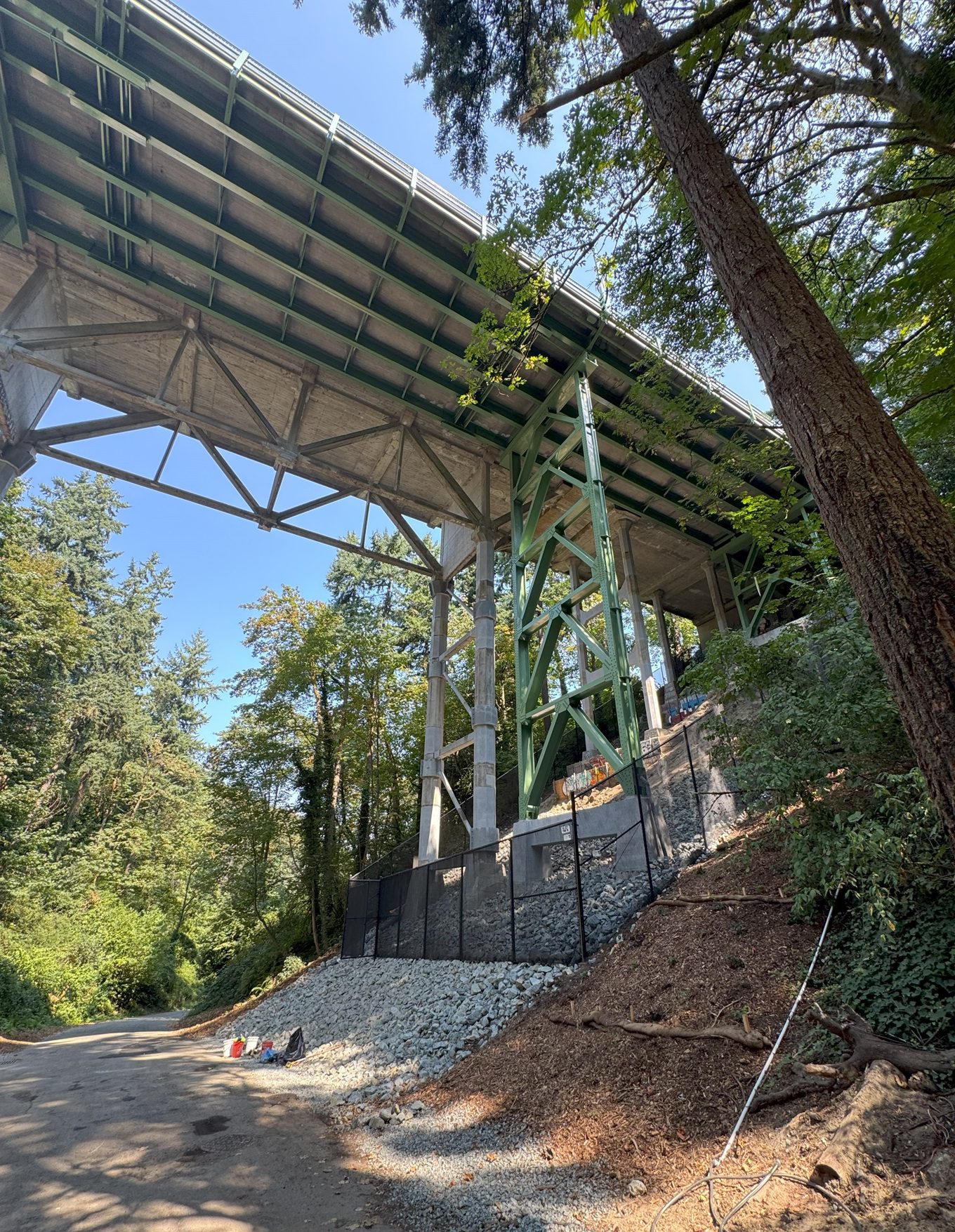
These two bridges sit side-by-side on SW Admiral Way between 39th Ave SW and Walnut Ave SW. We installed carbon fiber wrapping to strengthen specific bridge elements and stabilized the slopes to ensure durability.
Additionally, we re-painted the steel elements, replaced gusset plates (a part of the bridge that connects beams and girders to bridge columns), repaired cracks and damaged concrete, and updated the expansion joints at both ends of the bridge.
McGilvra Blvd E Bridge in Madison Park
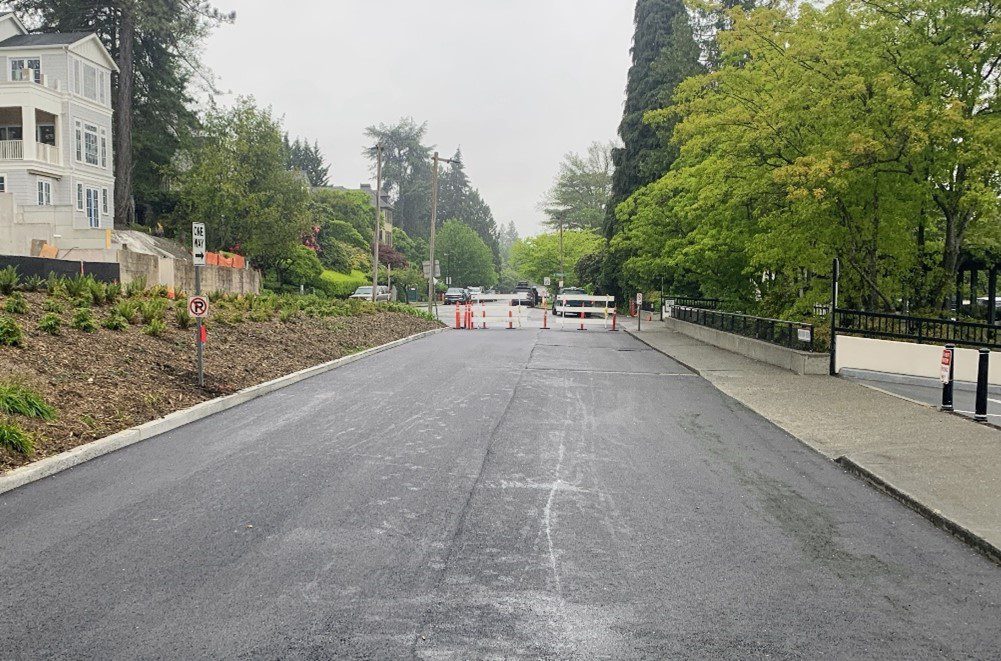
This bridge, located in Madison Park near the Seattle Tennis Club, may not look like a bridge – but it is! We constructed a stronger supplemental wall support to tie the existing bridge to. We also repaired damaged concrete underneath the bridge to prevent steel corrosion and restored an existing concrete masonry unit block wall to enhance structural safety.
Maintenance work associated with the bridge included repaving the entire deck surface consisting of replacing the old asphalt and deck joints to create a smoother road surface and minimizing water seepage at the joints to extend the bridge deck’s service life.
As part of the Levy to Move Seattle, we committed to seismically reinforcing 16 Seattle bridges to increase seismic resiliency. We’ve invested a total of nearly $73 million to-date into these 16 seismic upgrades.
We have two remaining bridge seismic projects on this list to complete:
- 15th Ave NE/NE 105th St Bridge: On this bridge in Northeast Seattle, we will reinforce the bridge foundations with extra supports, strengthen columns and crossbeams, and reinforce the existing steep slope around the bridge foundations. These improvements will enhance the bridge’s resiliency and durability.
- 15th Ave NW/Leary Way Bridge: We are improving earthquake safety by strengthening this bridge, which is the north end of the Ballard Bridge and is also called the Leary Way Bridge. This includes strengthening the bridge’s cap beams, columns, footings, and abutments (parts of the bridge structure), installing ground anchors, repairing cracks and damaged concrete, and replacing worn out bridge expansion joints. We’ve nearly completed this portion of the project! This work is part of the larger 15th Ave W/NW & Ballard Bridge Paving & Safety Project.

What’s next thanks to the new Seattle Transportation Levy
We’re investing $221 million into bridges and structures as part of the new Seattle Transportation Levy. As part of the investment, we created a new Bridge Preventative Maintenance program. This means that, across the City’s 134 bridges, we will be completing ongoing repairs focused on making our bridges last as long as possible.
We’re making repairs on the right bridge at the right time, so that down the line, we minimize the need for more expensive repairs. In fact, for every $1 we spend now on preserving infrastructure like bridges, we could save up to $6 on more expensive repairs in the future. This means that we are maximizing every one of your tax dollars raised through the Seattle Transportation Levy.
Some of this work includes replacing bridge decks and joints, and cleaning and painting bridges. It also includes repairs like sealing cracks, replacing expansion joints which allow a bridge to expand and contract depending on air temperature, fixing damaged bridge rails, and patching concrete spalls (breakdown of concrete). This routine maintenance work is essential in protecting key structural elements of the bridge that are expensive to repair. It goes a long way in preserving the life of a bridge!
One large project we’ve completed this year is improving how reliably the Spokane St Swing Bridge operates. As part of rehabilitation for this vital bridge, we’ve:
- Refurbished and reinstalled the lift turn cylinder, which is the main cylinder that allows the bridge to lifted before it pivots to allow marine traffic through.
- Overhauled and refurbished the four main turn cylinders that are critical in making the bridge pivot open and close
- Updated the control system, which the Bridge Operator uses to open and close the bridge and manage all of the features of safely operating the bridge.
Other planned improvement projects include replacing the vehicle barrier gates and replacing other parts of the hydraulic system and cylinders.
In 2025 we are also launching a bridge cleaning program, continuing minor repair work on bridges, and starting to design major maintenance projects for the Ballard Bridge and Magnolia Bridges. Even with greater emphasis on preventative maintenance, we are continuing to invest in seismic improvements to ensure that our bridges are more resilient to earthquakes. This work will be done on a schedule that maximizes every levy dollar you and your neighbors are investing in making our transportation system better, safer, and last longer. Thank you, Seattle!