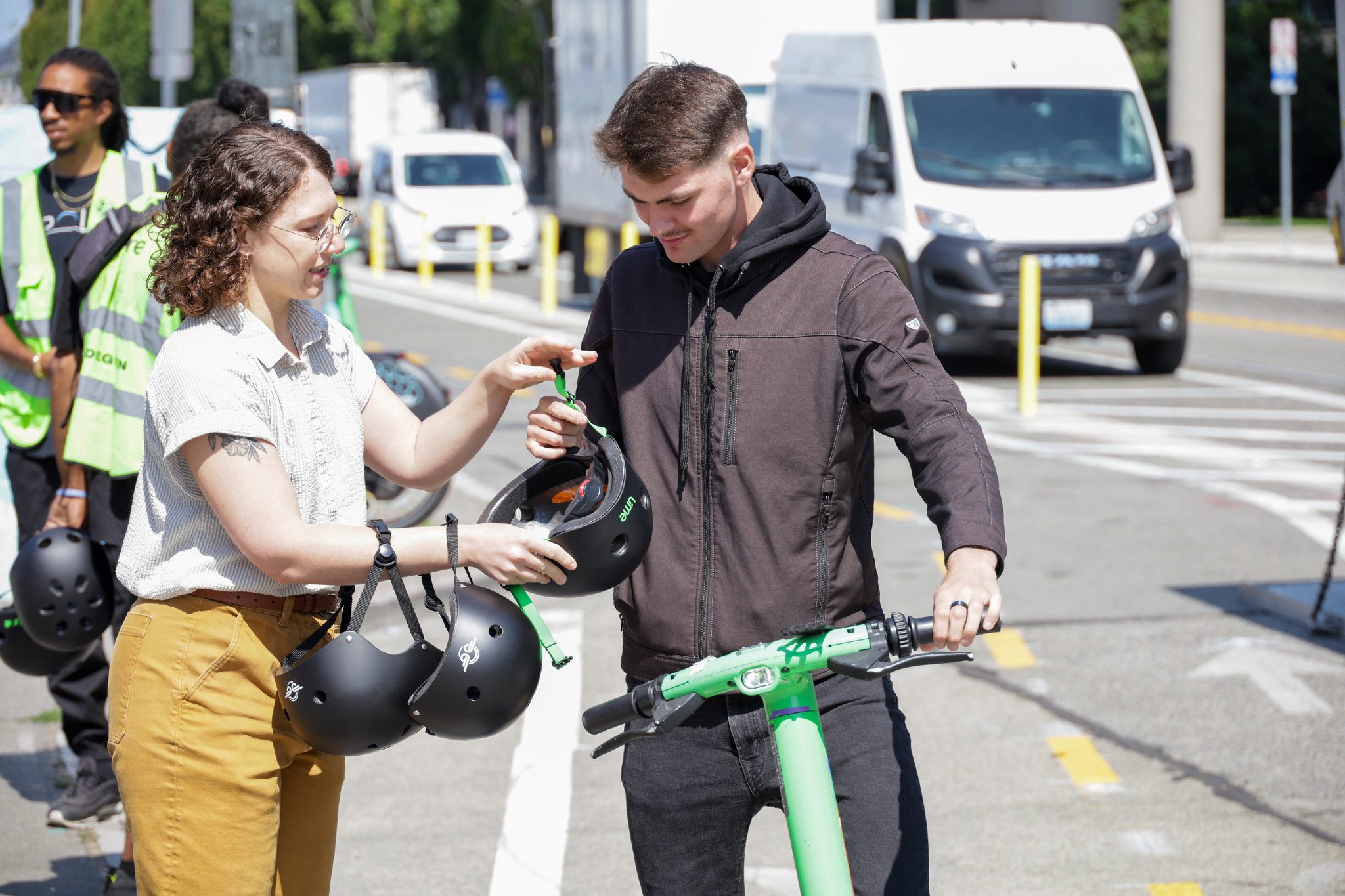
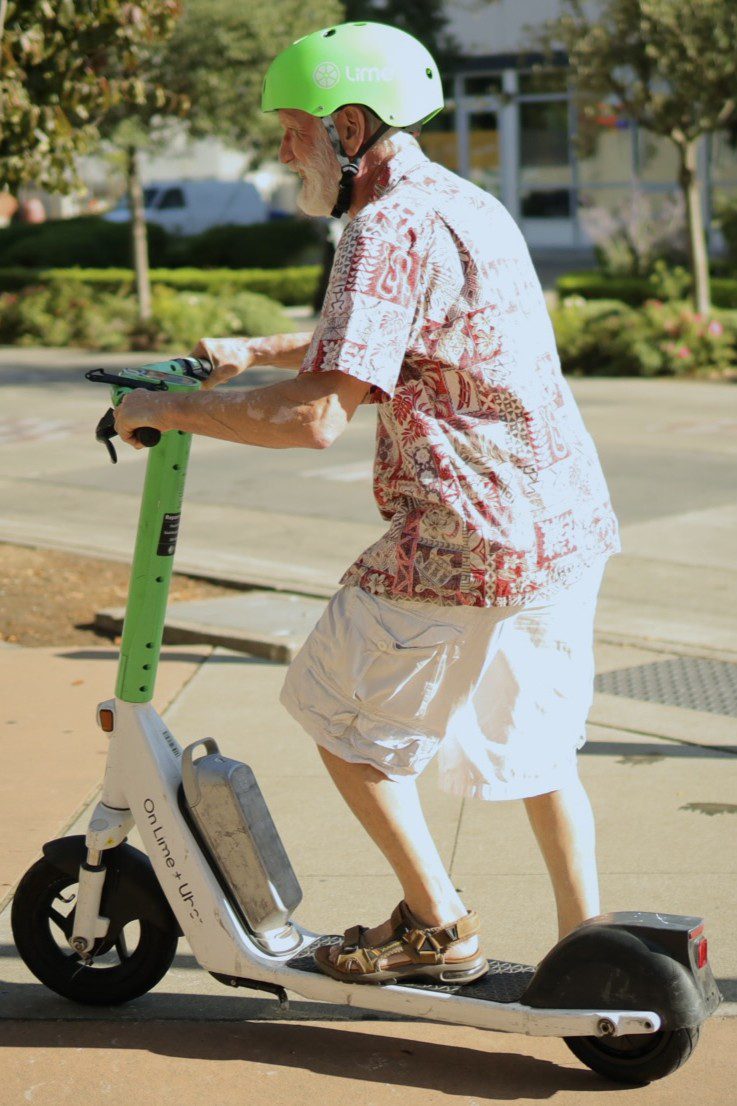
 A man accepts one of the 5,000 free helmets we gave away last year. Photo: SDOT
 Blog stats: 1,400 words | 7-minute read
At-a-glance
- Shared bikes and scooters are an important part of our transportation network, with 10.5 million trips made in 2025.
- We have updated operating permits to require bike and scooter companies to add technology to discourage reckless riding and bad parking and increasing fines for people who break the rules. Read more
- Updates build on current safety work including speed limiting technology, device safety requirements, and our 5,000 helmet a year give-away program. Read more
- We continue to build and upgrade protected bike lanes to improve safety and reduce sidewalk riding and collaborate with our Vision Zero team. Read more
- We are adding over 200 new downtown parking corrals by this summer to help keep sidewalks clear, which is especially important for people with mobility challenges. Read more
Seattle’s shared bike and scooter program gives people a convenient and sustainable way to get around Seattle. To improve the program, SDOT has adjusted permit requirements to help enhance safety and address concerns about people riding and parking devices where they are not allowed.
These new requirements for bike and scooter share companies will be bolstered by an ongoing investment to expand our bike network, build new parking corrals, and continuing to provide free helmets.
New requirements for safer vehicles and rides
We updated the operating permits for bike and scooter companies on April 1 to encourage safer riding and better parking based on best practices from other U.S and international cities. Read the highlights below to learn more.
SDOT’s permit now requires bike and scooter share companies to use new technology that detects when someone on a scooter is skidding, jumping, or riding recklessly on a sidewalk. Bike and scooter share companies must incorporate this technology as soon as possible, including deployment on at least half the standing scooter fleet within Quarter 2, 2026, and deployment on all devices by the end of 2026.
As the companies install and fine-tune these new sensors, they will provide direct feedback to riders, resulting in specific consequences for people who break the rules. Initially, the devices will provide audible warnings and in-app alerts when people improperly ride on sidewalks. Once testing confirms that the sensors are working as intended, we could potentially add stricter consequences like fines or account suspension for people who ignore the warnings.
We also now require companies to install more accurate GPS sensors, which can be used to detect when devices are parked inappropriately and automatically limit device speeds when riding through areas designated as “slow zones” in public spaces like Seattle Center, where people walking and riding are both allowed.
As before, riders will continue to see in-app notifications on how to ride and park correctly and are required to take a (quick) quiz every few months to ensure that they understand the rules.
People who ride or park their device improperly are given warnings. If they ignore the warnings, they can be fined or have their account disabled. The maximum possible fines in new permits have increased from $20 to $50 for riders not enrolled in the low-income reduced fare program.
Other permit updates include:
- Requiring that half of a company’s fleet be bikes or seated scooters, with rules to help ensure scooters and bikes are distributed to more neighborhoods with low car ownership, light rail stations, and transit hubs.
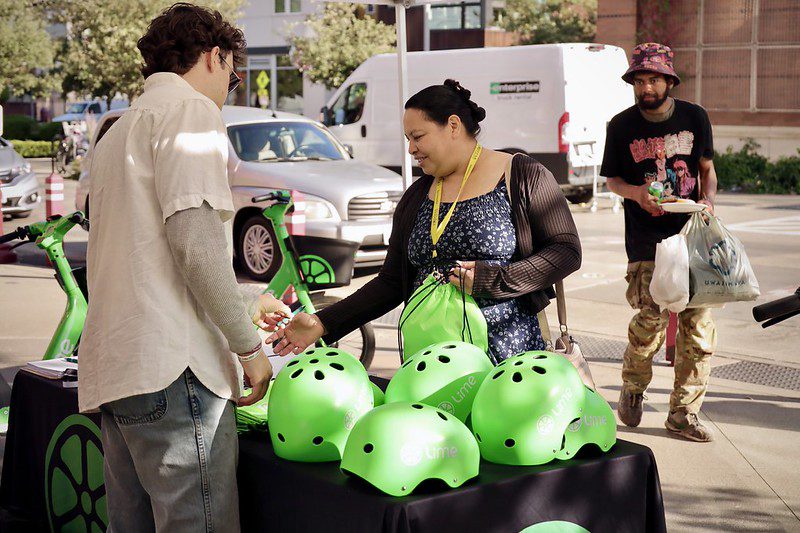
- Vendor participation in community events.
- Stronger insurance requirements aligning with City risk management recommendations.
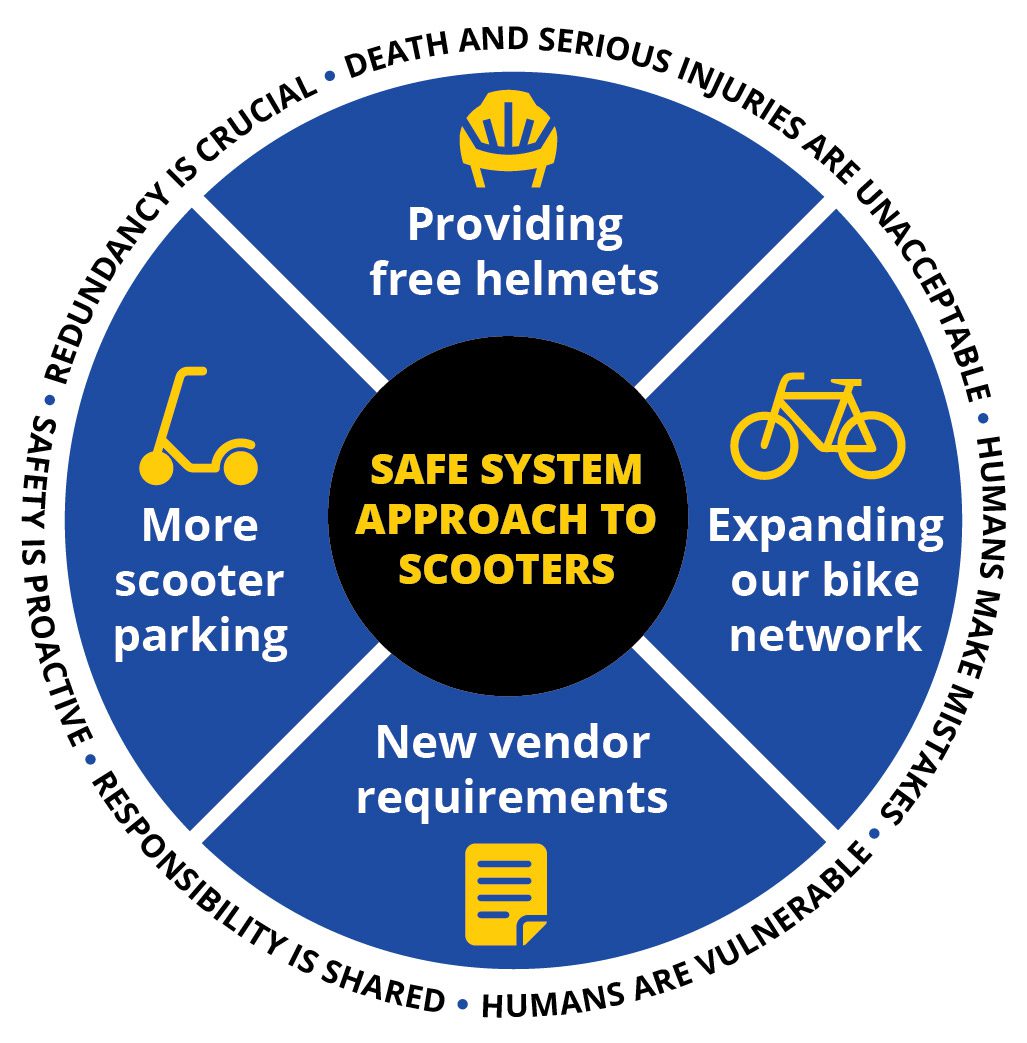
Safe Systems approach
These permit updates build upon the safety strategies which are already in effect:
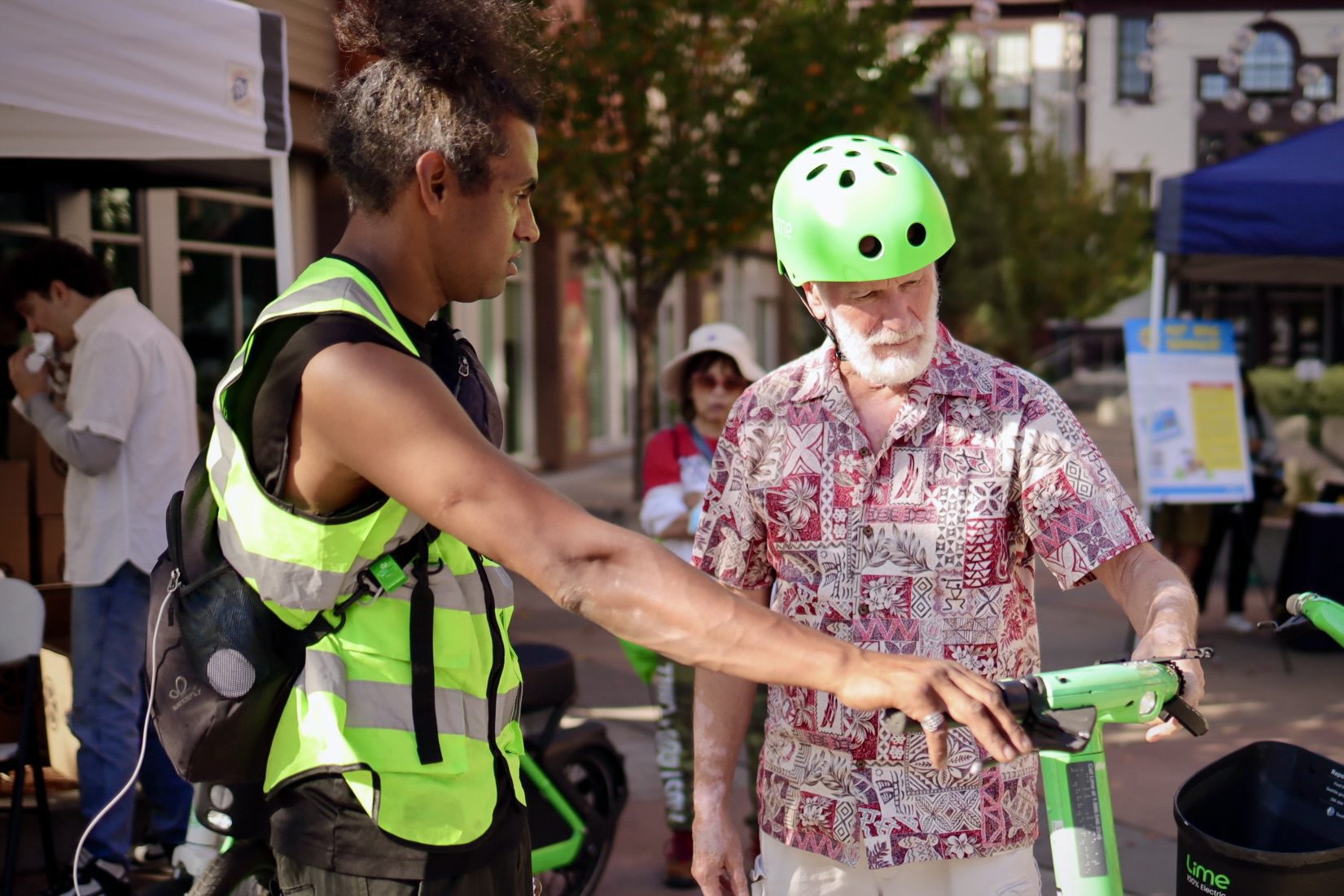
- Bike and scooter share companies are required to give away free helmets to riders, and we fund Bike Works to distribute them. We gave away 5,000 helmets last year and over 15,000 helmets since 2022 through this partnership. Learn how to get a free helmet.
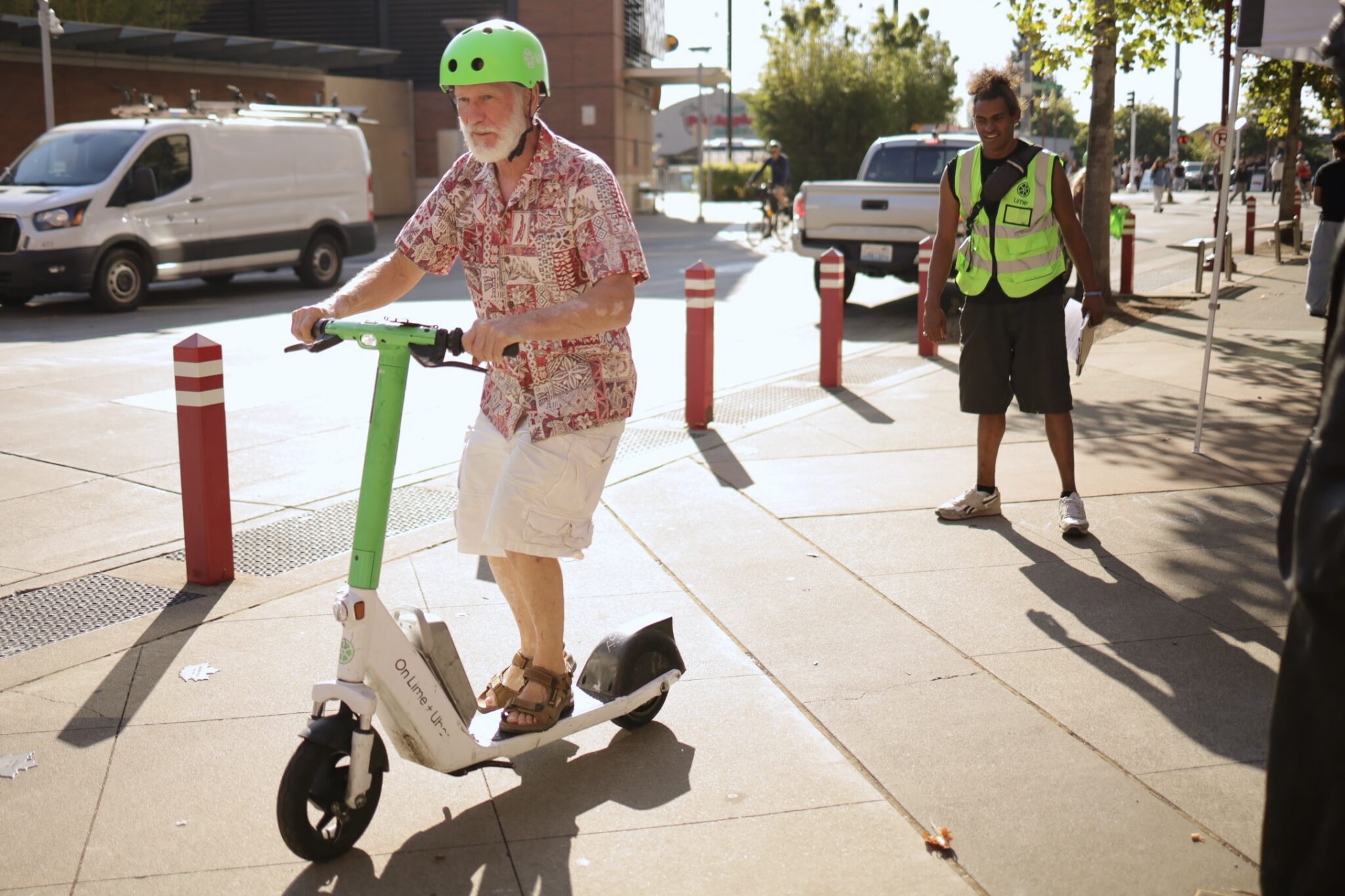
- Companies must also use scooters with sturdier and stronger equipment than previous generations. This includes features like larger shock-absorbent wheels, superior suspension systems, front and rear brakes, internal brake housing, and lower center of gravity that create a smoother ride.
- We’re also requiring that at least half the fleet be bikes and seated scooters.
- Scooters have built-in speed limits with a maximum speed of 8 MPH on a customer’s first ride and 15 MPH after that. There are also designated slow zones where all riders are capped at 8 MPH.
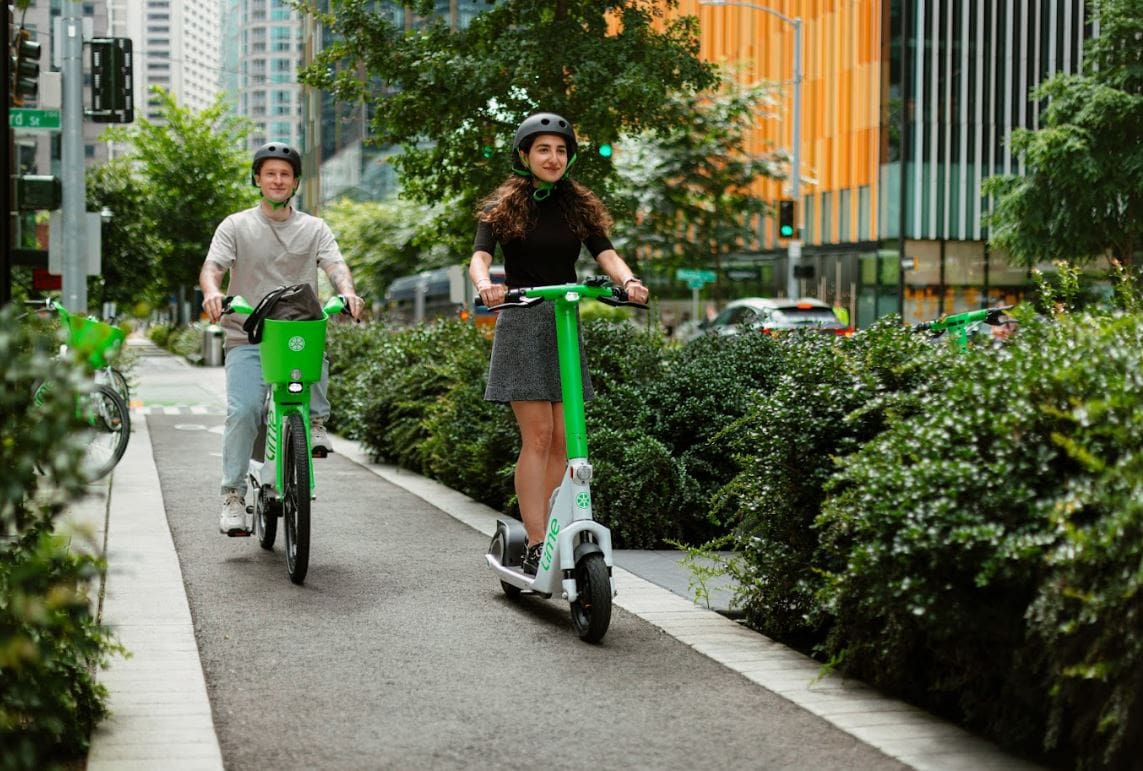
Building more bike lanes
Seattle’s network of protected bike lanes continues to grow and be upgraded thanks to the voter approved Seattle Transportation Levy.
A connected bike network provides a comfortable place for people to ride, reducing riding on sidewalks. In 2025, we built and upgraded over 13 miles of protected bike lanes to improve safety and connectivity.
This year, we have eliminated some of the final gaps in the City Center bike network including the recently completed Yesler Way protected bike lane and the Belltown to Seattle Center Connection Project.
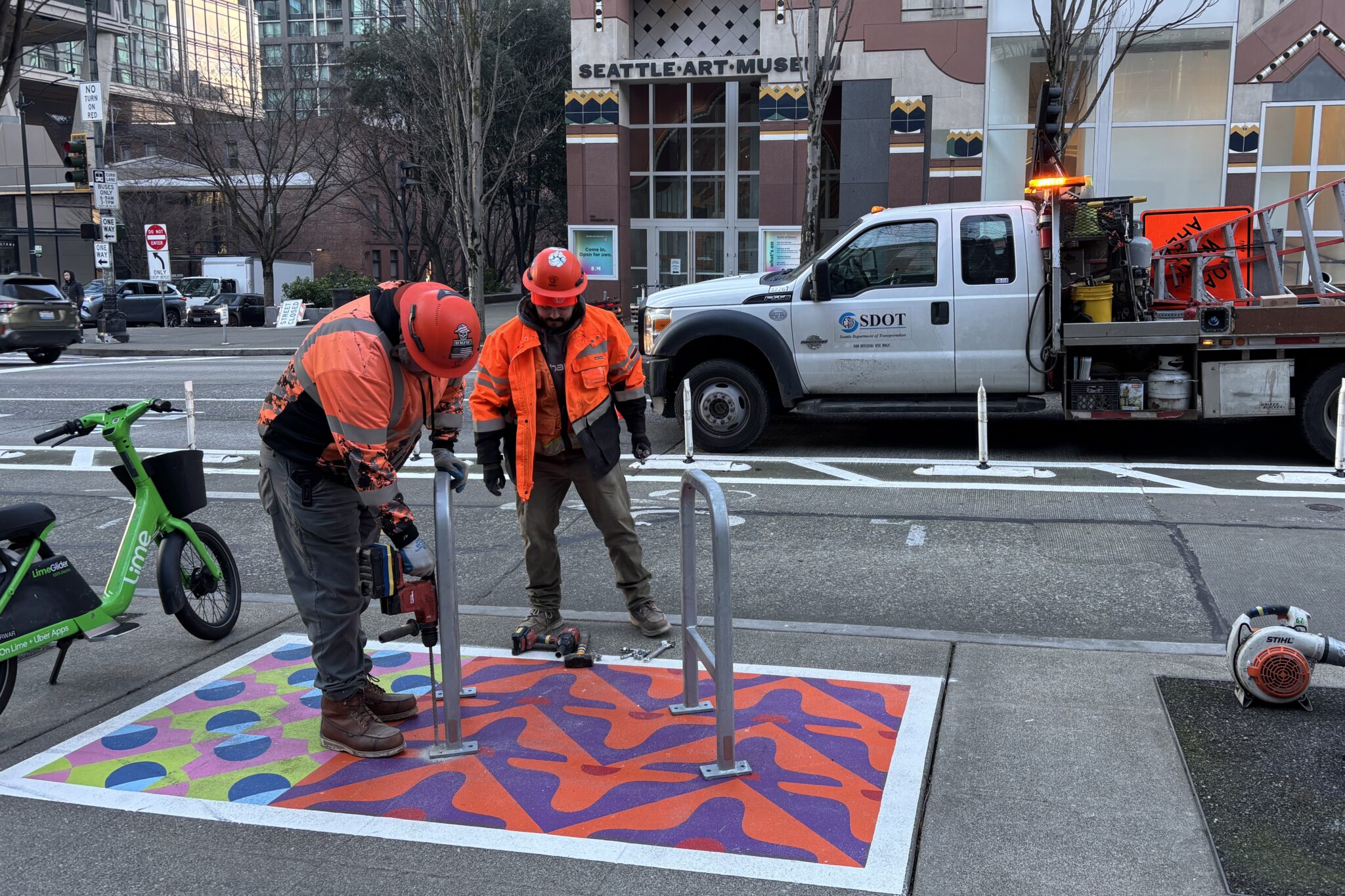
Building over 200 new bike and scooter corrals to help keep sidewalks clear
It is important for people walking, using a wheelchair, pushing a stroller, and relying on a cane or those that are sight impaired to have clear sidewalks.
We are making steady progress on our commitment to triple the number of downtown parking corrals by this summer. The 200 new parking corrals will be in locations where the data tells us they are needed most and with local business input, such as:
- Popular destinations for bike and scooter trips
- Near hotels and the Men’s World Cup event locations
- Around transit and bike facilities
- Where incorrectly parked bikes and scooters have been ticketed
Many of these parking corrals also make your streets safer by “daylighting” intersections, which means putting bike and scooter parking next to crosswalks where state and local laws say it is illegal to park cars. This prevents the safety hazard of parked cars blocking drivers’ view of oncoming traffic and people crossing the street.
In many parts of the city, we are using built-in GPS technology to ensure devices are parked in the proper areas and to prevent people from ending their trip if their device is left in certain locations. People will also continue to use their phones to take a photo of their properly parked bike or scooter before they end their ride on the company’s app.
The plan for shared bikes and scooters during the 2026 World Cup
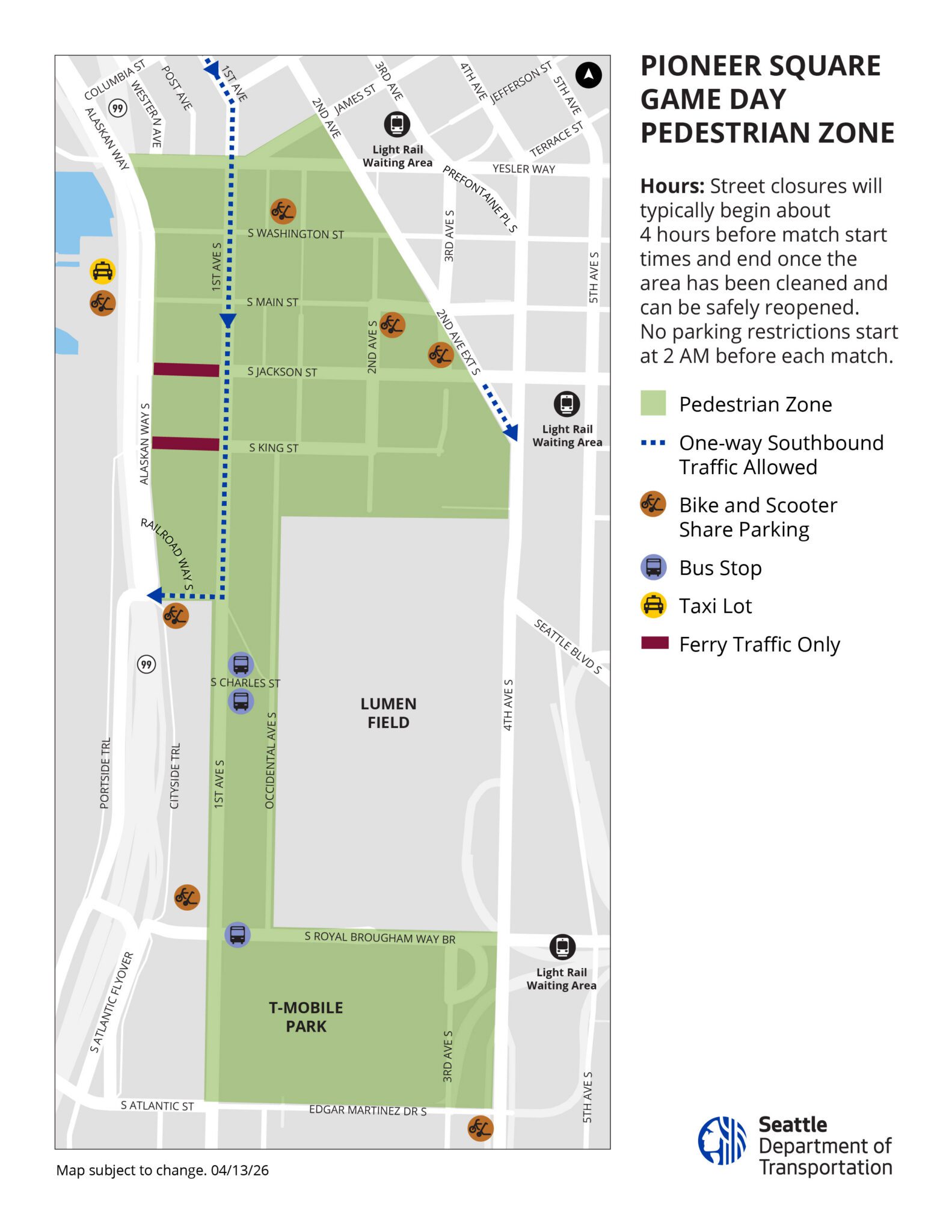
During 2026 FIFA World Cup, there will be an extraordinarily large number of people visiting Pioneer Square. To keep people moving safely, create more space for pedestrians, and support visiting local businesses, most of the streets around Pioneer Square will be temporarily closed to vehicles on match days. On these days, bike and scooter share vehicles will be automatically slowed down to 8 mph within the pedestrian zone.
Riders will find staffed bike and scooter valet parking areas at key locations near Pioneer Square and the Stadium district designed to accommodate the increased expected ridership and to organize parking. This has been a successful tactic at large events in other cities, like the 2024 Summer Olympics in Paris, France.
Ongoing commitment to public safety
In 2025, the Bike and Scooter Share Program was used by over 1 million people and reached 10.5 million trips in 2025. We expect even larger ridership in 2026, especially during the FIFA Men’s World Cup this summer.
While this rapidly increasing bike and scooter ridership indicates strong demand, it is important to evolve the program to align with SDOT’s on-going commitment to transportation safety for all.
We continue to evaluate the program over time and work with bike and scooter share companies to ensure successful implementation of changes. We hope you find these changes bring valuable benefits going forward. Our goal is to balance the increasing demand for this bike and scooter program with improvements to enhance accessibility for all, especially for people with mobility challenges.